


Charcoal walls and emerald velvet curtains are a bold pairing that instantly elevates a space. This combination feels rich, moody, and unmistakably refined, striking the perfect balance between drama and sophistication. When styled thoughtfully, charcoal provides depth and grounding, while emerald velvet adds luxury, warmth, and visual interest. Designers often turn to this pairing when creating interiors that feel intentional, layered, and emotionally expressive.
These curtain combinations explore how charcoal walls and emerald velvet can be styled together in ways that feel dramatic yet tasteful, helping rooms feel curated rather than overwhelming.
Why Charcoal and Emerald Work So Well Together
Charcoal is a versatile dark neutral that anchors a room without feeling harsh. Emerald green, especially in velvet, introduces richness and movement through texture and light reflection. Together, they create contrast while remaining harmonious. This pairing works across a range of styles, from classic and traditional to modern and eclectic, making it a favorite for designers who want depth without relying on overly bright color.
Emerald Velvet With Soft Sheer Panels
One of the most elegant approaches is layering emerald velvet curtains with soft sheer panels. The sheers filter natural light while the velvet adds drama and weight. Against charcoal walls, this combination feels balanced and refined. The layered look allows flexibility throughout the day and prevents the space from feeling too heavy.
Floor to Ceiling Emerald Velvet Curtains
Full-length emerald velvet curtains that extend from ceiling to floor create instant drama. Designers often use this approach to emphasize ceiling height and create a luxurious, tailored look. Against charcoal walls, the uninterrupted length of velvet feels bold and architectural, making the windows a true focal point.
Emerald Velvet With Black Metal Hardware
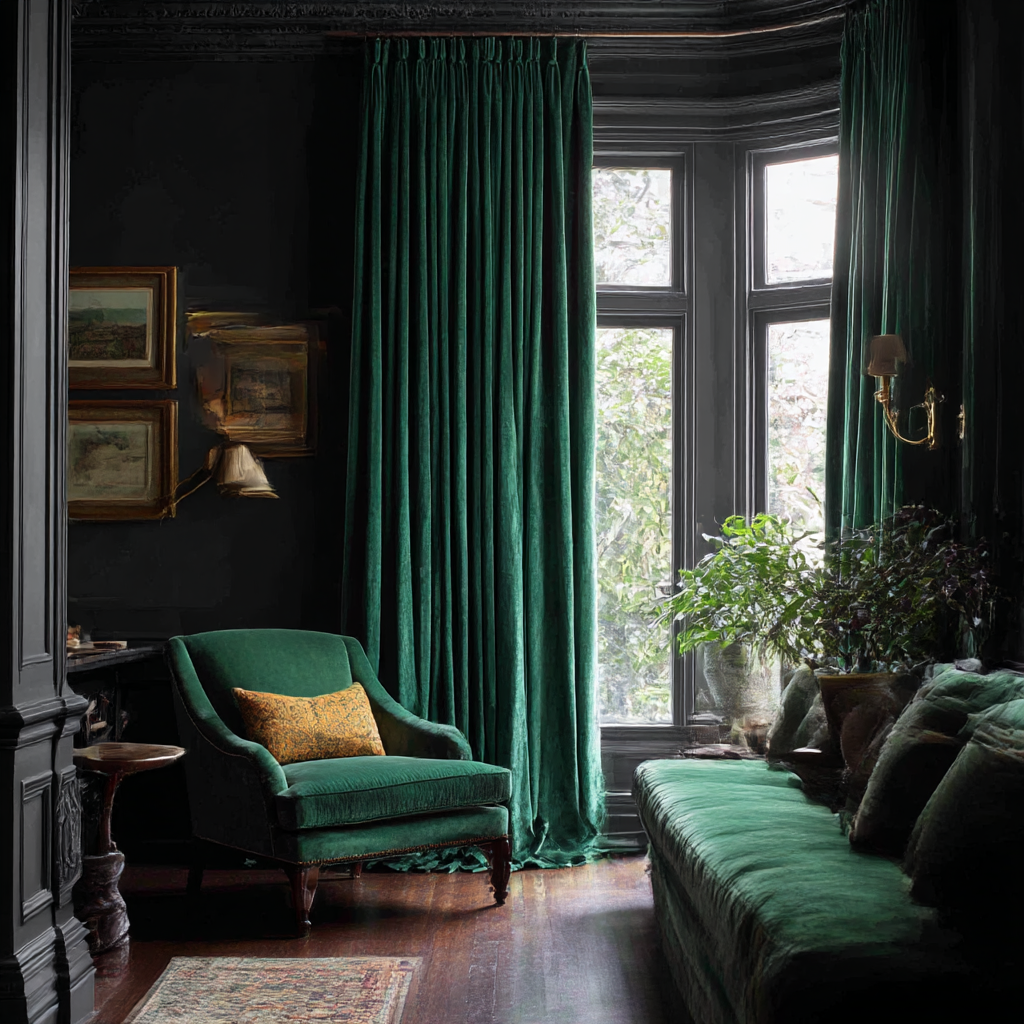
Pairing emerald velvet curtains with black metal rods and rings creates a sleek, modern contrast. The dark hardware blends seamlessly with charcoal walls while allowing the velvet fabric to stand out. This combination feels intentional and contemporary, especially in spaces with clean lines and minimal ornamentation.
Velvet Curtains With Warm Brass Accents
For a more classic or vintage-inspired look, emerald velvet curtains paired with warm brass hardware add softness and warmth. The metallic contrast against charcoal walls creates visual interest without overpowering the space. Brass accents catch light subtly, enhancing the richness of the velvet fabric.
Emerald Velvet With Subtle Patterned Linings
Adding a subtle patterned lining to emerald velvet curtains introduces an unexpected layer of detail. When the curtains are slightly open, the pattern peeks through, adding dimension. Against charcoal walls, this detail feels thoughtful and curated, appealing to those who appreciate nuanced design.
Tailored Emerald Velvet Panels With Clean Lines
For a modern aesthetic, designers often choose emerald velvet curtains with minimal pleating and clean edges. This tailored look prevents the velvet from feeling overly traditional. Paired with charcoal walls, the result is sophisticated and streamlined, ideal for contemporary living rooms or bedrooms.
Emerald Velvet Curtains Framing Dark Wood Windows

When paired with dark wood window frames or trim, emerald velvet curtains create a cohesive and grounded look. The natural warmth of wood softens the charcoal walls while complementing the richness of the velvet. This combination works beautifully in traditional, transitional, or moody modern spaces.
Double Rod Styling With Emerald Velvet
Using a double curtain rod allows emerald velvet curtains to be paired with a lighter secondary fabric. This approach adds depth and flexibility while keeping the space visually balanced. Against charcoal walls, the contrast between heavy velvet and lighter fabric feels layered and intentional.
Emerald Velvet With Tonal Accessories
Designers often extend the emerald tone beyond curtains through cushions, throws, or accent chairs. This repetition creates cohesion and prevents the curtains from feeling isolated. Charcoal walls act as a neutral backdrop, allowing emerald accents to feel luxurious rather than overwhelming.
Emerald Velvet Curtains in Low Light Spaces
Charcoal walls naturally absorb light, making emerald velvet curtains especially striking in rooms with controlled lighting. Table lamps, sconces, and warm bulbs highlight the texture of the velvet and deepen its color. This combination creates a cozy, intimate atmosphere that feels dramatic in the best way.
Styling Tips for a Balanced Look
When working with dark walls and rich fabrics, balance is essential. Designers recommend keeping surrounding furniture and decor slightly lighter to prevent the room from feeling closed in. Natural materials, reflective surfaces, and thoughtful lighting help maintain visual flow. Editing accessories ensures the curtains remain a statement rather than competing with too many elements.
Final Thoughts
Charcoal walls paired with emerald velvet curtains create interiors that feel bold, luxurious, and deeply expressive. This dramatic combination works best when styled with intention, balance, and attention to detail. Whether layered with sheers, paired with warm metals, or styled in a modern way, emerald velvet brings life and movement to charcoal spaces. When done thoughtfully, this pairing transforms a room into something unforgettable.
Questions About Styling Charcoal Walls With Emerald Velvet Curtains
Do emerald velvet curtains work in small rooms with charcoal walls
Yes, when styled carefully. Using floor-to-ceiling panels, good lighting, and lighter surrounding decor helps small rooms feel dramatic rather than cramped.
What hardware finishes pair best with emerald velvet curtains
Black metal and warm brass are both popular choices. Black creates a modern, seamless look, while brass adds warmth and a classic feel.
How do I keep dark walls and velvet from feeling too heavy
Balance dark elements with lighter furniture, reflective surfaces, and layered lighting. Adding natural textures also helps soften the overall look.
Add a Comment