

Winter in the garden may appear still, but December is a fantastic opportunity to map out and propagate for a vibrant spring garden. By taking the right steps now—like sowing seeds, taking cuttings, and dividing plants—you’ll be well on your way to a lively and colorful border when the weather warms up. Here are 10 flowers to start propagating this December, alongside some handy tips to set you up for success.
Taking Cuttings of Dianthus for Vibrant Borders
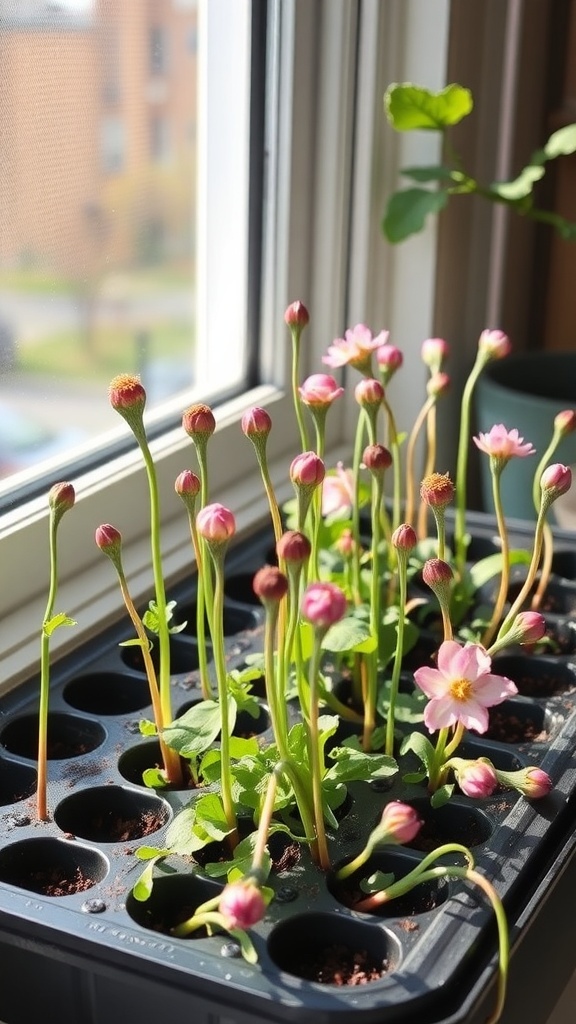
Dianthus, commonly known as Pinks, are a fantastic choice for adding color to your garden. The image shows healthy Dianthus cuttings, thriving in a seed tray by a sunny window. These young plants are already showing off their delicate pink blooms, hinting at the beauty they will bring to your spring garden.
To propagate Dianthus, start by taking semi-ripe cuttings from healthy plants. Look for stems that are firm but not fully woody. Trim them to about 4-6 inches long, ensuring each cutting has a few leaves. Place them in a well-draining mix, and keep them moist but not soggy. A sunny windowsill is perfect for this process, as it provides the warmth and light needed for rooting.
As you care for your cuttings, be patient. In a few weeks, you’ll notice new growth, signaling that your Dianthus are ready to be planted in your garden. This method not only saves money but also allows you to create a vibrant border filled with your favorite colors.
Dividing Hardy Geraniums for Strong Growth
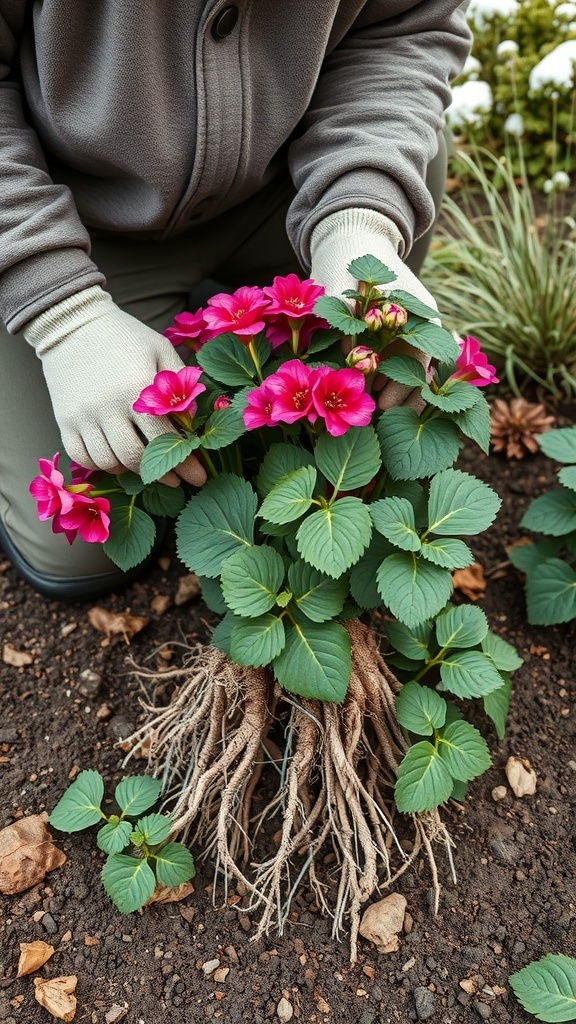
Dividing hardy geraniums is a great way to boost their growth and keep your garden vibrant. In the image, you can see someone gently lifting a clump of geraniums from the soil. The roots are well-developed, showing that these plants are healthy and ready for propagation.
Start by carefully removing the plant from the ground. Make sure to keep as much soil around the roots as possible. This helps reduce stress on the plant. Once out, you can see the beautiful pink flowers and lush green leaves, which are a sign of a thriving geranium.
Next, use a sharp spade or knife to divide the clump into smaller sections. Each section should have roots and some foliage. This way, they can establish themselves quickly in their new spots. After dividing, replant them in well-draining soil, and give them a good watering.
Dividing hardy geraniums not only promotes strong growth but also helps prevent overcrowding in your garden. Plus, you get more plants to fill your borders with color come spring!
Dividing Hellebores for Healthy Clusters
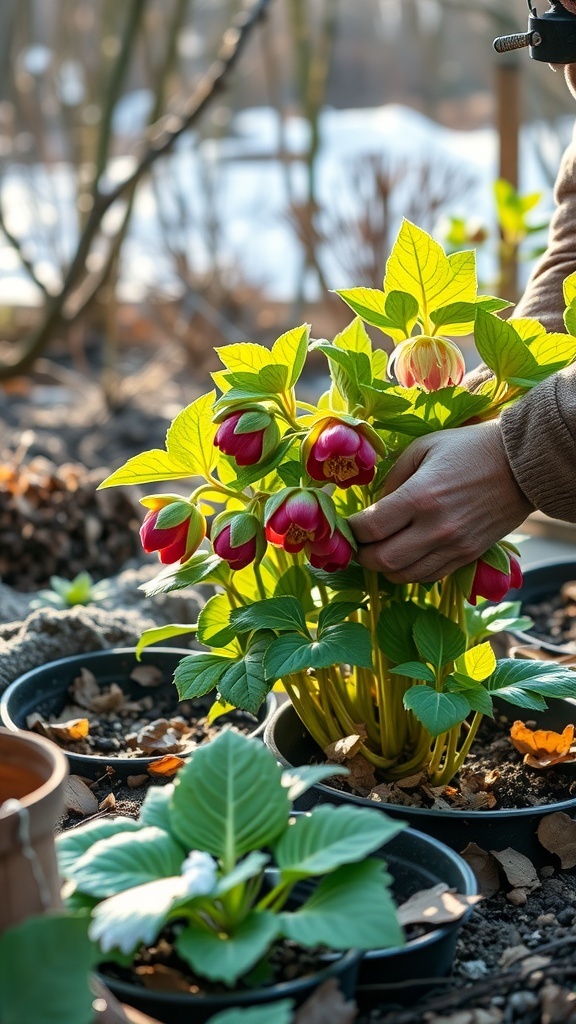
In the image, a gardener is carefully handling a cluster of Hellebores, showcasing their beautiful blooms and vibrant green leaves. This moment captures the essence of winter gardening, where preparation for spring begins.
Dividing Hellebores is a great way to promote healthy growth. These plants thrive when you split them into smaller sections, allowing each piece to flourish. Look for clusters that have become crowded or have fewer blooms. Gently lift them from the soil, making sure to keep the roots intact.
Once divided, replant the sections in well-draining soil. This helps ensure they have enough space to grow and develop strong roots. Water them lightly and keep an eye on their progress. With a little care, you’ll have vibrant Hellebores ready to brighten your garden come spring.
Sowing Aquilegias in Cold Frames
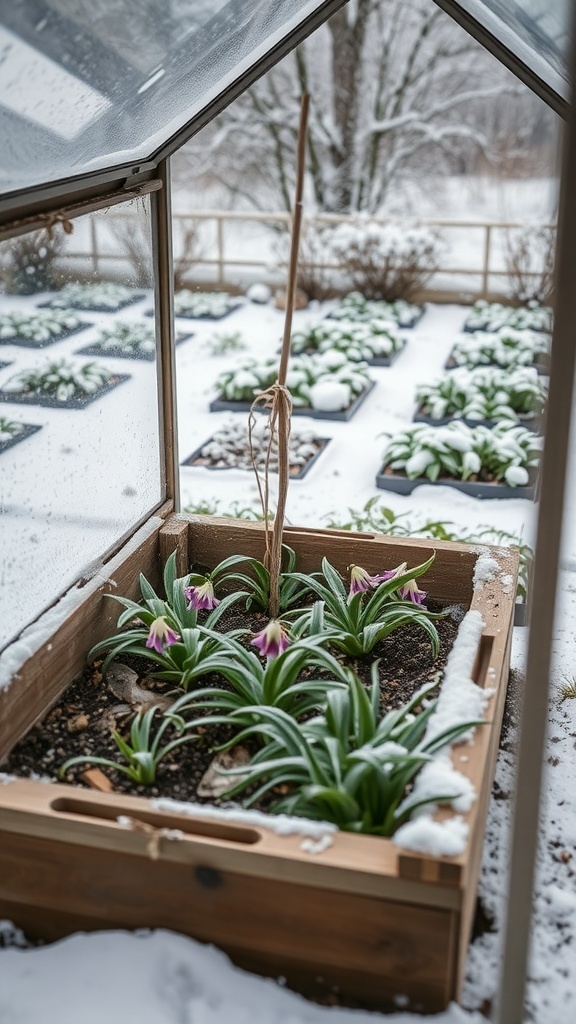
Using cold frames for sowing Aquilegias is a smart move in December. These structures provide a cozy environment, protecting your seeds from harsh winter conditions. The image shows a well-maintained cold frame, with snow gently resting on the edges, creating a beautiful winter scene.
Inside, you can see young Aquilegia plants peeking through the soil, ready to thrive. Cold frames help maintain warmth and humidity, which are essential for germination. Make sure to check the moisture levels regularly, as winter can dry out the soil quickly.
When sowing, space the seeds appropriately to give them room to grow. Label your trays so you know what’s sprouting. With a little care, these plants will reward you with stunning blooms come spring. Enjoy the process, and watch your garden come to life!
Splitting Lupins for Multi-Flower Displays
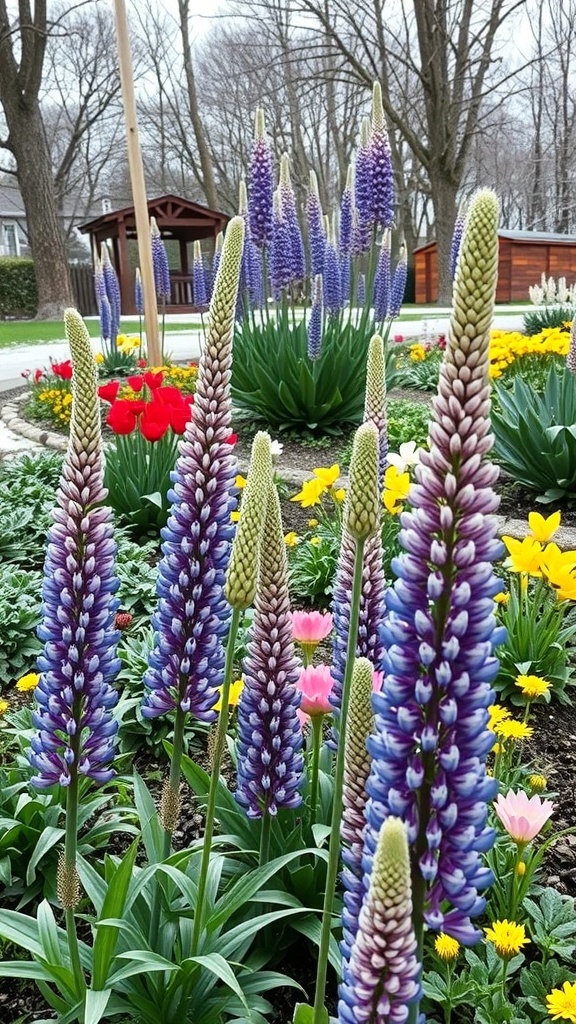
Lupins are a fantastic addition to any garden, known for their tall, vibrant flower spikes. In the image, you can see a stunning display of lupins in various shades of purple, standing tall among other colorful blooms. These flowers not only bring beauty but also attract pollinators, making them a great choice for a lively garden.
Now is the perfect time to split your lupins. This process encourages healthier plants and more blooms come spring. Start by carefully digging up the clumps, ensuring you don’t damage the roots. Once lifted, you can divide them into smaller sections. Each section should have roots and a few stems to thrive.
After splitting, replant the sections in well-drained soil. Water them lightly and keep an eye on their growth. With a little care, you’ll enjoy a vibrant display of lupins that will brighten up your garden and provide a stunning backdrop for other flowers.
Root Cuttings of Delphiniums Before Frost
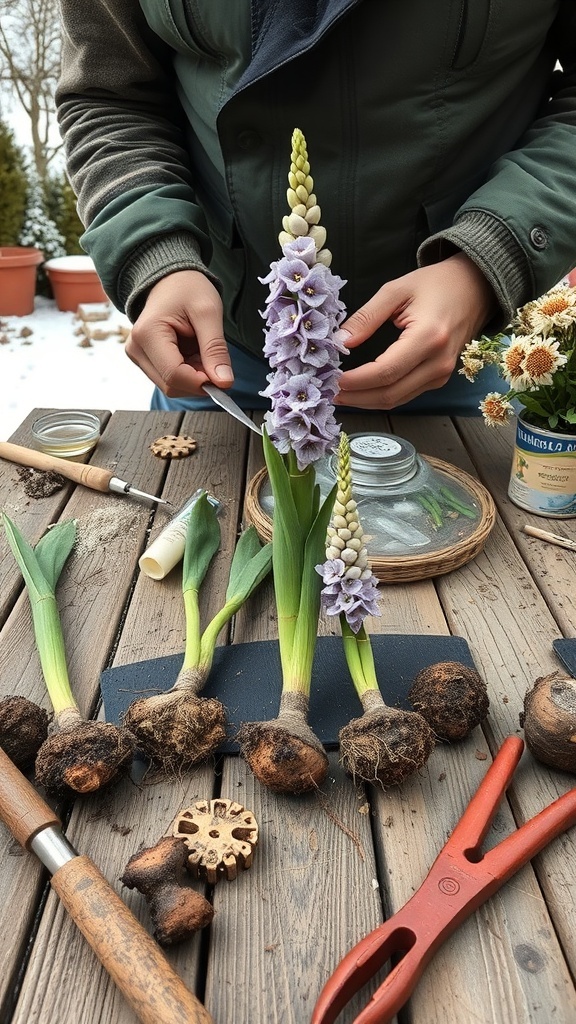
Delphiniums are stunning flowers that can bring vibrant colors to your garden. In December, it’s the perfect time to take root cuttings to ensure they thrive come spring. The image shows a gardener preparing delphinium cuttings, highlighting the process of propagation.
In the picture, you can see the gardener carefully handling the delphinium plants. The roots are visible, showing their healthy structure. This is a great reminder that healthy roots lead to beautiful blooms. The tools around them, like the pruning shears, are essential for making clean cuts, which helps the plants recover quickly.
Taking root cuttings now means you’ll have strong plants ready to burst into bloom when the weather warms up. Make sure to choose healthy specimens and cut just below the root crown. This technique is simple and effective, setting you up for a colorful spring garden.
Sowing Sweet Peas for Early Blooms
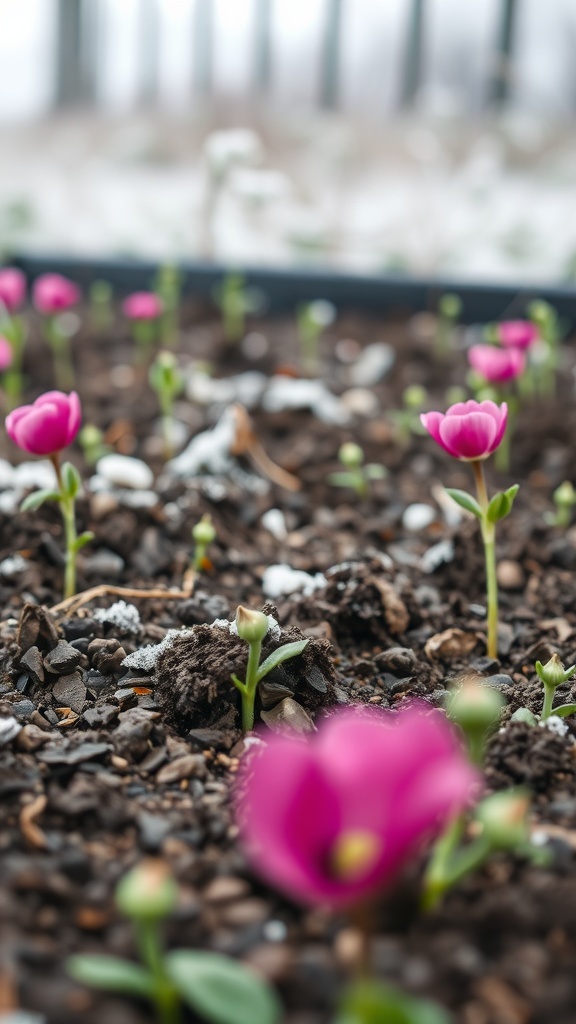
Sweet peas are a delightful choice for winter propagation. The image shows young sweet pea plants peeking through the soil, hinting at the promise of fragrant blooms to come. Their vibrant pink flowers stand out against the earthy backdrop, creating a cheerful scene even in the cold.
Sowing sweet peas now gives them a head start. These charming flowers thrive in cooler temperatures, making December the perfect time to plant. You can start them in seed trays or directly in the garden if the ground isn’t frozen.
To sow sweet peas, simply plant the seeds about an inch deep in well-draining soil. Water gently to keep the soil moist but not soggy. As they grow, support them with trellises or stakes to encourage climbing. This way, you’ll have a stunning display of blooms ready to brighten your spring garden.
Preventing Crowding with Shasta Daisy Division
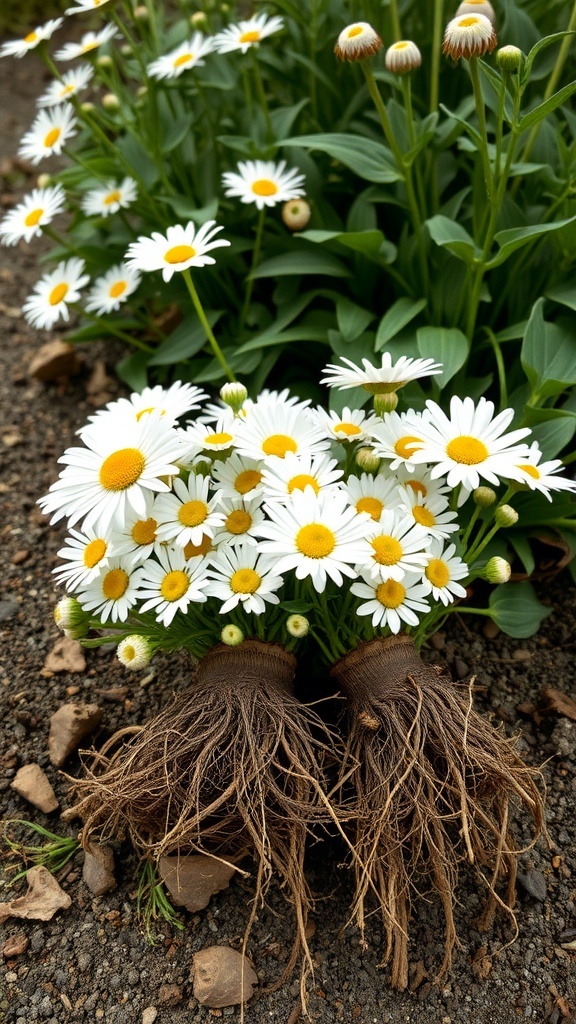
Shasta daisies are a cheerful addition to any garden, known for their bright white petals and sunny yellow centers. In the image, you can see a cluster of these lovely flowers, freshly divided and ready to thrive. This division helps prevent overcrowding, allowing each plant to flourish and produce more blooms.
Dividing Shasta daisies is a simple process. Start by carefully uprooting the clumps, ensuring you keep the roots intact. This method not only gives you new plants but also promotes healthier growth for the remaining ones. It’s a win-win!
Once divided, replant the sections in well-drained soil, giving them enough space to grow. This way, you’ll enjoy a vibrant display of flowers without the hassle of overcrowding. Plus, you can share the extra plants with friends or expand your own garden!
Rooting Basal Cuttings of Phlox Paniculata
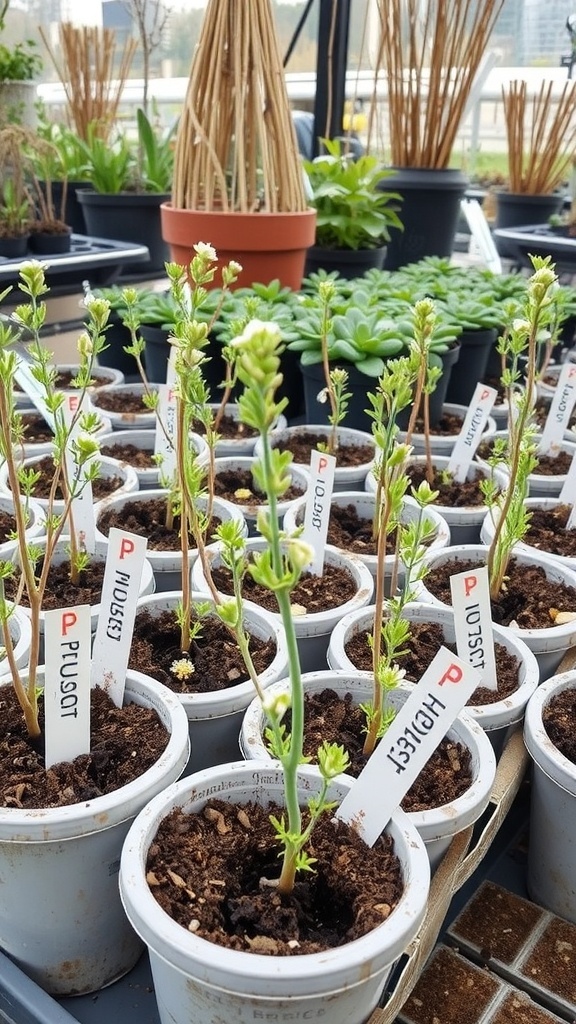
Rooting basal cuttings of Phlox paniculata is a simple way to expand your garden. These plants are known for their vibrant blooms and can add a splash of color to your spring borders.
The image shows young Phlox cuttings in small pots, each labeled for easy identification. This setup is perfect for keeping track of different varieties. The cuttings are healthy and ready to take root, which is a great sign for future growth.
To start, select healthy stems from the parent plant. Cut just below a node and remove any lower leaves. Place the cuttings in a well-draining potting mix, ensuring they are upright. Water them lightly and cover with a plastic bag or a clear dome to maintain humidity.
Keep the pots in a warm, bright spot but out of direct sunlight. Check regularly for moisture and remove any dead leaves. In a few weeks, you should see new growth, indicating that your cuttings have rooted successfully!
Propagating Wallflowers for Spring Color
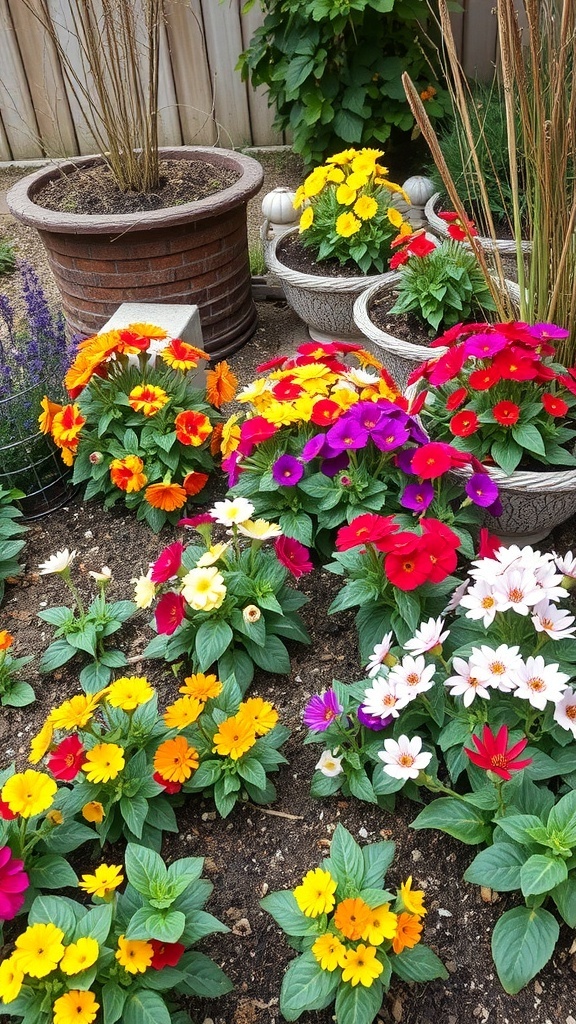
Wallflowers are a fantastic choice for adding vibrant color to your garden in spring. These cheerful blooms can brighten up any space with their rich hues and delightful fragrance. Propagating them in December gives you a head start on a stunning display when the weather warms up.
To propagate wallflowers, start by taking cuttings from healthy plants. Look for strong stems and snip them just below a leaf node. Place the cuttings in a pot filled with well-draining soil, and keep them in a cool, frost-free area. A sunny windowsill works well, too!
Water the cuttings sparingly, ensuring they don’t become waterlogged. Label your pots with the date and type of flower, so you can keep track of your progress. With a little patience, you’ll see roots forming in a few weeks, setting the stage for a colorful spring garden.
Add a Comment