
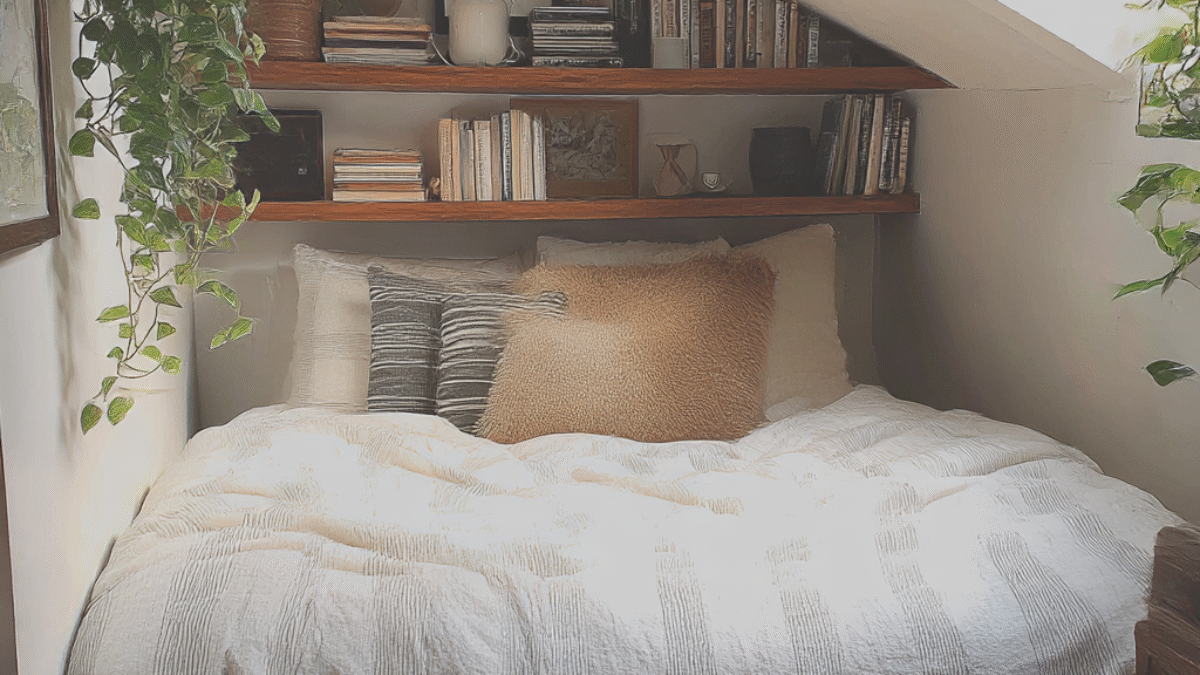
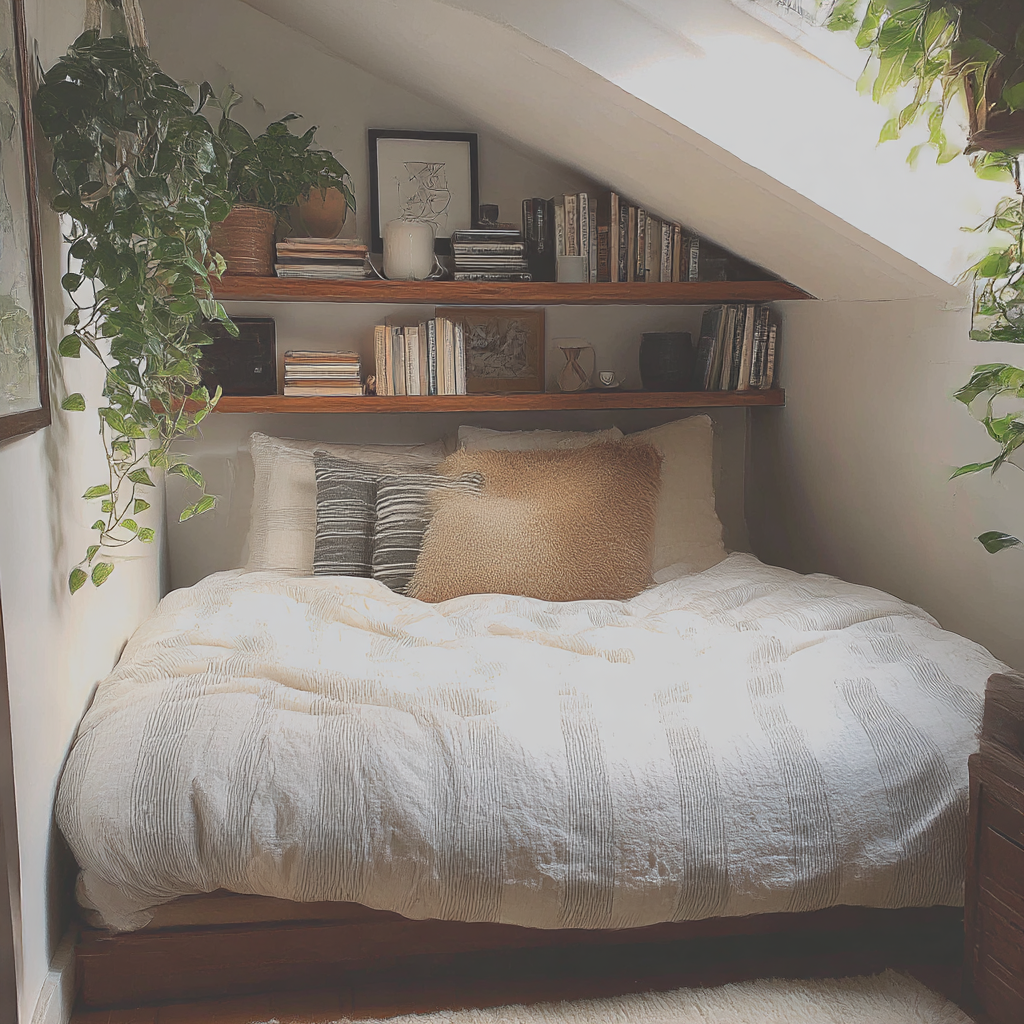
A very small bedroom can still feel like a peaceful retreat when it is styled with intention. Limited square footage does not mean limited comfort or style. In fact, small bedrooms often feel cozier, calmer, and more personal when designed thoughtfully. The key is to focus on softness, balance, and smart choices that support rest rather than overwhelm the space.
These small bedroom decor ideas are designed to help you create a warm, inviting retreat that feels comforting, functional, and beautifully lived in.
Start With a Calm, Light Foundation
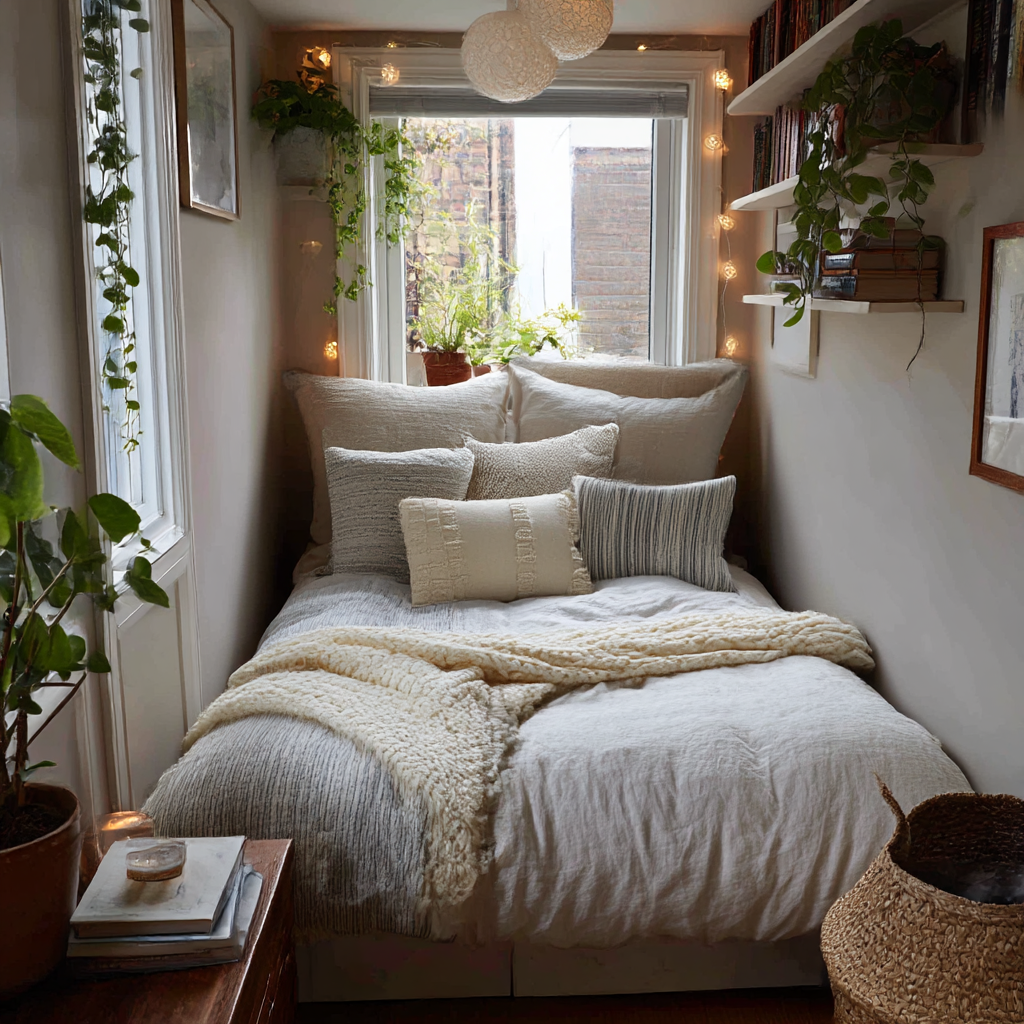
Light colors are one of the most effective tools in a very small bedroom. Soft whites, warm creams, pale neutrals, and gentle pastels reflect light and make the room feel more open.
A calm color foundation creates a sense of ease and allows the room to breathe. Even if you love darker tones, keeping walls and large surfaces light helps prevent the space from feeling closed in.
Choose Bedding That Feels Soft and Inviting
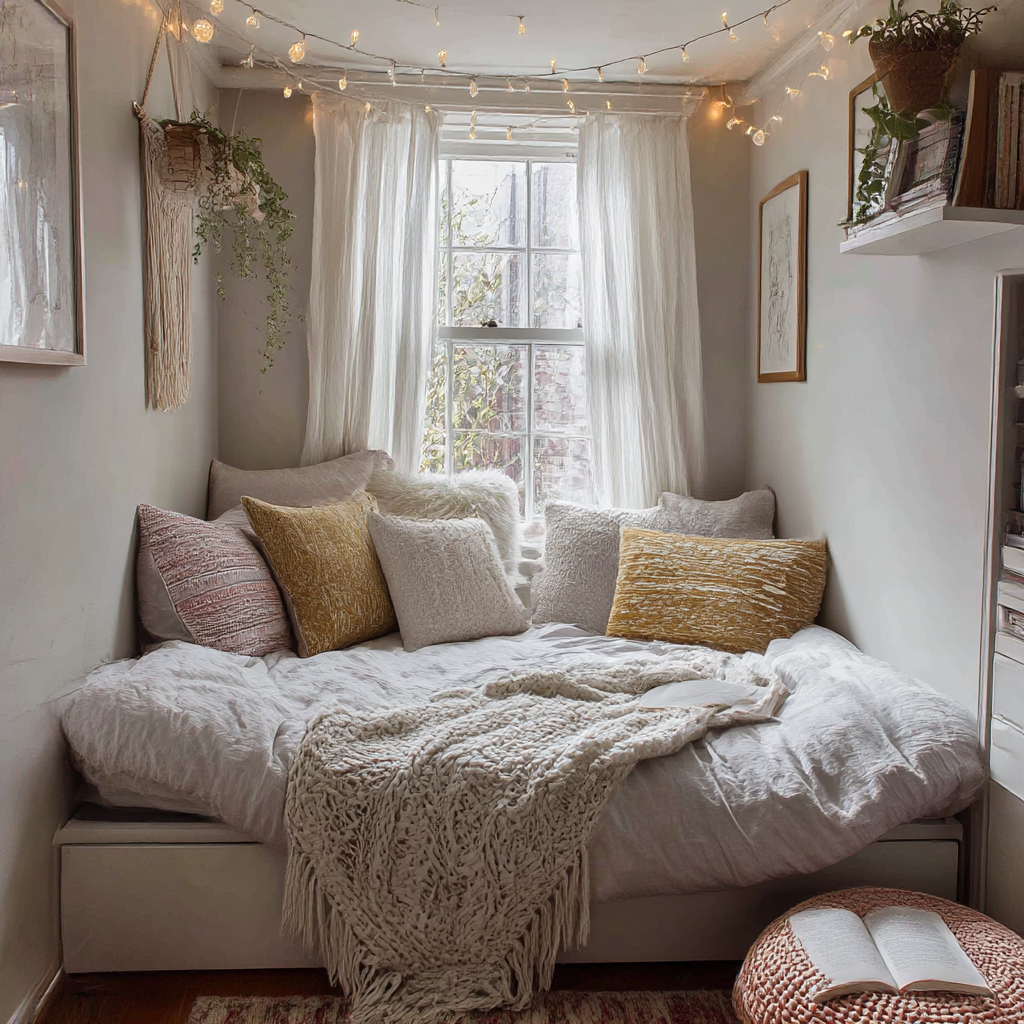
Bedding plays a major role in how cozy a small bedroom feels. Opt for fabrics that feel comforting and relaxed, such as cotton, linen, or soft blends.
Layering bedding with a simple duvet, a textured throw, and a few pillows adds depth without clutter. Keeping the palette soft and cohesive helps the bed feel like a calm focal point rather than a visual distraction.
Keep Furniture Proportional to the Room
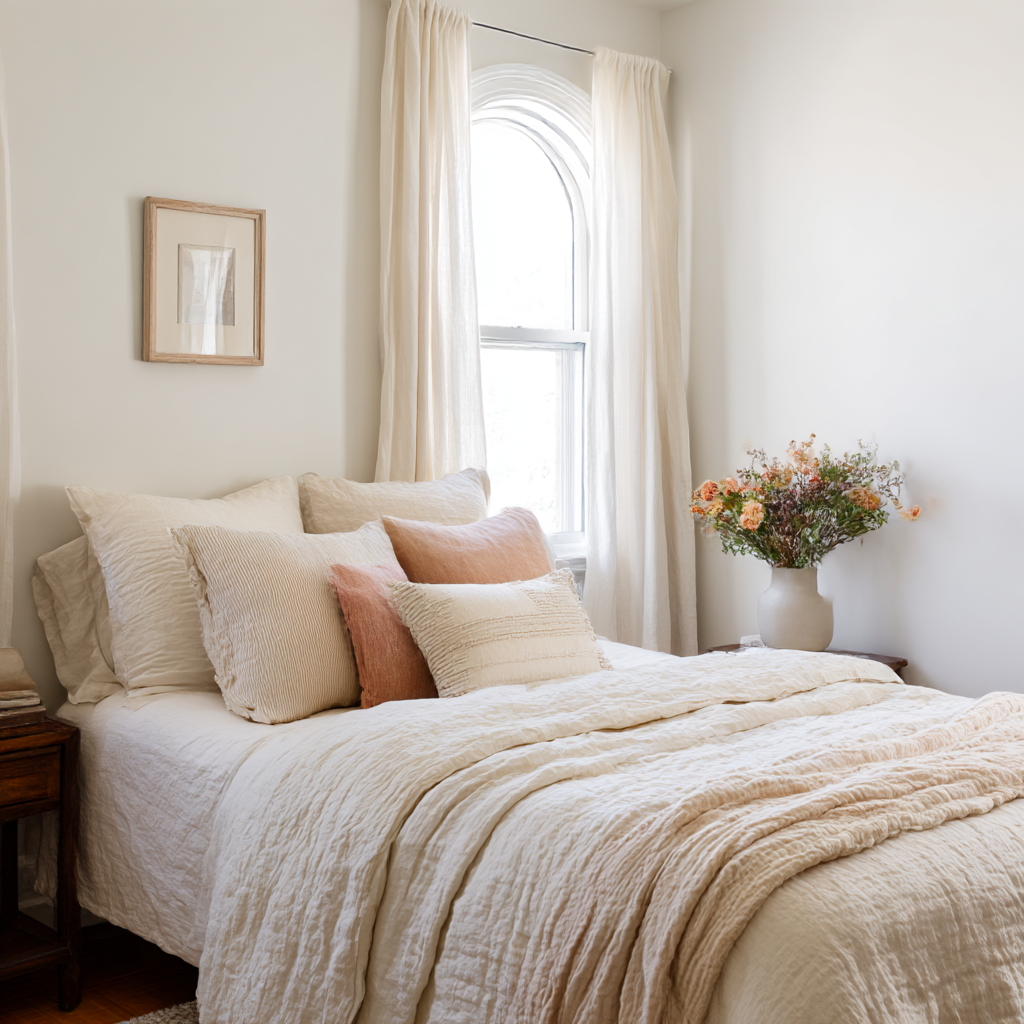
Oversized furniture can quickly overwhelm a small bedroom. Choosing pieces that fit the scale of the space helps maintain balance and flow.
A slim bed frame, compact nightstand, or wall-mounted shelf works better than bulky furniture. When furniture feels proportionate, the room feels more open and comfortable.
Use Vertical Space Thoughtfully
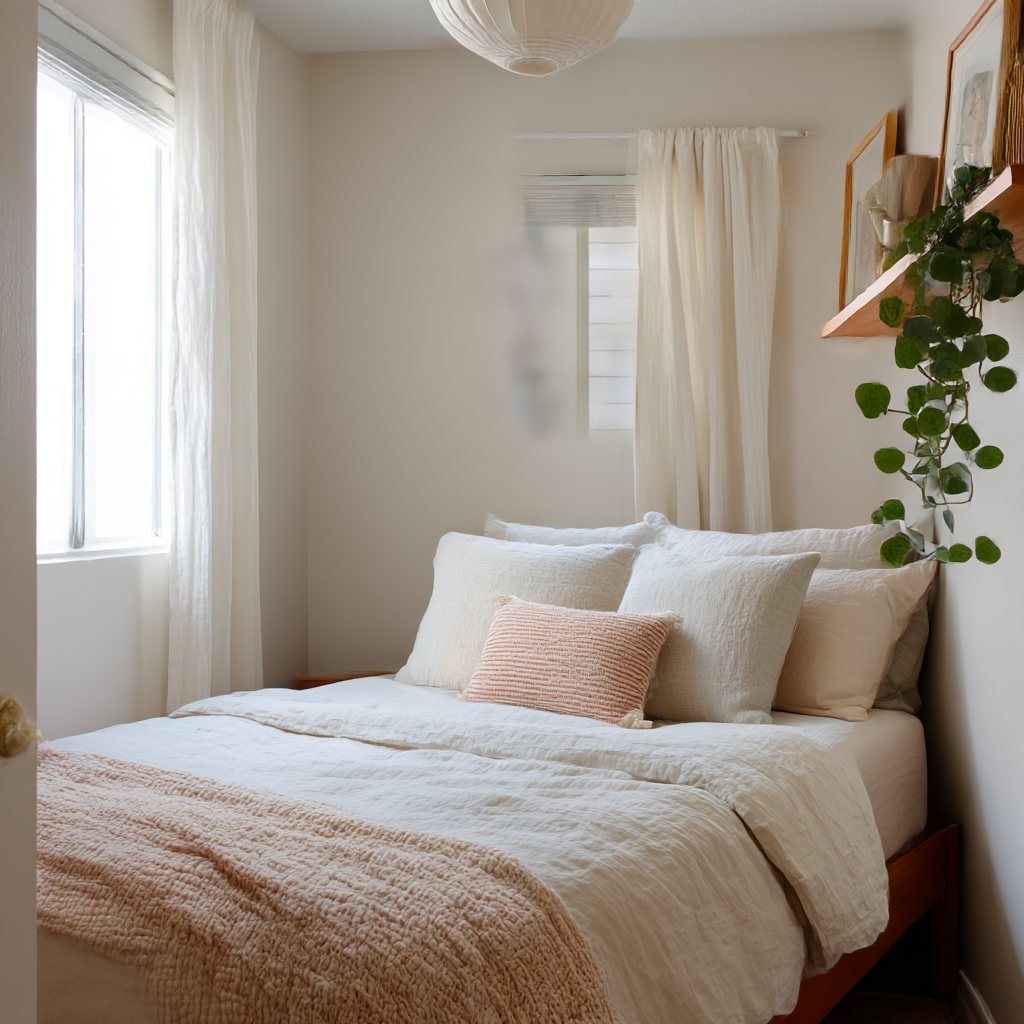
When floor space is limited, vertical space becomes incredibly valuable. Wall-mounted shelves, sconces, or hooks allow you to add function without crowding the room.
Vertical elements also draw the eye upward, helping the room feel taller and more spacious. Keeping these additions minimal ensures the room stays calm rather than busy.
Create Soft Lighting Layers
Lighting has a huge impact on the mood of a small bedroom. One overhead light often feels harsh and flat, especially in tight spaces.
Layered lighting creates warmth and depth. A bedside lamp, wall sconce, or soft string lights add gentle illumination that supports rest. Warm light tones help the room feel cozy and relaxing.
Limit Decor but Choose Meaningful Pieces
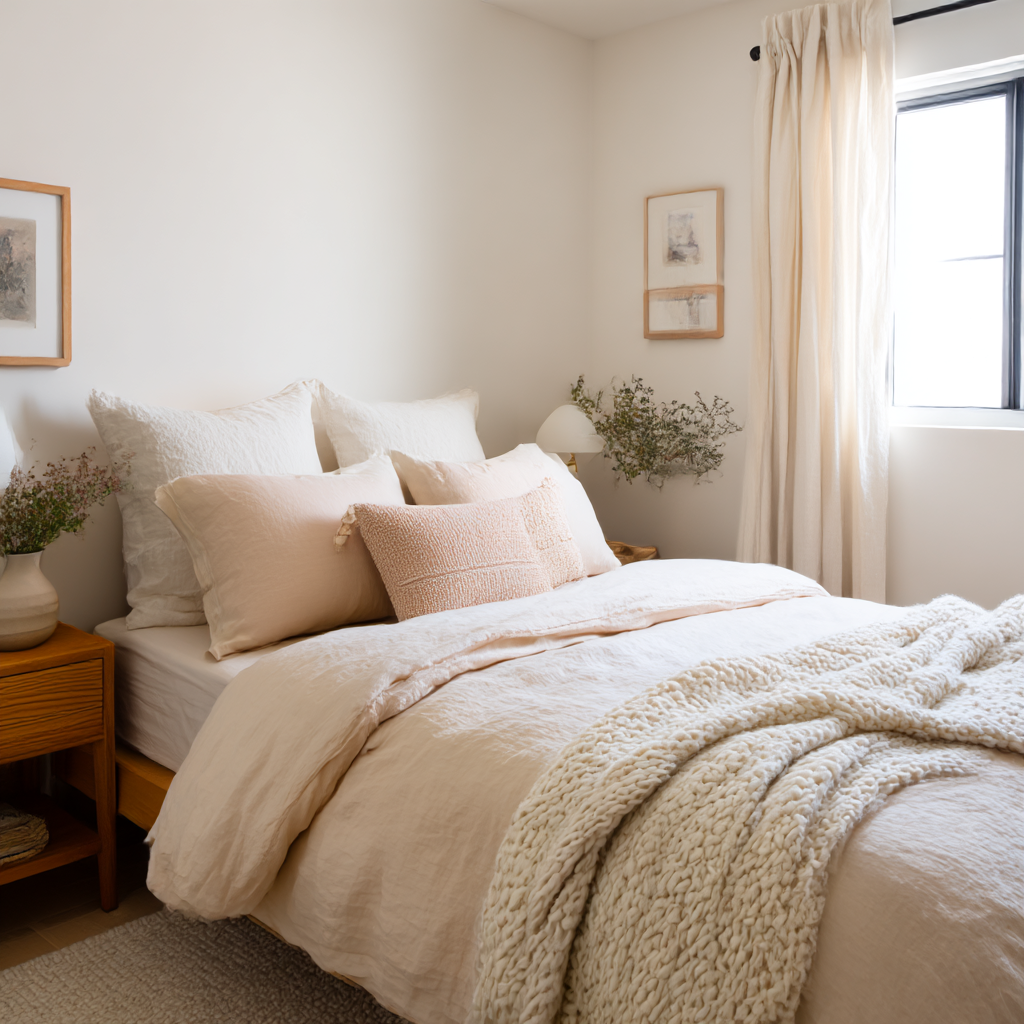
In a very small bedroom, every decor item should feel intentional. Rather than filling surfaces, choose a few pieces that add warmth or personal meaning.
A framed photo, a piece of artwork, or a ceramic object can add character without clutter. Leaving some empty space allows the room to feel restful and balanced.
Incorporate Texture for Comfort
Texture adds richness to a small bedroom without relying on color or pattern. Soft rugs, knitted throws, woven baskets, and linen fabrics all help create a cozy atmosphere.
Mixing textures keeps the space from feeling flat while still maintaining a calm, neutral look. Texture is especially important when working with a limited color palette.
Use Mirrors to Reflect Light
Mirrors are a classic solution for small spaces. In a bedroom, they help reflect light and visually expand the room.
A simple mirror placed across from a window or near a light source can make the space feel brighter and more open. Choosing a minimal frame keeps the look soft and uncluttered.
Opt for Built-In or Hidden Storage
Storage is essential in a small bedroom, but it should not dominate the space. Built-in storage, under-bed drawers, or furniture with hidden compartments help keep the room tidy.
When clutter is out of sight, the bedroom feels calmer and more inviting. A tidy space naturally supports rest and relaxation.
Keep the Floor as Open as Possible
Visible floor space makes a room feel larger. Avoid placing unnecessary items on the floor or blocking pathways.
Using wall-mounted lighting, floating shelves, or narrow furniture helps keep the floor open. Even a small amount of visible space can make a big difference in how the room feels.
Use Soft Window Treatments
Heavy curtains can overwhelm a small bedroom. Light, flowing fabrics allow natural light to enter while still providing privacy.
Sheer or linen curtains add softness without blocking light. Keeping window treatments simple helps the room feel airy and serene.
Choose a Simple, Cozy Rug
A rug adds warmth and comfort underfoot, especially in small bedrooms. Choose a rug that fits the space without overpowering it.
Soft textures and subtle patterns work best. A well-chosen rug anchors the room and enhances the cozy feel without adding visual weight.
Add a Touch of Nature
Natural elements bring calm and balance to a small bedroom. A small plant, dried stems, or natural wood accents help soften the space.
Greenery adds life without requiring much room. Even one natural element can make the bedroom feel more peaceful and grounded.
Keep the Color Palette Unified
A unified color palette helps a small bedroom feel cohesive and calm. Repeating similar tones across bedding, decor, and furniture creates visual flow.
Avoid introducing too many contrasting colors. Simplicity helps the room feel restful and thoughtfully designed.
Let the Room Feel Personal and Lived In
A cozy retreat should feel like it belongs to you. Personal touches make the space feel comforting rather than generic.
This might include a favorite book, a meaningful object, or artwork you love. Keeping personal items minimal but intentional helps the room feel warm and authentic.
Final Thoughts
A very small bedroom can become a cozy retreat when designed with care and intention. By focusing on light, texture, comfort, and thoughtful choices, you can create a space that feels calm, inviting, and perfectly suited for rest.
Small spaces do not need more decor. They need the right decor. When every element supports comfort and simplicity, even the smallest bedroom can feel like a peaceful escape at the end of the day.
Add a Comment