

Combining your living and dining areas is a fantastic way to create a welcoming, multifunctional space that feels larger and more connected. This guide presents 19 creative ideas to help you blend these two areas seamlessly, whether you prefer a cozy nook or a more expansive open layout.
Balance Bold Decor with Restraint

In a living-dining combo, balancing bold decor with restraint can create a harmonious space. The image showcases a vibrant setting with a striking red sofa and accent chairs that draw the eye. This use of color adds energy without overwhelming the room.
Notice how the decor is kept simple in the dining area. The white table and chairs provide a clean contrast to the bold colors in the living space. This mix allows each area to shine while maintaining a cohesive look.
Incorporating plants and artwork adds personality without cluttering the space. The artwork on the wall complements the colors in the furniture, tying everything together beautifully. This thoughtful approach ensures that the bold elements enhance rather than dominate the overall design.
Zone with Rugs

Using rugs is a smart way to define different areas in a living-dining combo. In the image, you can see how various rugs create distinct zones without walls. The soft textures and colors help separate the living space from the dining area, making each section feel intentional.
Rugs can add warmth and comfort to your space. The contrasting patterns in the rugs shown here not only define the areas but also bring visual interest. This layering technique can make your home feel more inviting and cozy.
When choosing rugs, consider the size and shape. A larger rug under the dining table can anchor that space, while smaller rugs in the living area can create a relaxed vibe. Mixing different styles can also add character, just like in the image where the rugs complement each other beautifully.
Install Pendant Lighting Over Dining

Pendant lighting can be a game changer in your living-dining combo. It not only adds style but also helps define the dining area. In the image, a beautiful pendant light hangs gracefully above a wooden dining table, creating a focal point that draws the eye.
The light’s design complements the modern aesthetic of the room while providing ample illumination for meals and gatherings. This setup encourages conversation and connection, making it perfect for family dinners or entertaining friends.
Choosing the right pendant can enhance your decor theme, whether you prefer a minimalist look or something more ornate. It’s all about finding a piece that resonates with your style while serving a practical purpose.
Define Corners Thoughtfully

Creating a cozy corner for your dining area can make a big difference in a living-dining combo. In the image, the dining table is positioned thoughtfully, surrounded by stylish chairs that invite conversation. Framing the area with artwork adds a personal touch, making it feel intentional and balanced.
Using artwork or decorative elements on the walls can help define the dining space. This not only enhances the visual appeal but also sets the mood for meals and gatherings. The combination of natural light and a well-placed plant adds warmth to the corner, making it a welcoming spot for family and friends.
Create Harmony with Matching Materials
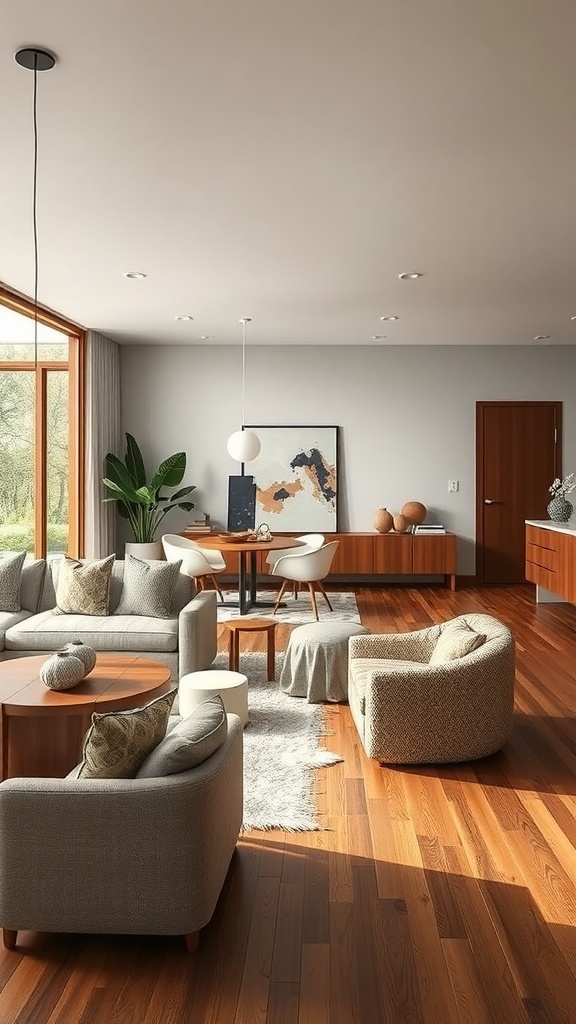
In a living-dining combo, using matching materials can tie the two areas together beautifully. The image showcases a warm and inviting space where the wood tones of the furniture create a seamless flow. The rich wooden floor complements the dining table and sideboard, enhancing the overall aesthetic.
Choosing similar fabrics for the seating and decorative elements can also help unify the look. In this setup, the soft textures of the chairs and cushions add comfort while maintaining a cohesive style. The neutral tones of the upholstery work well with the natural wood, creating a balanced environment.
When materials match, it not only looks pleasing but also feels intentional. This approach makes the space feel larger and more connected, inviting family and friends to enjoy both areas together. Whether you prefer a modern or traditional vibe, harmonizing materials can elevate your living-dining combo.
Use Sectional Sofas as Dividers
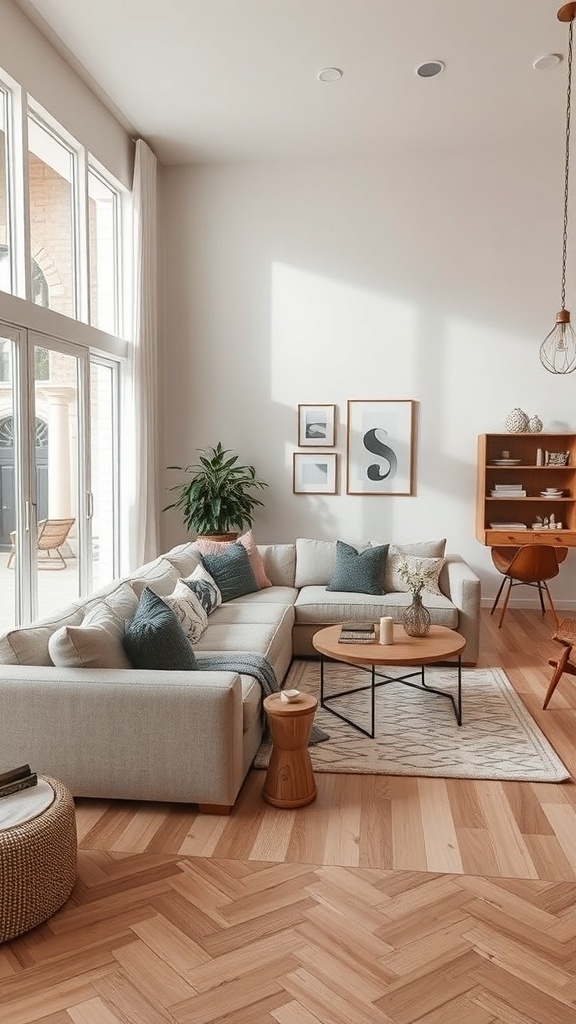
Sectional sofas are a smart choice for dividing living and dining spaces. They create a natural boundary without blocking light or sightlines. In the image, the light-colored sectional is positioned to separate the living area from the dining space, making it feel cozy yet open. This setup allows for easy conversation and movement between the two areas. Plus, the sectional adds comfort and style, enhancing the overall design of the room. It’s a practical solution for maximizing space while keeping the layout inviting and functional.
Frame with Built-ins

Built-in shelves can be a game changer in a living-dining combo. They offer both style and function, creating a seamless transition between spaces. In the image, you can see how the built-ins frame the dining area beautifully, adding character without overwhelming the room.
These shelves provide storage for books, decor, and personal items, keeping the space organized. The white cabinetry contrasts nicely with the warm wood flooring, enhancing the overall aesthetic. A few decorative pieces and plants add life, making the area feel inviting.
Using built-ins also allows you to define the dining zone without needing physical barriers. This keeps the flow open while still giving each area its own identity. It’s a clever way to maximize space and style in your home.
Accent Wall for Dining Zone
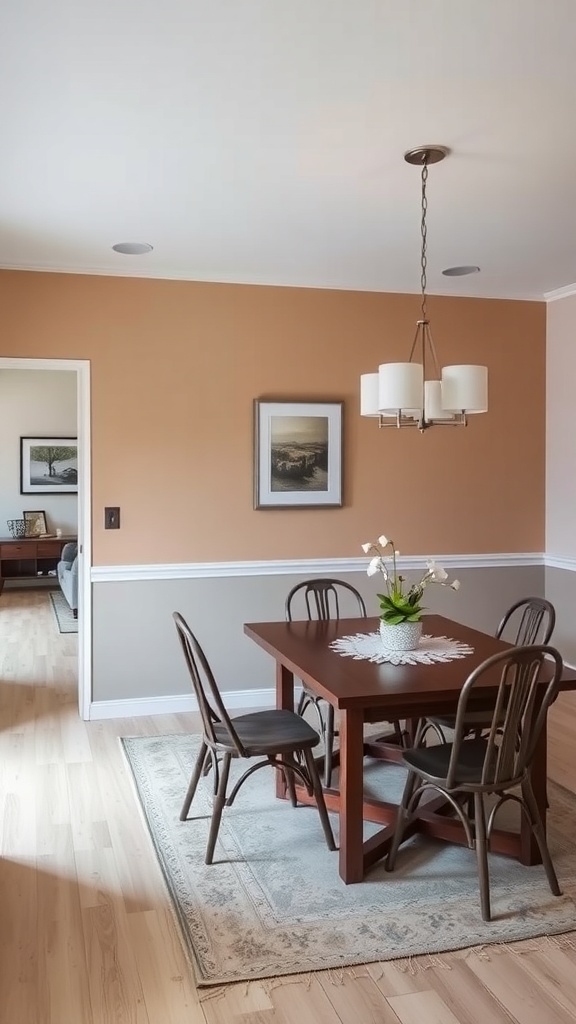
Creating an accent wall in your dining area can make a big difference in how the space feels. In the image, the warm, earthy tone of the wall adds a cozy vibe, making the dining zone feel inviting and distinct.
This approach helps to visually separate the dining area from the living space, enhancing the overall flow of the room. The framed artwork on the wall adds a personal touch, drawing the eye and creating a focal point.
Choosing a color that complements the rest of the room is key. In this case, the soft contrast with the lighter trim and flooring keeps the space feeling open and airy while still defining the dining area.
Overall, an accent wall is a simple yet effective way to elevate your living-dining combo, making it both stylish and functional.
Anchor Dining Zone with Large-scale Furniture

In a living-dining combo, large-scale furniture can really make a statement. A grand hutch or buffet, like the one shown in the image, serves as a focal point for the dining area. This piece not only adds visual weight but also provides essential storage for tableware and decor.
The rich wood tones of the hutch complement the dining table beautifully, creating a cohesive look. This harmony between furniture pieces enhances the overall design and makes the space feel more inviting.
Adding a large piece like this helps to define the dining zone, making it feel intentional and separate from the living area. It’s a simple yet effective way to create a balanced layout that encourages both functionality and style.
Divide Using a Console Table Behind the Sofa
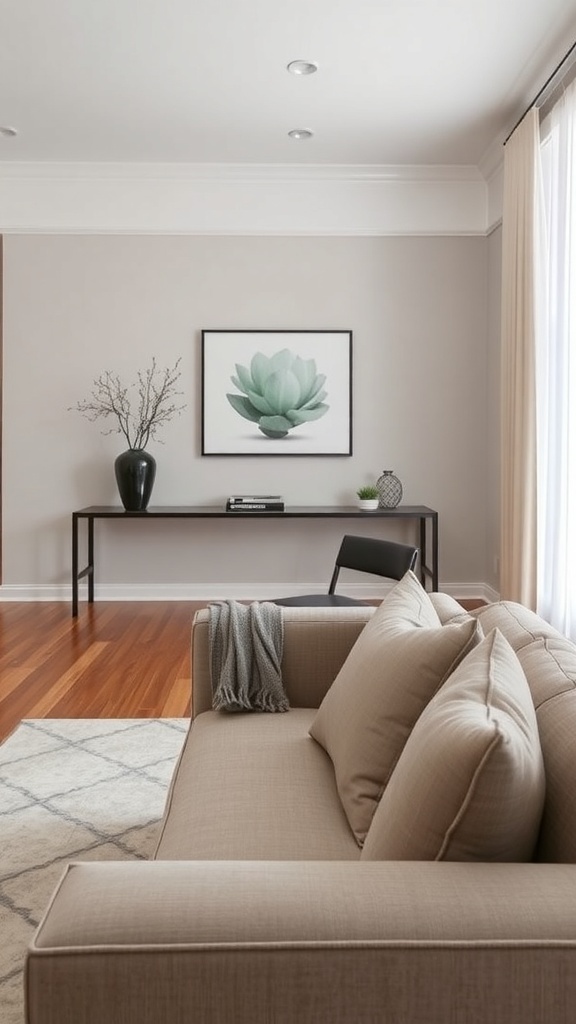
Using a console table behind the sofa is a smart way to create a visual divide between the living and dining areas. This setup not only adds functionality but also enhances the overall design of the space.
The image shows a sleek console table that complements the modern aesthetic of the room. It’s positioned perfectly behind a cozy sofa, providing a subtle boundary without blocking the view. This arrangement allows for easy movement between the two zones while maintaining an open feel.
Decorating the console table with a few stylish items, like a vase or a decorative bowl, can add personality. You can also use it to display books or small plants, making it both practical and attractive. This approach helps to define each area while keeping the design cohesive.
Use Different Lighting Schemes
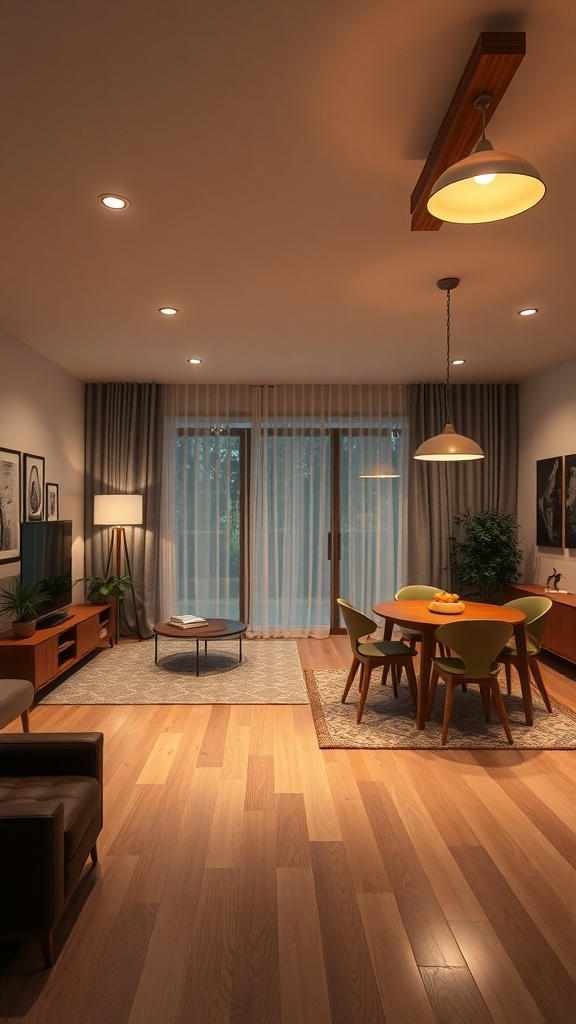
Lighting plays a key role in defining spaces, especially in a living-dining combo. In the image, you can see how different lighting fixtures create distinct zones. The pendant light over the dining table draws attention to that area, making it feel inviting for meals and gatherings.
In contrast, the recessed lights provide a softer glow in the living area, creating a cozy atmosphere for relaxation. This separation helps each space serve its purpose while still feeling connected. Using varied lighting not only enhances functionality but also adds visual interest to the overall design.
Match Seating Across Both Zones

Matching seating in your living and dining areas creates a seamless look that ties the space together. In the image, you can see how the chairs in both zones share a similar design and color palette. This consistency helps the areas feel connected, even if they serve different purposes.
Using similar chairs or materials can enhance the overall aesthetic. For example, the light fabric and wooden accents of the chairs in the living room complement the dining chairs beautifully. This not only looks great but also makes the transition between spaces feel natural.
When choosing seating, consider comfort and style. You want your guests to feel welcome in both areas. A cohesive look can make your home feel more inviting and organized, making it easier for everyone to enjoy their time together.
Unify with Subtle Decorative Echoes

In a living-dining combo, creating a sense of unity can be achieved through subtle decorative echoes. This means using similar colors, materials, or decor items in both areas to tie them together.
The image showcases a cozy space where the warm orange wall connects the living and dining areas. The color is echoed in the rug, creating a visual link that draws the eye across the room.
Notice how the furniture choices, like the gray sofa and the round dining table, complement each other. This harmony makes the space feel cohesive, even though it serves different functions.
Using similar decorative elements, such as the framed artwork and the stylish vase, adds character while reinforcing the connection between the two zones. This approach not only enhances the overall aesthetic but also makes the space feel more inviting and balanced.
Opt for Round Dining Tables

Round dining tables are a fantastic choice for living-dining combos. They create a warm and inviting atmosphere, perfect for gatherings and conversations. The circular shape encourages interaction, making it easy for everyone to engage with one another.
In the image, you can see a beautifully styled round table surrounded by modern chairs. The natural wood finish of the table adds a touch of warmth, while the light-colored chairs keep the look fresh and airy. The arrangement is complemented by a charming vase of flowers, bringing a pop of color to the space.
Round tables are especially great for smaller areas, as they save space and allow for better flow. They fit snugly in corners or can be placed in the center of the room, making them versatile for any layout. Plus, they eliminate sharp corners, which is a bonus for families with kids or pets.
Use Mismatched Rugs for Zoning

Mismatched rugs can be a fun and stylish way to define different areas in a living-dining combo. In the image, you can see a beautiful blend of rugs that create distinct zones without feeling chaotic.
The layered look adds texture and warmth, making the space feel inviting. The combination of colors and patterns allows each area to have its own personality while still feeling connected.
Using rugs of different sizes and styles helps to visually separate the living space from the dining area. This technique is especially useful in open layouts, where clear boundaries can enhance flow and functionality.
When choosing mismatched rugs, consider how they complement each other. Look for colors or patterns that echo throughout the room to maintain a sense of unity. This approach keeps the design cohesive while allowing for creativity.
Work with Architecture—Not Against It

When designing a living-dining combo, it’s smart to embrace the architectural features of your space. The image showcases a room with high ceilings and exposed beams, which add character and a sense of openness. Instead of trying to hide these elements, let them guide your layout.
For instance, placing furniture around structural features can create a natural flow. In the image, the seating area is arranged to highlight the ceiling’s height, making the space feel airy and inviting. This approach not only enhances the room’s aesthetic but also maximizes functionality.
Consider how the natural light pours in through the large windows. Positioning the dining table near this light source can make meals more enjoyable. Use the architecture to define spaces without needing bulky dividers. This keeps the area feeling connected and spacious.
Incorporating built-in shelves or cabinetry can also work well with the existing structure. These elements provide storage while complementing the room’s design. Overall, working with your space’s architecture can lead to a harmonious and stylish living-dining area.
Zone with Paint or Architectural Details

Using paint or architectural details is a smart way to define spaces in a living-dining combo. A subtle change in wall color can create a visual boundary without feeling harsh. For example, a soft hue in the dining area can set it apart while still blending with the living space.
In the image, the light gray walls provide a calm backdrop, making the dining area feel distinct yet connected. The elegant chandelier adds character and draws attention to the dining table, enhancing the zone’s identity.
Architectural details like molding or trim can also help separate areas. These elements add texture and interest, making the transition between spaces feel seamless. By incorporating these design strategies, you can create a cozy yet defined atmosphere in your home.
Use Neutral Bases with Layered Accents

Creating a living-dining combo with a neutral base sets a calm tone for the space. In the image, you can see how soft, muted colors dominate the room, making it feel inviting and spacious. This neutral backdrop allows for flexibility in styling.
Layering accents is where the fun begins. Bright cushions on the sofa and colorful dining chairs add personality without overwhelming the space. The mix of textures, like the woven rug and smooth table, creates visual interest while keeping the overall look cohesive.
Using plants as accents brings a touch of nature indoors, enhancing the relaxed vibe. They also serve as a subtle way to connect the living and dining areas, tying everything together beautifully.
Maximize Natural Light and Maintain Cohesion

In a living-dining combo, natural light plays a big role in creating a warm and inviting atmosphere. The image shows a bright dining area filled with sunlight, thanks to large windows that let the outdoors in. This openness not only enhances the space but also makes it feel larger and more connected to nature.
To keep the look cohesive, the use of similar materials and colors throughout the space is key. The light wood of the dining chairs and the warm tones of the sideboard complement the overall aesthetic. This unity helps the two areas blend seamlessly, making the entire room feel like one harmonious space.
Incorporating plants, as seen in the image, adds a touch of life and freshness. They also help to soften the lines of the furniture and create a more relaxed vibe. By maximizing natural light and maintaining a cohesive design, your living-dining area can become a stylish and functional space that everyone loves.
Add a Comment