
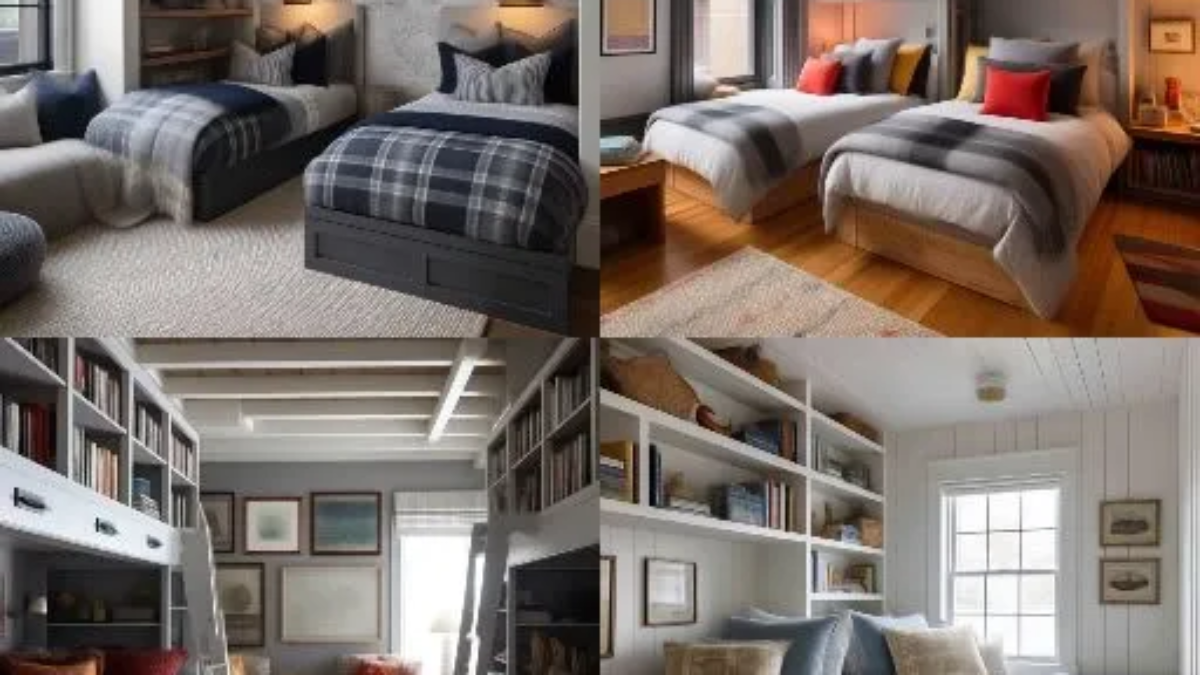
Sharing a bedroom can be both a challenge and an opportunity for creativity. With the right design strategies, you can create a space that maximizes functionality while preserving personal style and privacy. From clever furniture choices to layout tips, these 20 shared bedroom ideas will inspire you to craft a cozy oasis that works for everyone involved.
Corner Bed Placement
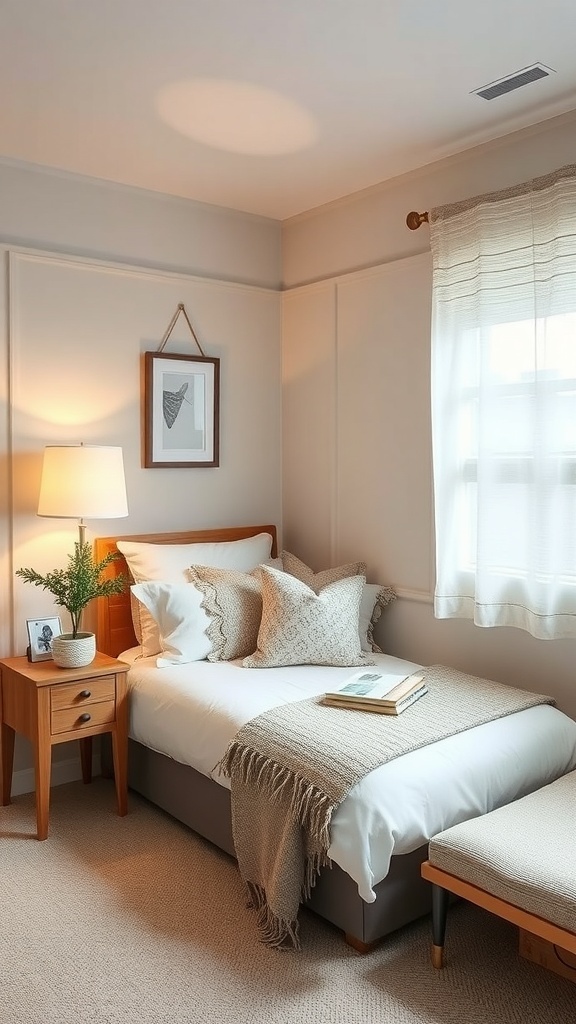
Corner bed placement is a smart way to maximize space in a shared bedroom. By positioning a bed in the corner, you free up valuable floor area for other furniture and activities. This layout creates a cozy nook that feels inviting and personal.
In the image, you can see a beautifully arranged corner bed. The soft colors and warm textures make the space feel comfortable and stylish. The use of a bedside table adds functionality without crowding the room. This setup allows for easy access to the bed while maintaining a sense of openness.
Another benefit of corner bed placement is that it can help define personal zones. Each occupant can have their own side, making it easier to establish boundaries. This is especially useful in shared spaces where privacy is essential.
Bunk Beds with Built-In Storage
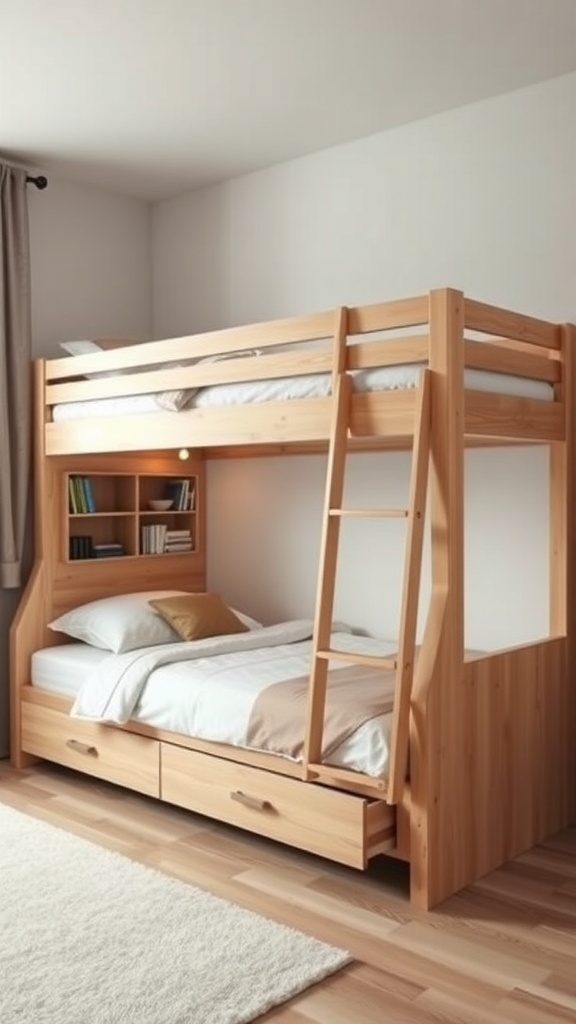
Bunk beds are a fantastic solution for shared bedrooms, especially when space is tight. They not only save floor space but also offer a cozy sleeping arrangement. The image showcases a stylish wooden bunk bed that features a lower bed and built-in storage. This design is perfect for siblings or friends sharing a room.
The upper bunk is easily accessible with a sturdy ladder, while the lower area can be utilized for storage. The drawers beneath the lower bed provide ample space for clothes, toys, or books, keeping the room tidy and organized. This clever use of space helps maintain a clean environment, which is essential in a shared bedroom.
Incorporating a bunk bed with built-in storage can also encourage kids to keep their belongings in order. With everything in its place, the room feels more spacious and inviting. Plus, the natural wood finish adds warmth and charm, making it a stylish addition to any bedroom.
Twin Beds with a Shared Nightstand
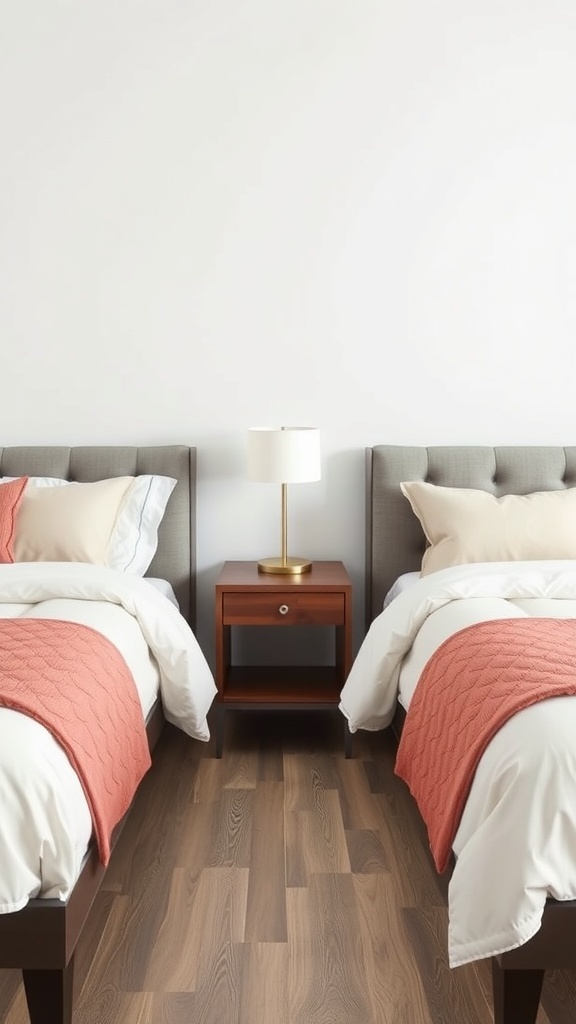
Having twin beds in a shared bedroom is a smart choice for maximizing space while keeping things cozy. This layout allows each person to have their own sleeping area without feeling cramped. The beds are neatly positioned on either side of a shared nightstand, creating a balanced look.
The nightstand serves as a central point for both occupants, providing easy access to essentials like lamps, books, or a glass of water. This setup encourages a sense of harmony in the room, as both sides can be styled similarly or personalized with unique decor.
Using matching bedding can enhance the overall aesthetic, making the room feel cohesive. Soft textures and warm colors, like the coral throws shown in the image, add a welcoming touch. This design not only looks great but also promotes a comfortable atmosphere for both individuals.
Back-to-Back Bed Layout
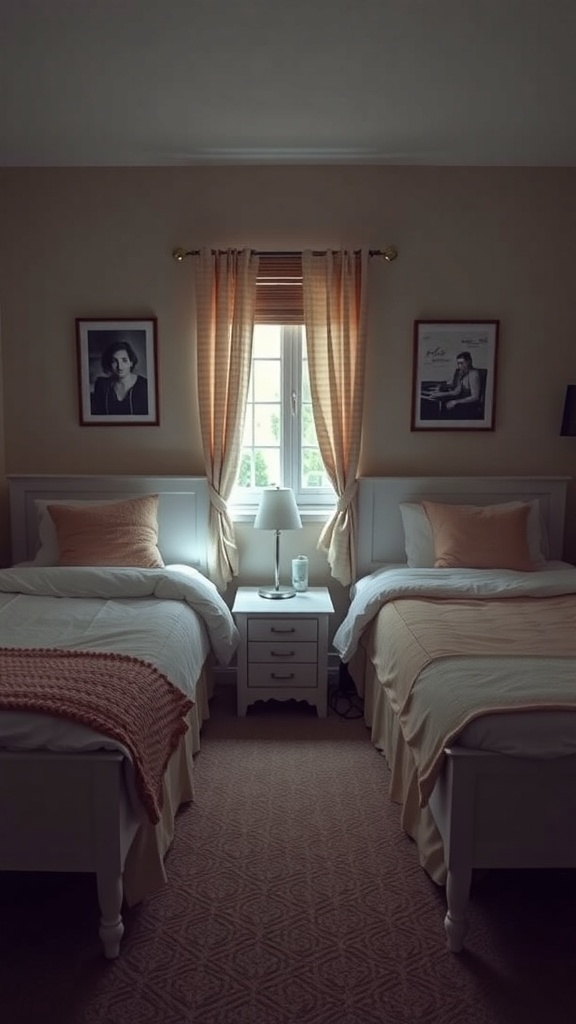
The back-to-back bed layout is a smart way to create personal zones in a shared bedroom. This setup allows each person to have their own defined space while maintaining a cohesive look. It’s perfect for siblings or roommates who want to feel a sense of privacy without building walls.
In the image, you can see two twin beds positioned back-to-back, separated by a shared nightstand. This arrangement not only maximizes floor space but also provides easy access to essentials like lamps and books. The soft color palette and warm textiles add a cozy touch, making the room feel inviting.
Using this layout, you can encourage individual expression. Each occupant can personalize their side with different bedding or decor while keeping the overall design harmonious. It’s a practical solution that balances style and functionality, making shared living comfortable for everyone.
Sliding Curtains or Panels for Privacy
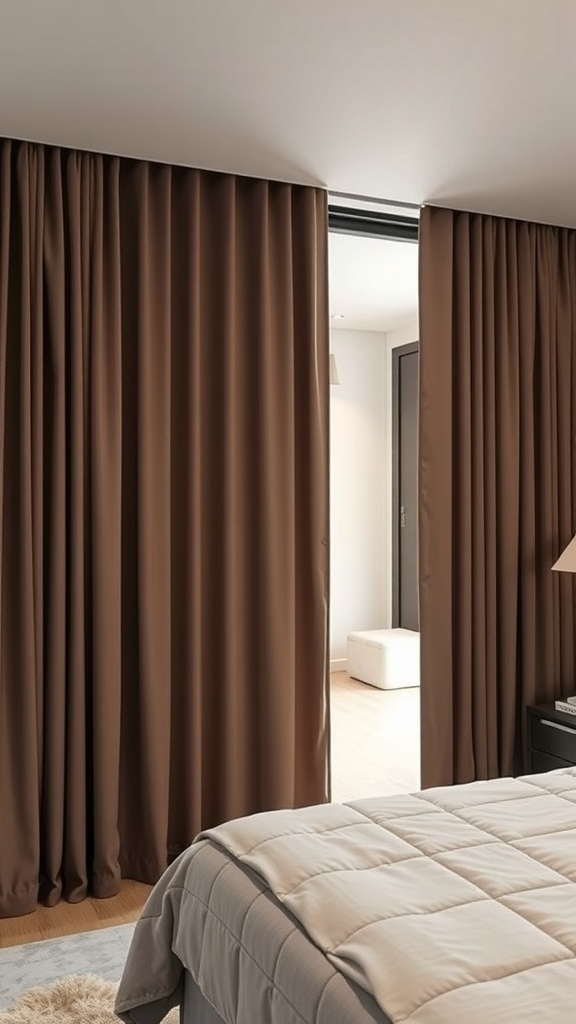
Sliding curtains or panels are a fantastic way to create privacy in a shared bedroom. They offer a flexible solution that can be adjusted based on your needs. When you want to separate spaces, just slide them closed. When you need an open feel, simply pull them back.
The image shows a cozy setup where rich brown curtains elegantly frame a doorway. This design not only adds warmth but also allows for easy transitions between shared and private areas. The curtains blend seamlessly with the room’s decor, making them both functional and stylish.
Using curtains instead of solid walls can make a room feel larger and more inviting. They can be chosen in various colors and fabrics to match personal styles, giving each person a chance to express themselves without overwhelming the space.
For those looking to enhance their shared bedroom, sliding curtains are a smart choice. They provide the necessary privacy while maintaining an open and airy atmosphere.
Room Divider Screens or Bookcases
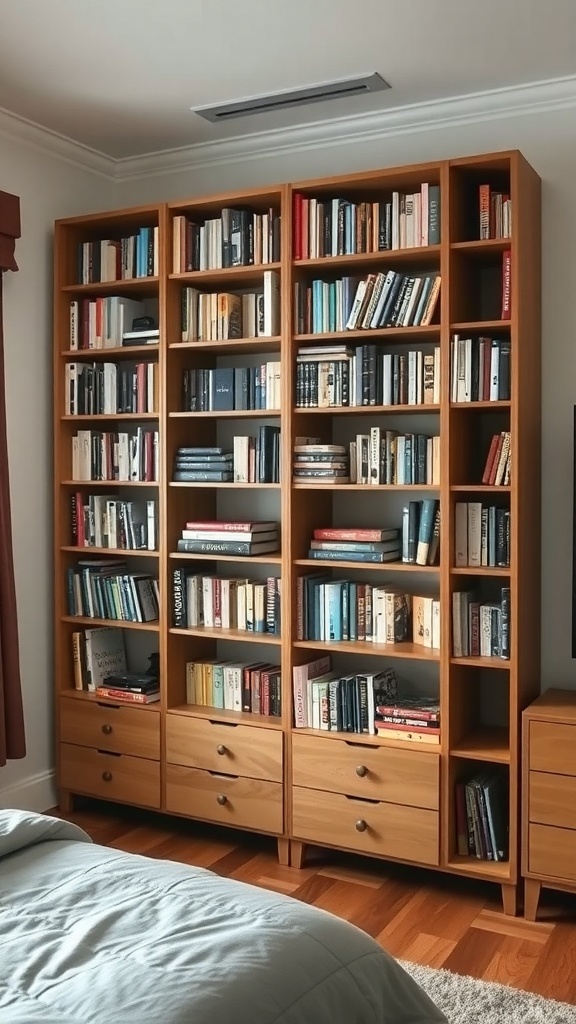
Room divider screens and bookcases are clever solutions for shared bedrooms. They help create personal spaces while adding style and functionality. A well-placed bookcase can act as a barrier, giving each person their own area without the need for permanent walls.
In the image, a tall, wooden bookcase stands proudly, filled with a variety of books. This not only provides storage but also serves as a visual divider. The shelves are organized, showcasing both books and decorative items, making it a focal point in the room.
Using a bookcase as a divider can also encourage organization. Each occupant can have their own section for books, personal items, or even plants, making the space feel more personalized. Plus, it keeps the room looking tidy.
For a softer look, consider using fabric room dividers. These can add warmth and texture, making the space feel cozy. Whether you choose a bookcase or a screen, both options enhance privacy while maintaining an open feel.
Color-Zoned Spaces
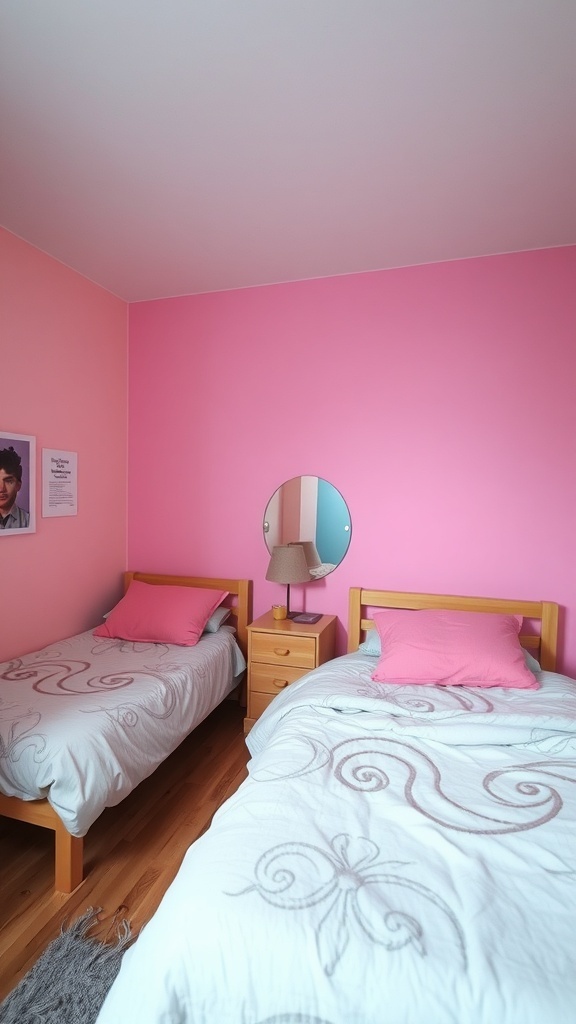
Color zoning is a fun and effective way to create personal spaces in a shared bedroom. By using different paint colors or wallpaper patterns, you can visually separate areas for each person. This method not only adds personality but also helps in defining boundaries.
In the image, we see a room with two beds, each adorned with matching bedding. The walls are painted in a soft pink hue, which creates a warm and inviting atmosphere. This color choice is cheerful and can make the space feel larger and more open.
Using color to zone spaces allows each occupant to feel a sense of ownership. For instance, one side can be painted a lighter shade, while the other can have a bolder color. This way, each person can express their style while maintaining harmony in the overall design.
Incorporating elements like artwork or decorative items that match the color zones can further enhance this effect. It’s a simple yet effective way to make a shared bedroom feel more personal and comfortable.
Loft Beds for Extra Floor Space
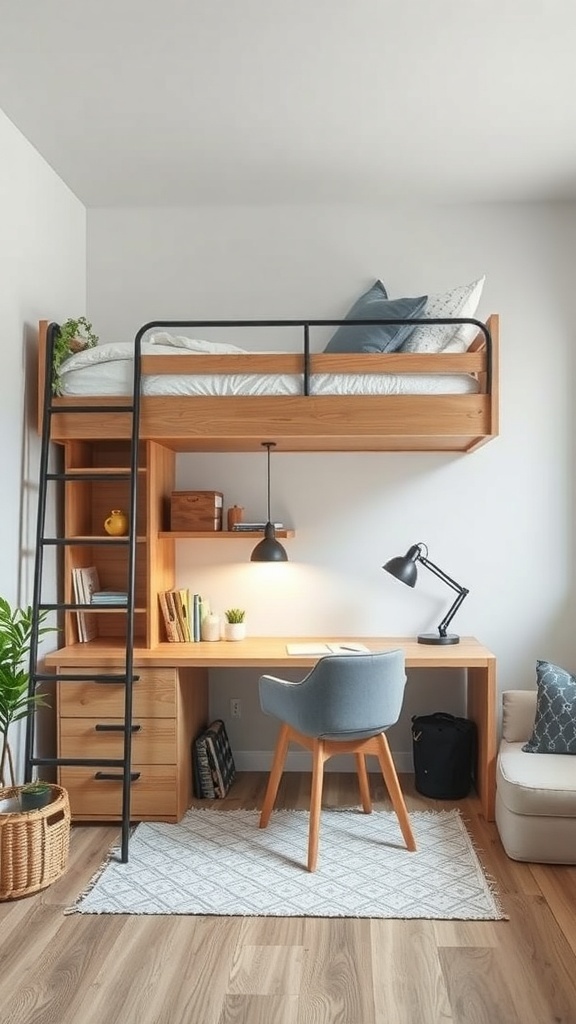
Loft beds are a fantastic solution for maximizing floor space in shared bedrooms. By elevating the bed, you free up valuable square footage below for other uses. This clever design allows for a desk, a cozy reading nook, or even extra storage.
The image showcases a stylish loft bed made of warm wood, paired with a sleek black ladder. Underneath, a well-organized workspace features a desk and chair, perfect for studying or working. This setup not only looks great but also keeps the room feeling open and airy.
Using a loft bed can transform a cramped area into a functional living space. It’s an ideal choice for kids, teens, or even adults who want to make the most of their shared room. Plus, the elevated design adds a fun element to the room, making it feel more like a personal retreat.
Floating Shelves Instead of Dressers
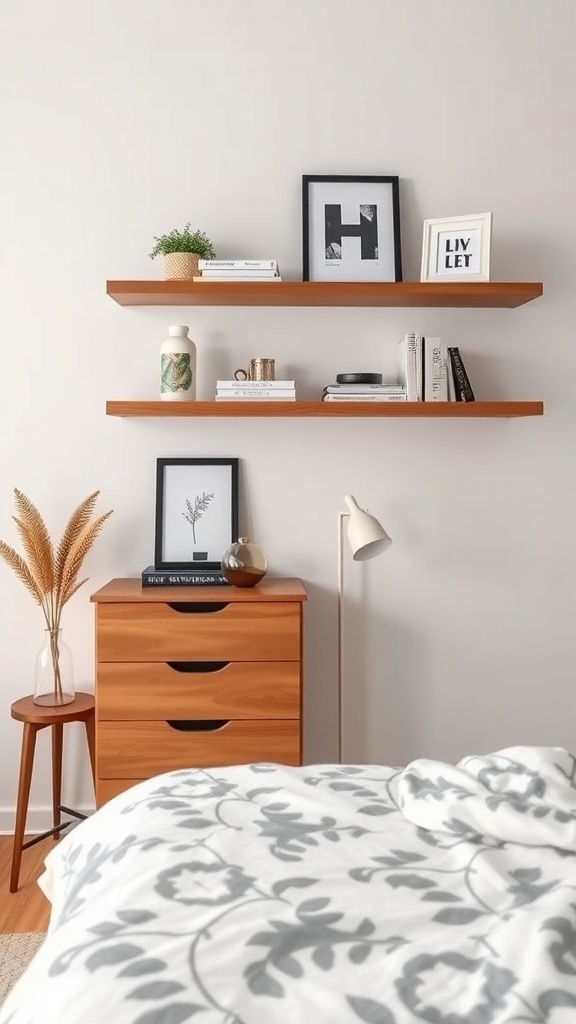
Floating shelves are a smart choice for shared bedrooms, offering both style and functionality. They free up floor space while providing a place to display personal items and essentials. In the image, you can see how the shelves are neatly arranged above a dresser, creating a visually appealing setup.
These shelves can hold books, plants, and decorative pieces, allowing each person to express their personality. The clean lines and minimal design keep the room feeling open and airy. Plus, they are easy to install and can be adjusted as needs change.
Using floating shelves instead of traditional dressers also encourages organization. Each person can have their own designated space for their belongings, which helps maintain harmony in a shared room. This setup not only looks great but also maximizes storage without taking up too much space.
Shared Desk or Vanity Area

A shared desk or vanity area can be a game changer in a shared bedroom. This setup not only maximizes space but also encourages collaboration and productivity. Imagine two people working side by side, each with their own designated space but still connected.
The image shows a stylish, modern desk with two comfortable chairs. It features ample storage above, perfect for keeping essentials organized. The light wood finish adds warmth, making the area inviting. Plants and personal touches like framed photos bring a sense of personality to the workspace.
Having a shared desk allows for flexibility. Whether it’s for studying, working from home, or getting ready in the morning, this area can serve multiple purposes. It’s a practical solution that keeps the room functional while maintaining a stylish look.
Statement Rugs to Define Zones
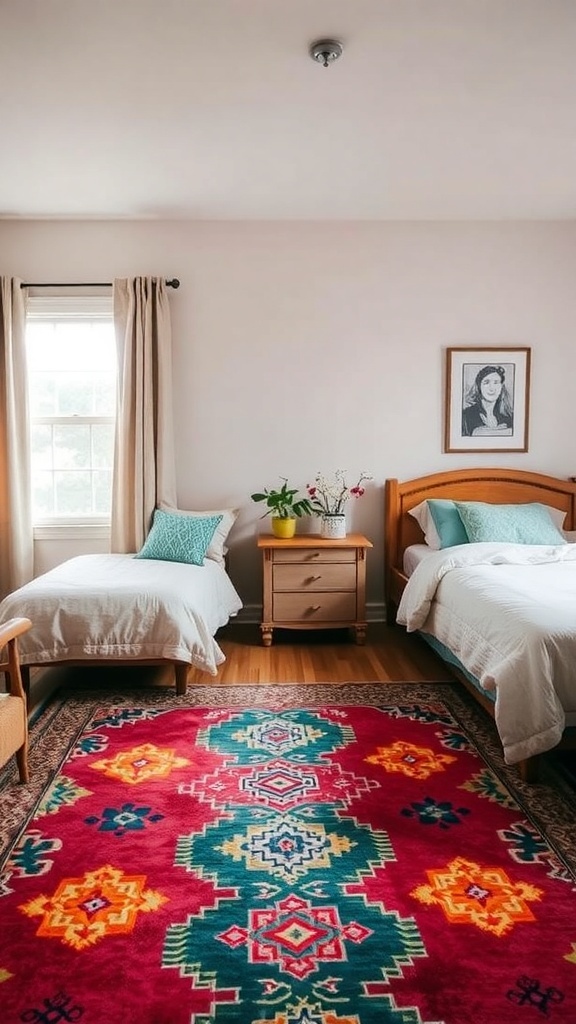
Rugs can do wonders in a shared bedroom, especially when it comes to defining personal spaces. A vibrant statement rug, like the one shown in the image, adds character and warmth while visually separating areas for each person.
The bold colors and intricate patterns create a focal point that draws the eye, making the room feel more inviting. This particular rug not only enhances the overall aesthetic but also serves a practical purpose by marking boundaries between beds.
Using rugs to define zones helps each occupant feel a sense of ownership in the shared space. It’s a simple yet effective way to balance style and functionality, allowing for personal expression without overwhelming the room.
Privacy Curtains Around Bunks
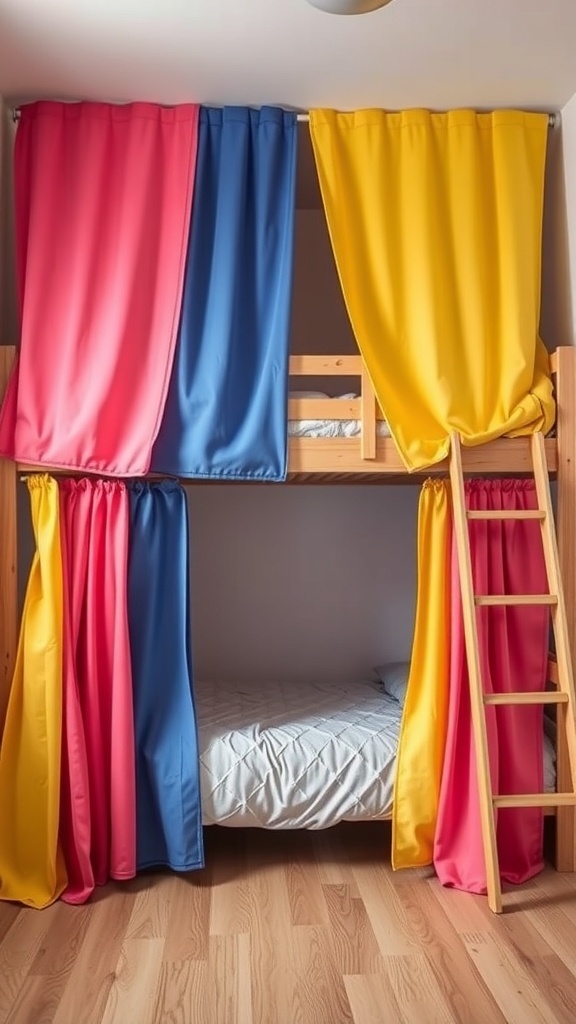
Privacy curtains around bunk beds are a fun and practical way to create personal spaces in a shared bedroom. The image shows a vibrant setup with colorful curtains in pink, blue, and yellow, adding a playful touch to the room.
These curtains not only provide privacy but also allow each person to express their style. They can easily be drawn open or closed, giving flexibility based on the mood or need for solitude. This setup is especially great for kids or teens who value their personal space.
Using curtains instead of solid walls keeps the room feeling open while still offering a sense of separation. Plus, the bright colors can make the space feel more inviting and cheerful. It’s a simple solution that can transform a shared room into a cozy retreat for everyone.
Murphy Beds or Pull-Out Sleepers

Murphy beds and pull-out sleepers are fantastic solutions for shared bedrooms, especially when space is tight. This image showcases a sleek Murphy bed that folds up into a stylish cabinet, keeping the room open and airy during the day.
The design features a rich wood finish that adds warmth, while the clean lines of the cabinetry maintain a modern look. The bed itself is neatly tucked away, allowing for more floor space, which is essential in a shared room.
With a cozy blanket draped over the bed, it invites comfort while still being practical. This setup is perfect for maximizing functionality without sacrificing style. It’s an ideal choice for anyone looking to create a multi-use space that feels personal and inviting.
Double-Duty Furniture
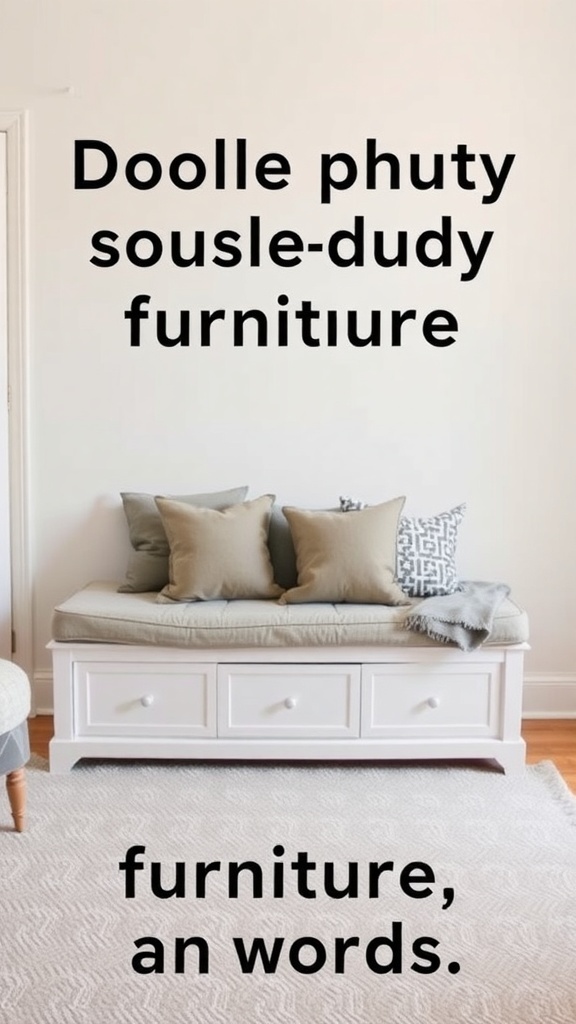
Double-duty furniture is a game-changer in shared bedrooms. It helps maximize space while keeping the room stylish and functional. Think of pieces that serve more than one purpose, like a bench that offers seating and storage.
For example, a storage bench at the foot of the bed can hold extra blankets and pillows, while also providing a cozy spot to sit. This not only keeps the room tidy but also adds a welcoming touch.
Another great option is a coffee table that doubles as a desk. When you need to study or work, simply clear off the top and get to it. This versatility is key in small spaces where every inch counts.
Look for ottomans with hidden compartments or beds with built-in drawers. These clever designs help keep clutter at bay and make the most of your shared space.
Matching But Personalized Bedding
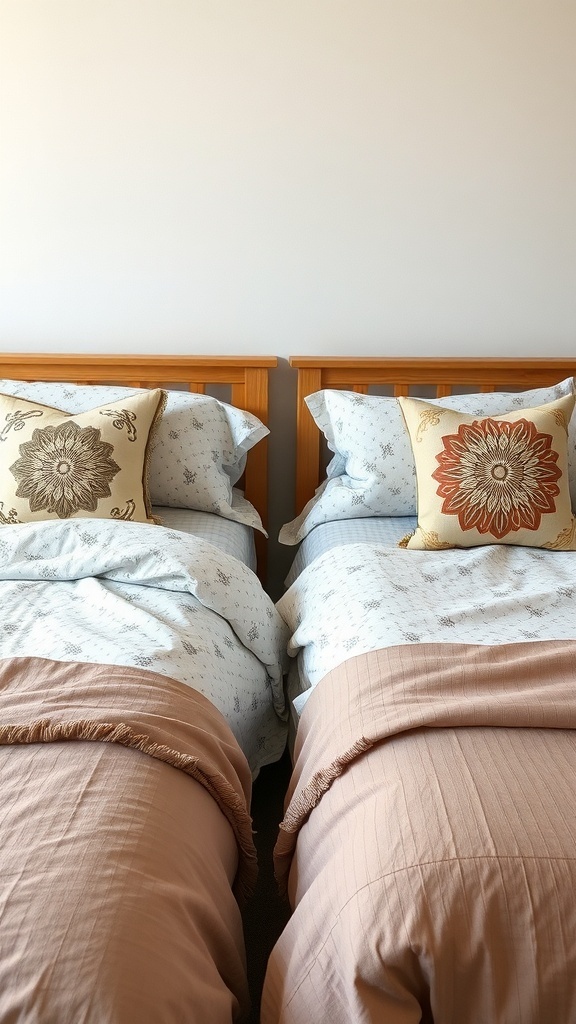
Choosing bedding for a shared bedroom can be a fun way to express individual styles while maintaining a cohesive look. The image shows two beds dressed in complementary colors and patterns, creating a balanced yet personalized vibe.
Each bed features unique decorative pillows, adding a personal touch without overwhelming the space. The soft hues of the bedding harmonize, making the room feel inviting and stylish.
When selecting bedding, think about colors and patterns that resonate with each person’s taste. This approach allows for individuality while ensuring the room feels unified. Consider using similar fabric types or color palettes to tie everything together.
Matching but personalized bedding can also help define each person’s space. By choosing different accent pillows or throws, each occupant can add their flair, making the room feel like home for everyone.
Built-In Closet Systems
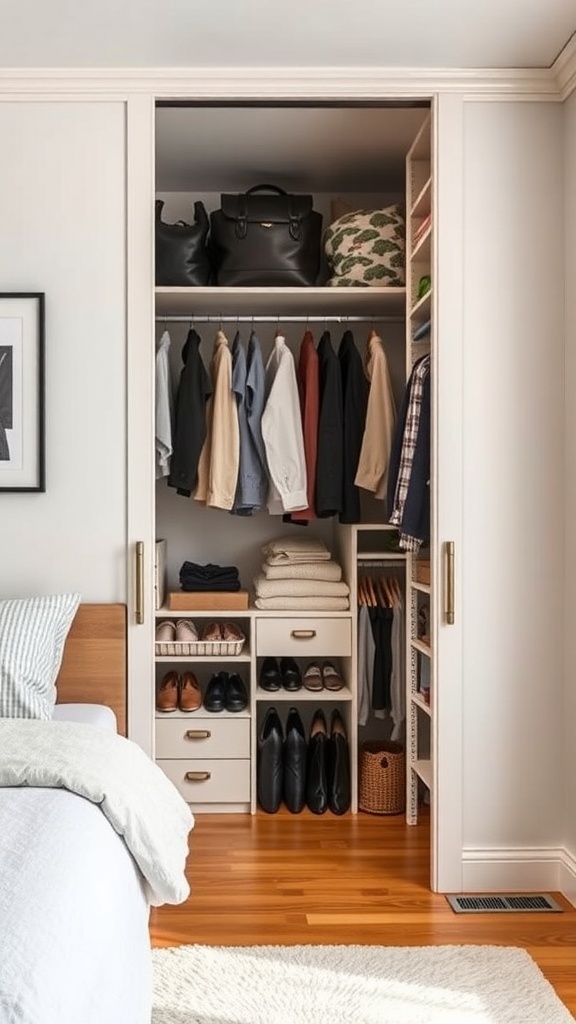
Built-in closet systems are a fantastic way to maximize storage in a shared bedroom. They offer a streamlined look while providing ample space for both occupants’ belongings. In the image, you can see a well-organized closet that neatly displays clothing, shoes, and accessories. This kind of setup helps keep the room tidy and makes it easy to find what you need.
With shelves, drawers, and hanging space, built-in closets can be customized to fit the needs of each person sharing the room. For example, one side can be dedicated to casual wear, while the other can hold formal attire. This separation helps maintain personal space and organization.
Using a built-in closet system also frees up floor space, which is crucial in smaller rooms. Instead of bulky dressers taking up valuable real estate, everything can be neatly tucked away behind closed doors. This creates a more open and inviting atmosphere, making the room feel larger and more comfortable.
Incorporating a built-in closet system can also add a touch of elegance to the room. The clean lines and modern design can enhance the overall aesthetic, making the shared space feel more cohesive and stylish.
Creative Lighting Layers

Lighting can truly transform a shared bedroom. The right mix of light sources adds warmth and character to the space. In the image, we see a cozy setup with soft, inviting lights that create a welcoming atmosphere.
Table lamps on each nightstand provide focused light for reading or late-night chats. The wall sconces add a touch of elegance while freeing up space on the bedside tables. This layered approach ensures that each person can adjust their lighting to suit their needs.
Consider using dimmable lights to create different moods throughout the day. Bright lights are great for studying or getting ready, while softer lighting is perfect for winding down. A well-lit room feels more spacious and inviting, making it easier for roommates to coexist comfortably.
Add Greenery & Textures

Incorporating plants into a shared bedroom can truly transform the space. The image shows two beds flanked by vibrant greenery, creating a warm and inviting atmosphere. Plants not only add color but also improve air quality, making the room feel fresher.
Hanging planters above the beds draw the eye upward, giving the illusion of higher ceilings. This is especially useful in smaller rooms where every inch counts. The soft textures of the bedding complement the natural elements, creating a cozy vibe.
Consider using a mix of plants, like trailing vines and sturdy succulents, to add variety. This can help each person in the room express their style while keeping the space cohesive. Textured throws and pillows can also enhance comfort, making the room feel more personalized.
Minimalist Decor to Reduce Clutter
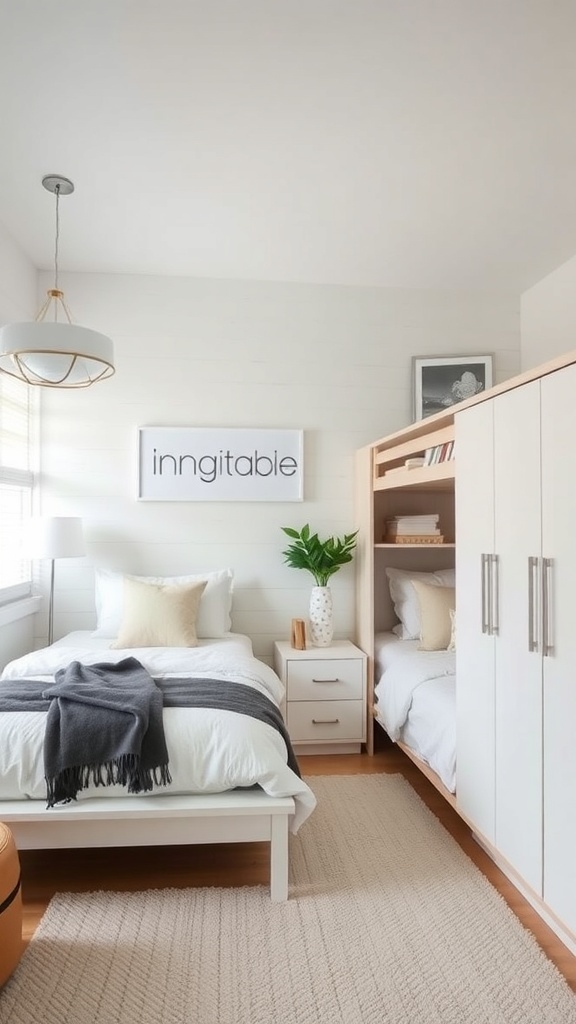
Minimalist decor is a fantastic way to create a serene shared bedroom. The image shows a cozy space with two beds, a simple nightstand, and a built-in storage unit. This setup keeps things tidy and functional.
Using light colors and clean lines helps the room feel open. The soft textures of the bedding and rug add warmth without overwhelming the space. A few decorative touches, like the plant and wall art, bring personality without clutter.
Choosing furniture that serves multiple purposes is key. For example, the built-in storage not only saves space but also keeps personal items organized. This approach allows each person to have their own area while maintaining a cohesive look.
In a shared bedroom, it’s important to strike a balance between style and functionality. A minimalist design can help achieve that, making the room feel inviting and peaceful for everyone.
Neutral Base with Pops of Color
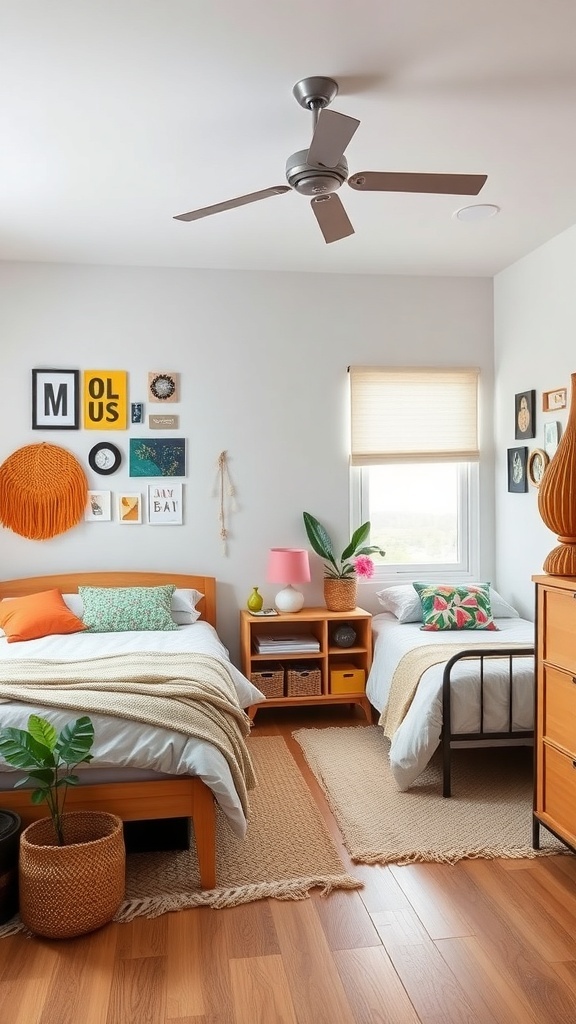
A neutral base in a shared bedroom creates a calm and inviting atmosphere. The soft tones of the walls and bedding allow for flexibility in design. This approach makes it easy to mix and match colors without overwhelming the space.
In the image, you can see how the light walls and wooden furniture set a serene backdrop. The beds are dressed in white linens, which keep the look fresh and airy. This neutral foundation is perfect for adding colorful accents.
Pops of color come from vibrant throw pillows and decorative elements. The bright orange and green cushions add personality and warmth, making the room feel lively. These small touches can reflect each occupant’s taste while maintaining a cohesive look.
Artwork on the walls also plays a key role. The mix of frames and colors creates visual interest and allows for personal expression. Each piece tells a story, making the space feel unique to its inhabitants.
Incorporating plants adds another layer of color and texture. The greenery not only brightens the room but also brings a sense of life and freshness. It’s a simple way to enhance the overall vibe.
Add a Comment