

Your small kitchen doesn’t have to be a source of daily frustration. The cramped counters, overflowing cabinets, and endless search for that one spatula can become things of the past with the right organizational strategies.
The secret isn’t buying more storage containers or waiting for a kitchen renovation. It’s about understanding how to work with the space you have and making every square inch count toward creating a functional, peaceful cooking environment.
These five organization ideas represent the most impactful changes you can make in your small kitchen. Each one addresses a specific pain point that small kitchen owners face daily, offering practical solutions that deliver immediate results.
The Psychology of Small Kitchen Organization
Small kitchens can feel overwhelming because they force us to confront the reality of limited space while demanding maximum functionality. This tension creates stress that extends far beyond cooking tasks into our daily routines.
The key to successful small kitchen organization is understanding that every item needs a designated home. When things don’t have specific places, they inevitably end up on counters, creating visual chaos that makes the space feel even smaller.
Effective organization also depends on accessibility. Items you use daily should be within arm’s reach, while seasonal or specialty items can be stored in less convenient locations. This hierarchy of access transforms how efficiently you can work in your kitchen.
The visual impact of organization cannot be underestimated. Clear counters and organized cabinets create a sense of calm and control that makes cooking more enjoyable and less stressful.
1: The Ruthless Declutter Revolution

Before implementing any organizational system, you must confront the uncomfortable truth about your kitchen possessions. Most small kitchens are overwhelmed not by lack of storage, but by an excess of unnecessary items.
Start by removing everything from your cabinets and drawers. This dramatic step forces you to examine every item and make deliberate decisions about what deserves space in your limited kitchen real estate.
Apply the “one-year rule” ruthlessly. If you haven’t used something in the past year, it’s consuming valuable space without providing value. This includes duplicate items, broken appliances you keep meaning to fix, and gadgets that seemed essential when purchased but rarely get used.
Focus particularly on multiples. You don’t need three wooden spoons, five measuring cups, or two can openers. Keep the best version of each item and donate or discard the rest.
Create three categories during this process: daily use, occasional use, and seasonal or specialty items. This categorization will guide your organization decisions and help you assign appropriate storage locations for each group.
2: Vertical Storage Mastery
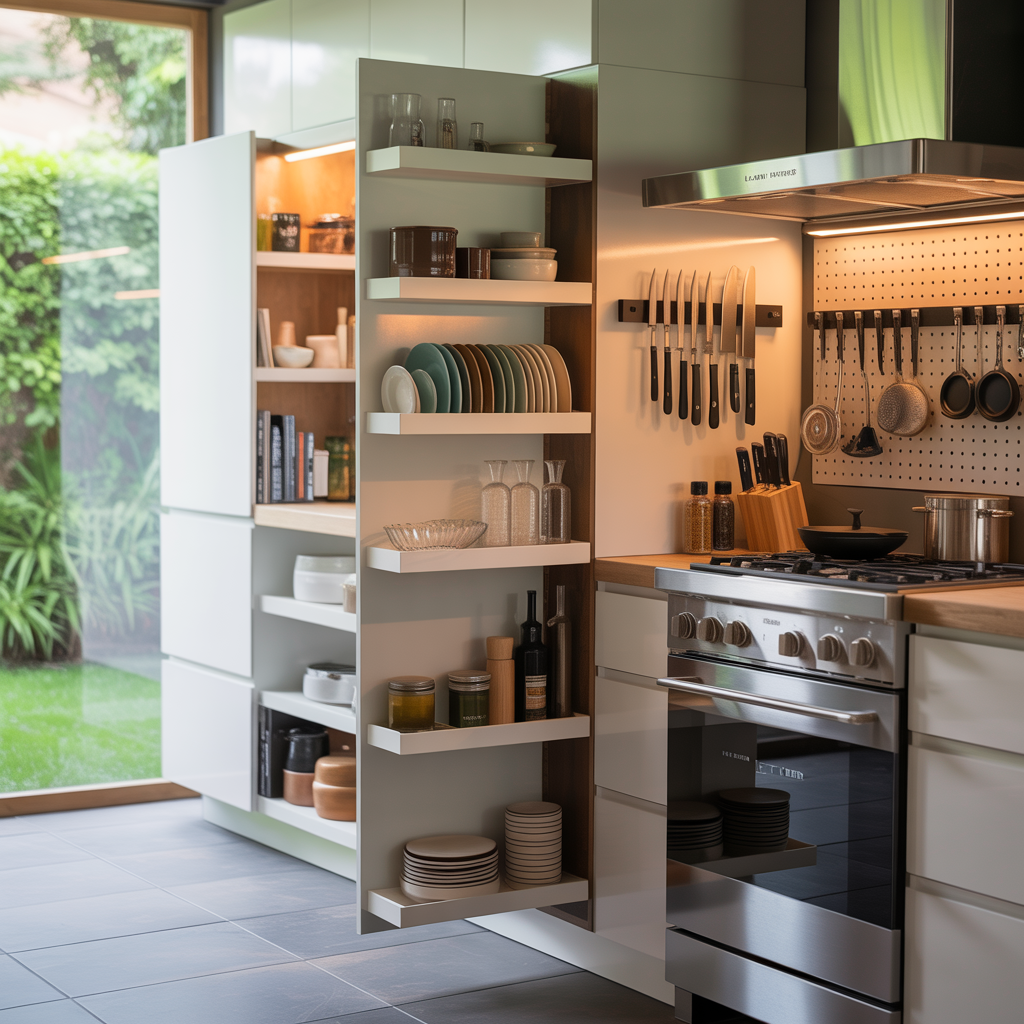
Small kitchens often suffer from underutilized vertical space. While floor space is limited, the area from counter to ceiling offers significant storage potential that most people ignore.
Install shelf risers in your cabinets to double your storage capacity instantly. These simple additions create two levels of storage where previously there was one, allowing you to store twice as many items in the same cabinet footprint.
Wall-mounted magnetic strips transform unused wall space into functional storage for knives, spice jars, and small metal tools. This approach keeps frequently used items visible and accessible while freeing up valuable drawer and counter space.
Consider pegboards for customizable wall storage. These versatile systems allow you to hang pots, pans, utensils, and small appliances exactly where you need them, and you can easily reconfigure the layout as your needs change.
Don’t overlook the space above your cabinets. While not ideal for daily-use items, this area can house seasonal cookware, specialty appliances, or bulk storage containers that would otherwise crowd your working areas.
3: Cabinet Door Transformation
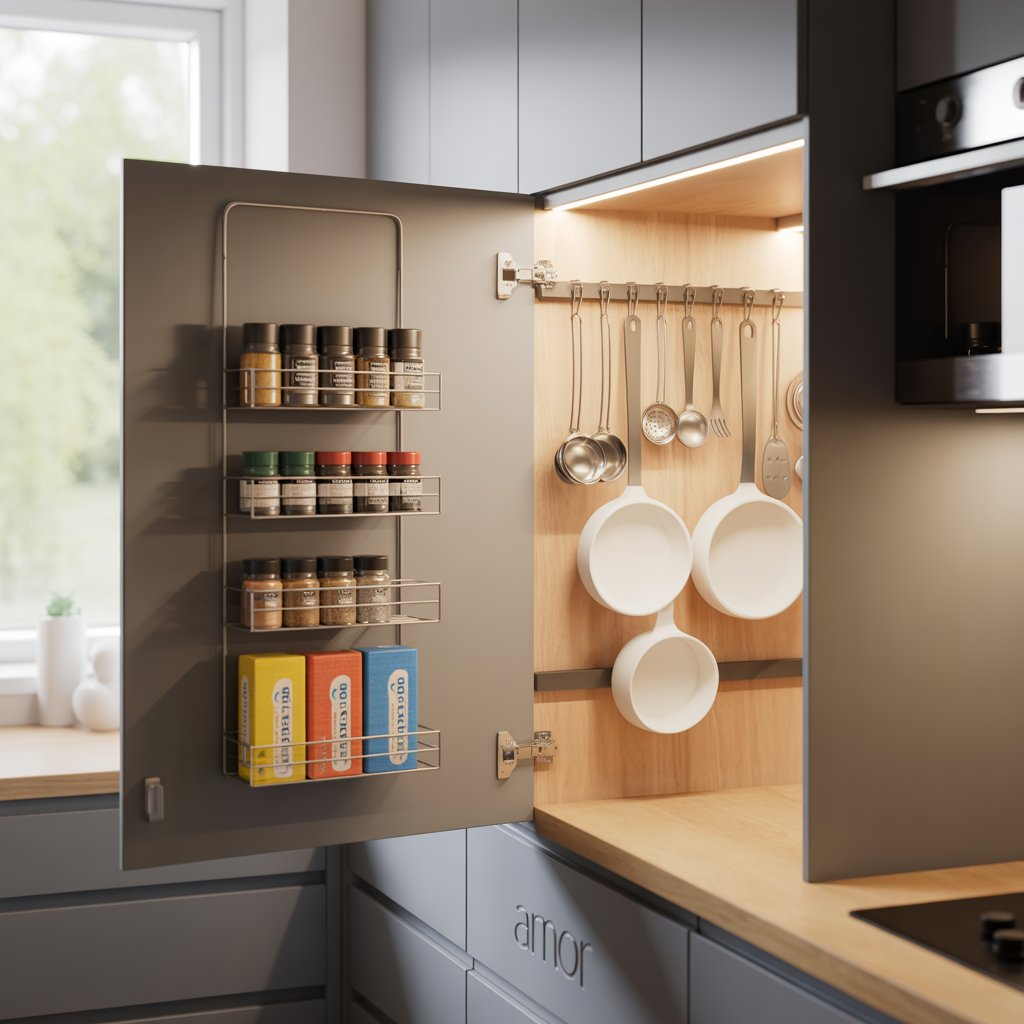
The inside of your cabinet doors represents one of the most underutilized storage areas in small kitchens. These surfaces can accommodate a surprising amount of storage without requiring any additional floor or shelf space.
Install over-the-door racks for spices, wraps, or cleaning supplies. These slim organizers take advantage of the typically wasted space behind cabinet doors while keeping items easily accessible and visible.
Use Command hooks on cabinet doors to hang pot lids, measuring cups, or small utensils. This simple addition prevents these items from consuming valuable shelf space while keeping them organized and easy to find.
Consider adding a narrow shelf or wire rack to the inside of your pantry door. This creates additional storage for condiments, small jars, or packets that would otherwise get lost in the depths of your pantry shelves.
The key to successful cabinet door storage is choosing slim organizers that won’t interfere with the door’s ability to close properly. Measure carefully before purchasing any door-mounted storage solutions.
4: Under-Sink Organization System
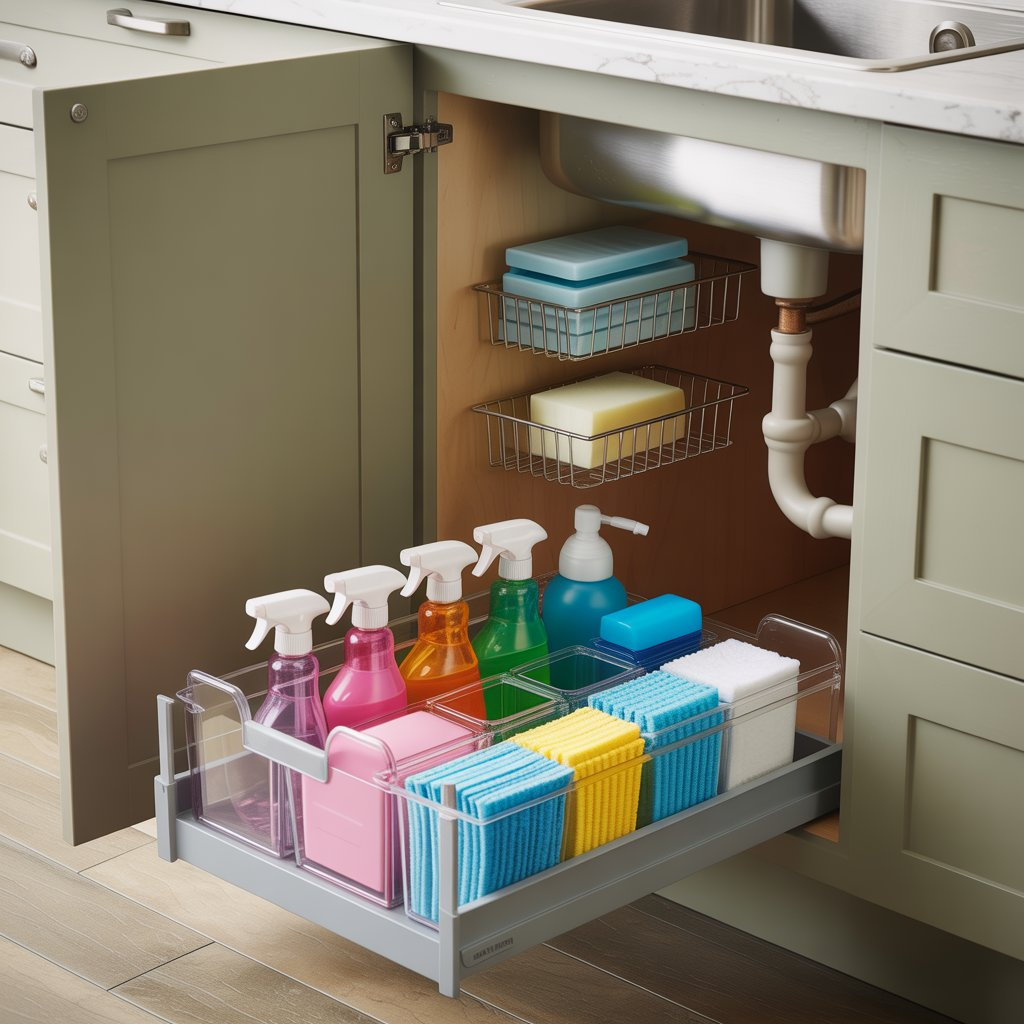
The area under your kitchen sink often becomes a chaotic dumping ground for cleaning supplies, trash bags, and miscellaneous items. This valuable storage space can be transformed into a highly functional area with the right approach.
Install a sliding drawer system that allows you to pull out the entire contents of the under-sink area. This modification transforms the deep, awkward space into easily accessible storage that you can see and reach without crawling on your knees.
Use stackable bins to contain cleaning supplies and prevent them from tipping over every time you open the cabinet. Clear bins allow you to see contents at a glance, while stackable designs maximize the vertical space available.
Mount a narrow shelf or organizer on the cabinet door to hold frequently used items like dish soap, sponges, or rubber gloves. This keeps these essentials within easy reach while freeing up floor space for larger items.
Consider installing a slim trash can or recycling bin in this area to free up floor space elsewhere in your kitchen. Many under-sink organizers include integrated waste disposal solutions that make efficient use of this often-wasted space.
5: Strategic Appliance Management
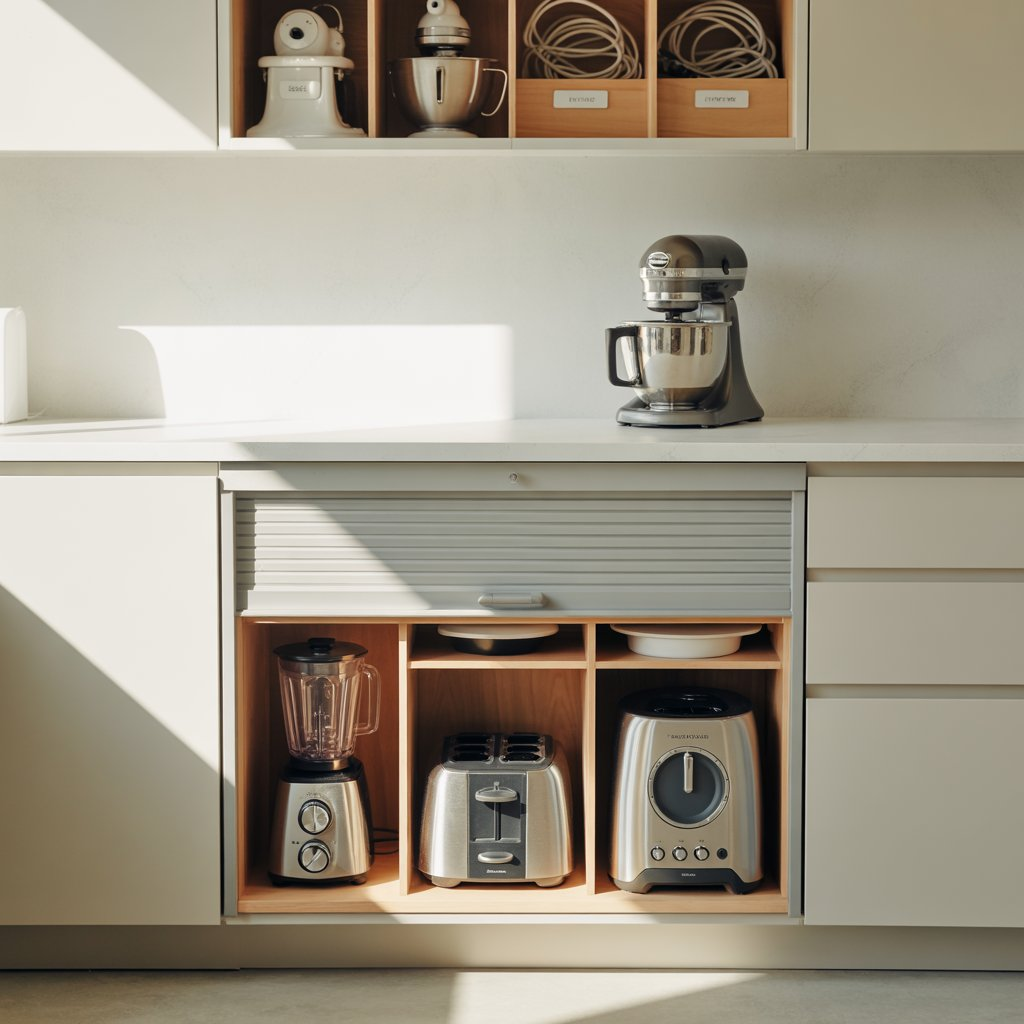
Small appliances can quickly overwhelm a small kitchen, creating counter clutter that makes the space feel cramped and dysfunctional. The key is creating designated storage that keeps these appliances accessible but out of sight.
Create an appliance garage by designating a specific cabinet or corner for small appliances. This approach keeps them easily accessible for regular use while maintaining clear counters that make your kitchen feel larger and more organized.
Establish a rotation system for seasonal appliances. Store holiday-specific items like turkey roasters or ice cream makers in less accessible locations, bringing them out only when needed.
Consider which appliances truly deserve counter space. Items used daily, like coffee makers or toasters, may warrant permanent counter placement, while weekly-use items should be stored in easily accessible cabinets.
Use appliance-specific organizers to keep cords tidy and accessories together. This prevents the frustration of searching for attachments and keeps everything needed for each appliance in one location.
Creating Your Action Plan
The most effective approach to small kitchen organization is implementing these changes gradually. Start with the ruthless declutter, as this creates the foundation for all other organizational efforts.
Choose one additional area to focus on each week. This prevents overwhelming yourself while allowing you to see immediate progress that motivates continued effort.
Remember that organization is an ongoing process, not a one-time project. Plan for regular maintenance sessions to keep your systems functioning effectively and prevent clutter from rebuilding.
The goal isn’t perfection but functionality. Your organized kitchen should make cooking and daily tasks easier, not create additional stress through overly complex systems.
Most importantly, customize these ideas to fit your specific needs and cooking habits. The best organizational system is one that you’ll actually use consistently, making your small kitchen a place of efficiency rather than frustration.
Add a Comment