
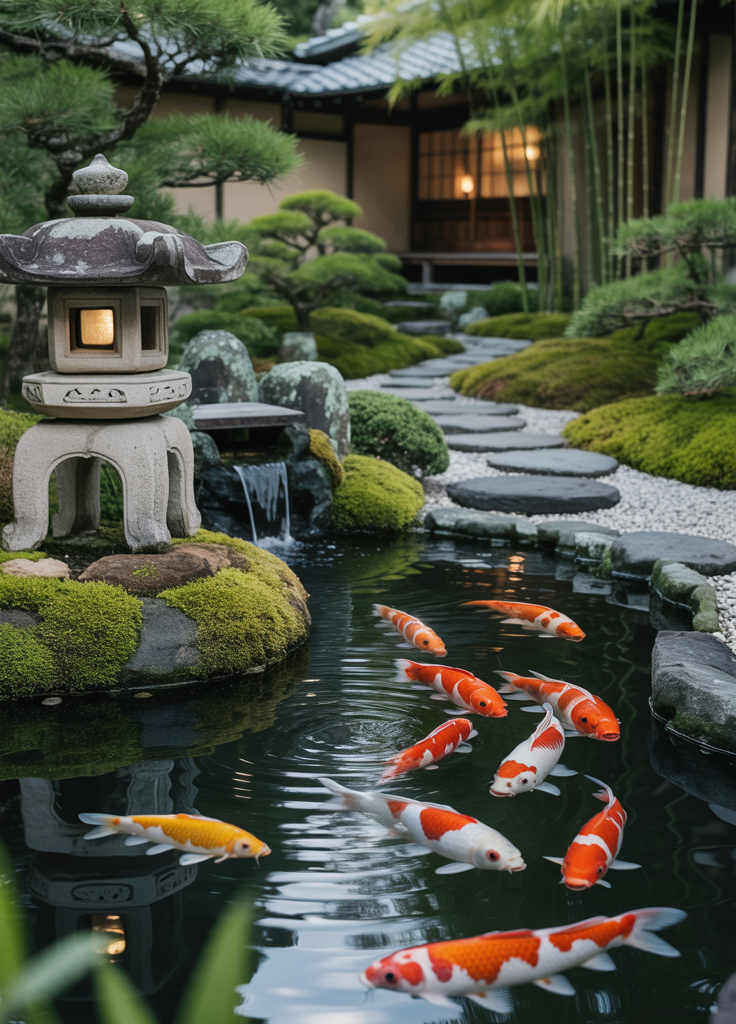
Creating a serene Japanese garden is all about embracing simplicity and nature’s beauty. This guide shares practical tips on incorporating water features, using natural materials, and integrating symbolic elements to achieve a harmonious space that offers year-round allure. Let’s cultivate tranquility and elegance in your outdoor oasis!
Creating Pathways for Mindful Exploration
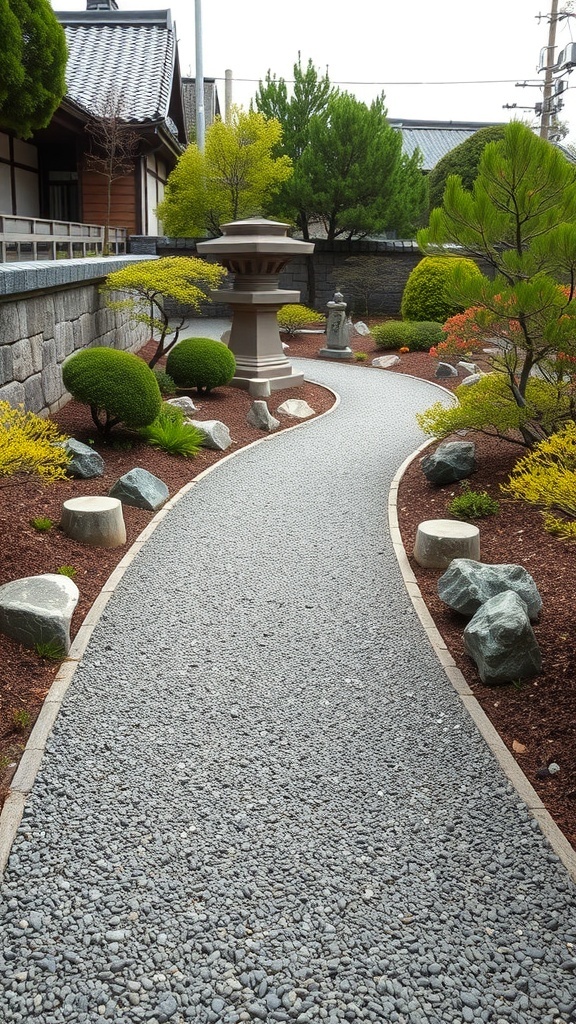
Pathways in a Japanese garden invite you to slow down and appreciate the surroundings. The winding path shown in the image leads you through a serene landscape filled with carefully placed stones and lush greenery. Each step along the gravel path encourages a moment of reflection.
Using natural materials, like gravel and stone, enhances the garden’s simplicity. The gentle curves of the pathway create a sense of discovery, making each turn a new experience. The way the path meanders through the garden allows for mindful exploration, encouraging visitors to take their time and soak in the beauty around them.
Incorporating symbolic elements, such as lanterns and statues, adds depth to the journey. These features not only serve as focal points but also tell a story, connecting visitors to the rich traditions of Japanese gardening. The balance of natural elements and thoughtful design creates a harmonious space that is beautiful year-round.
Symbolic Elements and Their Meanings
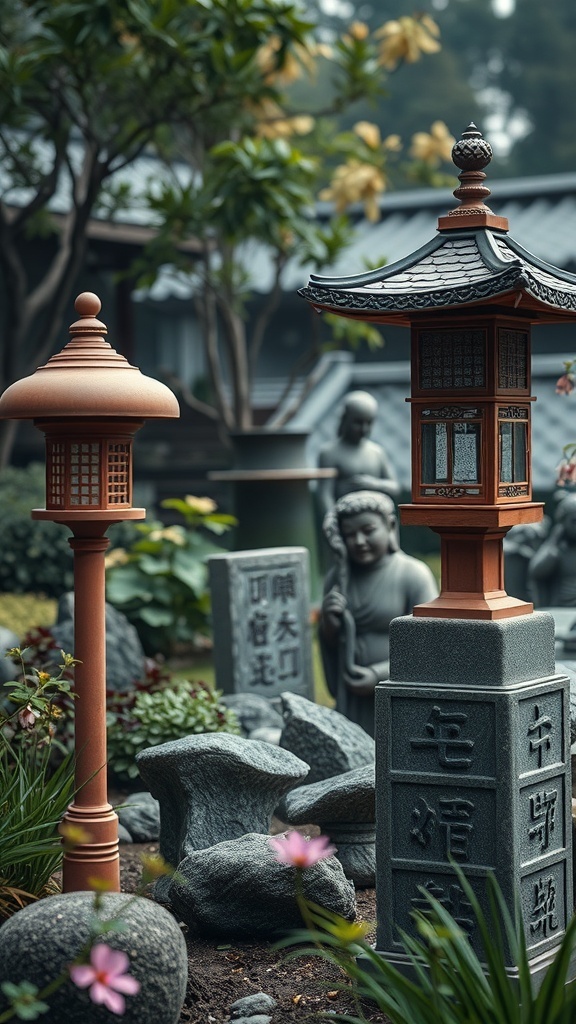
In a serene Japanese garden, every element holds a special meaning. The lanterns, like the ones in the image, symbolize guidance and enlightenment. They illuminate paths, inviting visitors to explore the beauty of the garden.
The stone statues represent tranquility and reflection. They often depict figures from Japanese culture, encouraging a sense of peace and mindfulness. Each stone carries its own story, adding depth to the garden’s narrative.
Rocks and gravel are not just for aesthetics; they symbolize mountains and rivers, connecting the garden to nature. The careful placement of these elements creates a harmonious balance, essential for a peaceful atmosphere.
Flowers and plants also play a vital role. They represent the changing seasons, reminding us of the beauty in transformation. Choosing plants that bloom at different times ensures year-round beauty, enhancing the garden’s charm.
Choosing Natural Materials for Authenticity
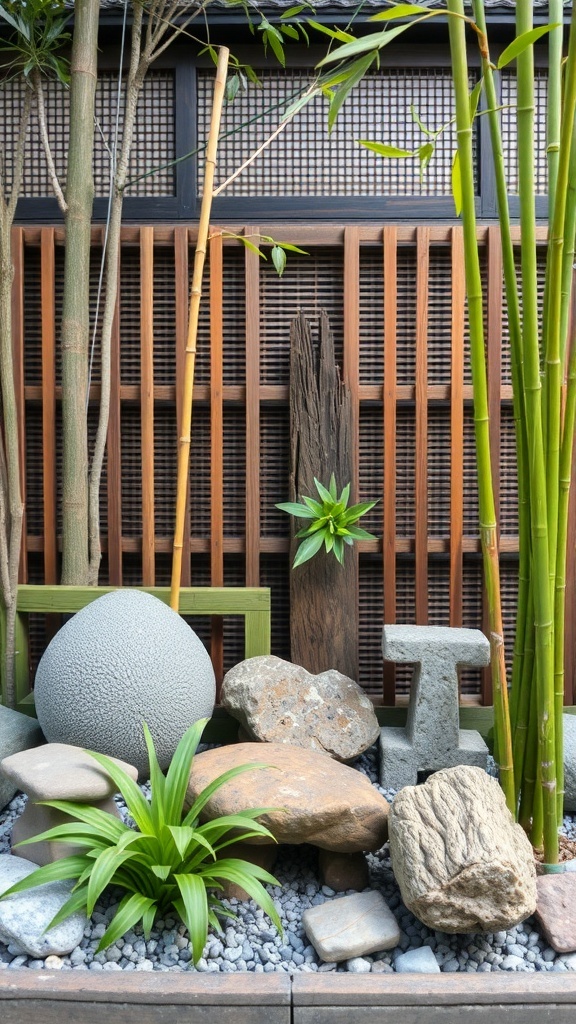
When designing a serene Japanese garden, the choice of materials plays a vital role in creating an authentic atmosphere. The image shows a beautiful arrangement of stones, plants, and wooden elements that reflect the essence of nature.
Using natural materials like stone, wood, and bamboo helps to establish a connection with the environment. The smooth stones and textured wood in the image highlight the beauty of simplicity. Each element complements the others, creating a harmonious space.
Incorporating local materials can enhance the garden’s authenticity. For instance, using local stones not only supports sustainability but also blends the garden into its surroundings. The bamboo adds a touch of elegance while being a renewable resource.
Don’t forget about the plants! Choosing native species ensures that your garden thrives year-round. The greenery in the image adds life and vibrancy, making the space inviting. Overall, the thoughtful selection of natural materials is key to achieving a tranquil and authentic Japanese garden.
Seasonal Changes and Year-Round Beauty
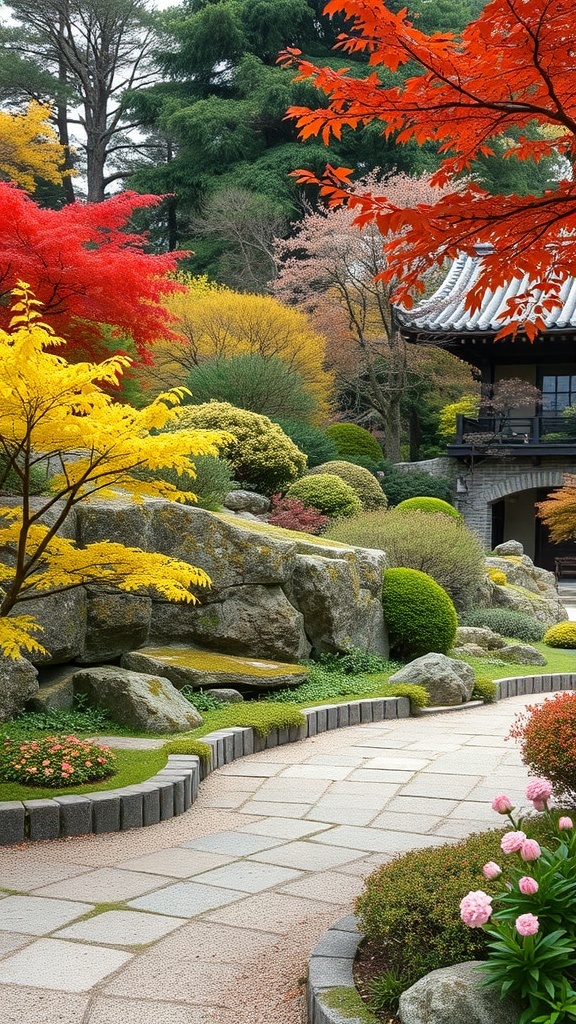
A Japanese garden is a canvas that changes with the seasons. In the image, vibrant reds, yellows, and greens create a stunning display of autumn foliage. This seasonal transformation adds a unique charm, inviting visitors to appreciate nature’s cycles.
To maintain year-round beauty, choose plants that bloom in different seasons. For instance, cherry blossoms in spring and evergreens in winter ensure that your garden remains lively throughout the year. Incorporating stones and water features can also enhance the garden’s appeal, reflecting the changing colors and providing a serene atmosphere.
Consider adding elements like lanterns or bridges to create focal points that draw the eye. These features not only add visual interest but also symbolize harmony and balance, key principles in Japanese garden design. By thoughtfully selecting plants and materials, your garden can be a peaceful retreat, no matter the season.
Incorporating Tranquil Water Features

Water features are a key element in any Japanese garden. They create a sense of calm and bring life to the landscape. In the image, you can see a serene pond filled with colorful koi fish, surrounded by lush greenery and beautiful lotus flowers. This combination not only enhances the visual appeal but also adds soothing sounds of water, which can be very relaxing.
When designing your garden, think about including a pond or a small stream. The gentle movement of water can attract wildlife and provide a habitat for fish and plants. You might also consider adding stones and pebbles around the water’s edge to create a natural look.
Incorporating features like a small waterfall can add a dynamic element to your garden. The sound of water cascading over rocks can be very calming, making it a perfect spot for meditation or relaxation. Remember to keep the design simple and uncluttered to maintain that tranquil vibe.
Embracing Simplicity in Design
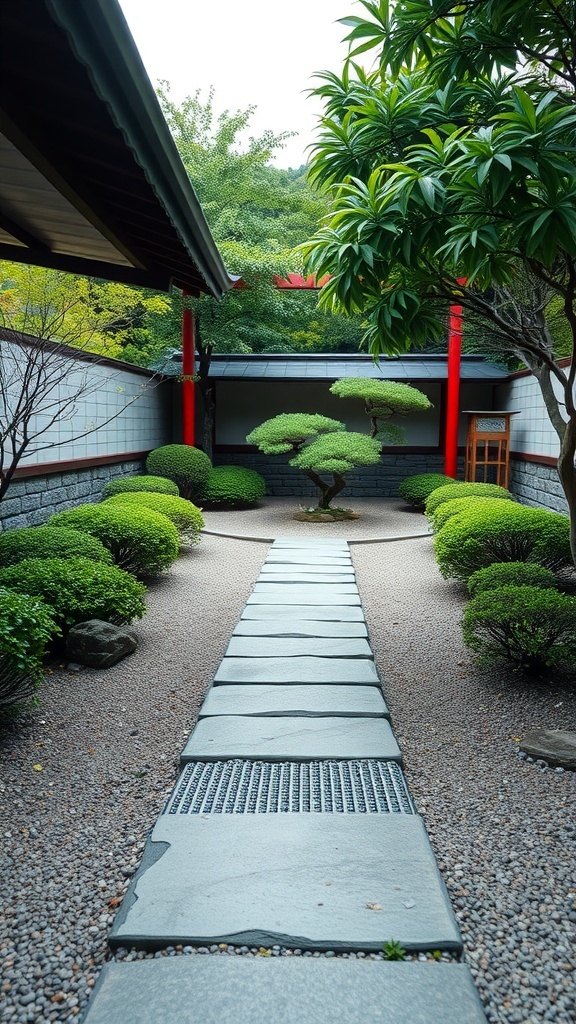
When it comes to creating a Japanese garden, simplicity is key. The image showcases a beautifully arranged space that embodies this principle. The clean lines of the stone pathway lead the eye through the garden, inviting visitors to explore.
Notice how the carefully trimmed shrubs and the sculpted tree add a sense of order. Each element serves a purpose, contributing to the overall harmony of the space. The use of natural materials, like stone and gravel, enhances the garden’s serene feel.
Incorporating simplicity means avoiding clutter. Each stone and plant has its place, allowing for a peaceful atmosphere. This approach not only makes maintenance easier but also creates a calming retreat that can be enjoyed year-round.
As you design your own garden, think about how you can use fewer elements to achieve a greater impact. Focus on what truly matters to you, and let those elements shine.
Integrating Zen Principles for Inner Peace
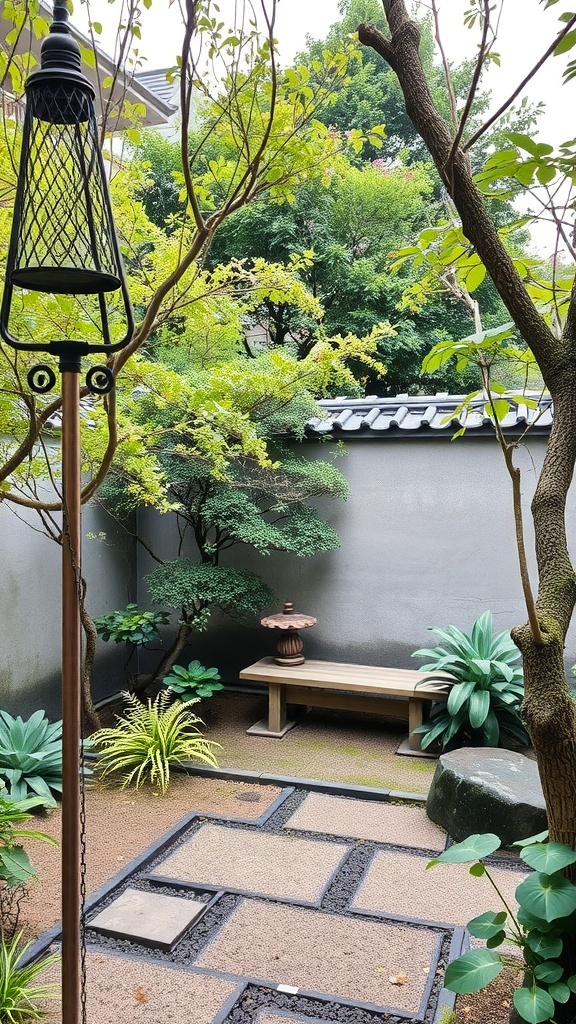
Creating a serene Japanese garden is all about embracing simplicity and nature. The image captures a tranquil space, featuring a wooden bench surrounded by lush greenery and carefully arranged stones. This setting encourages quiet reflection and a connection to the natural world.
Incorporating Zen principles means focusing on minimalism. Each element in the garden serves a purpose, from the gentle curves of the paths to the placement of plants. The use of natural materials, like wood and stone, enhances the organic feel, inviting you to relax and unwind.
Water features, such as a small basin or fountain, can add soothing sounds that promote peace. Even without a large pond, the sound of trickling water can create a calming atmosphere. The lantern in the image adds a touch of warmth, guiding your way while enhancing the garden’s charm.
Symbolic elements, like the stone arrangements and plant choices, reflect deeper meanings in Zen philosophy. Each stone can represent stability, while the plants symbolize growth and renewal. This thoughtful design fosters a sense of harmony and balance, making the garden a perfect retreat for inner peace.
Add a Comment