

Your bathroom should feel like a sanctuary, not just a functional space. Japandi design offers something that traditional bathroom styles often miss: the perfect balance between beauty and purpose. This Japanese-Scandinavian fusion creates spaces that breathe with you.
The magic happens when Japanese minimalism meets Scandinavian warmth. Clean lines don’t have to feel cold. Natural materials don’t have to sacrifice functionality. This design philosophy transforms even the smallest bathroom into a retreat that calms your mind.
Japandi bathrooms work because they eliminate visual noise while embracing natural textures. Every element serves a purpose, yet the overall feeling remains soft and welcoming. This approach creates timeless spaces that age beautifully.
Understanding the Japandi Philosophy in Bathroom Design
Japandi design philosophy centers on the Japanese concept of wabi-sabi combined with Scandinavian hygge. Wabi-sabi finds beauty in imperfection and impermanence. Hygge creates cozy comfort in everyday moments. Together, they form a design language that feels both sophisticated and approachable.
The color palette remains intentionally restrained. Earth tones, warm whites, and muted grays dominate the space. These colors create a backdrop that allows natural materials and textures to shine. The restraint doesn’t feel limiting; it feels liberating.
Functionality guides every design decision in Japandi bathrooms. Beautiful elements must also serve practical purposes. Storage solutions hide clutter while maintaining aesthetic integrity. This dual focus creates spaces that work as hard as they look good.
Natural light takes priority over artificial illumination whenever possible. Large windows, skylights, and glass elements maximize daylight penetration. When artificial lighting becomes necessary, it mimics natural light patterns and warmth.
Essential Element 1: Natural Materials That Ground Your Space
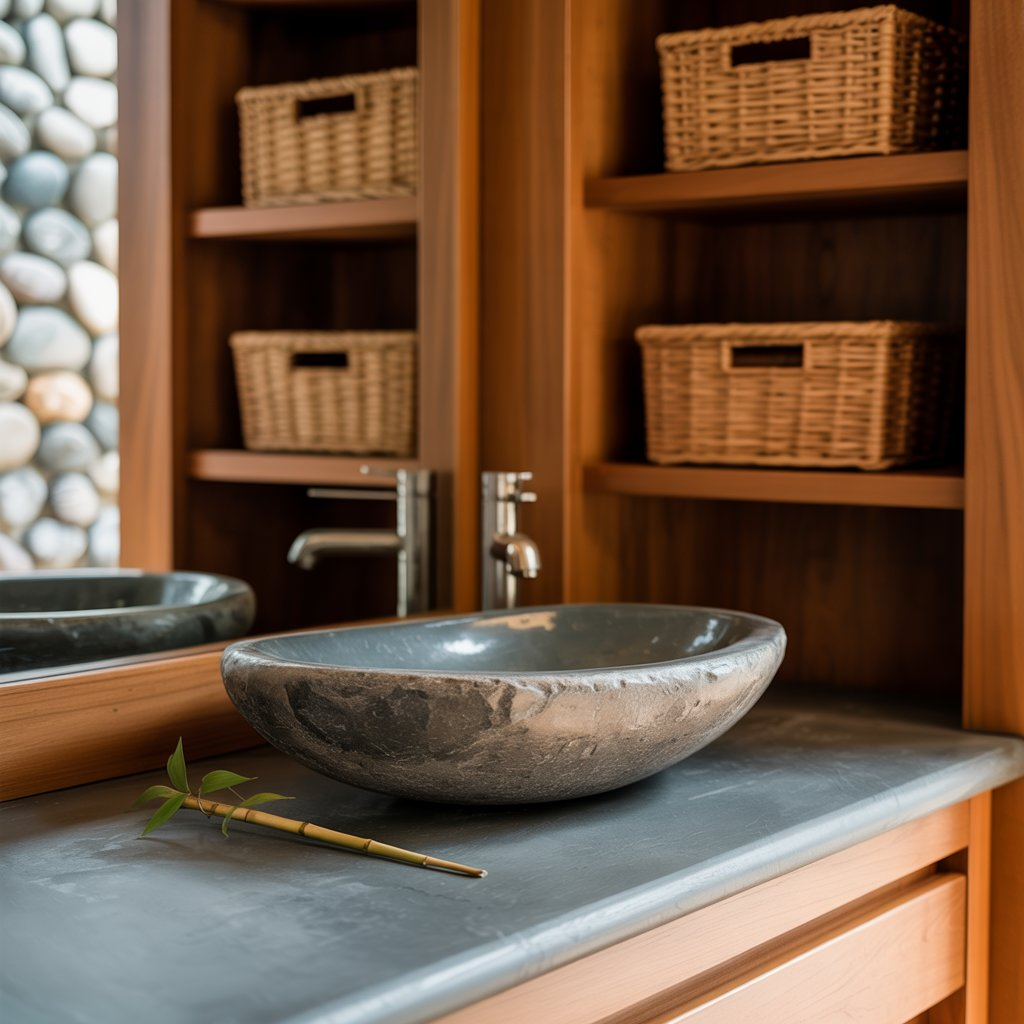
Wood brings warmth and life to Japandi bathrooms in ways that synthetic materials simply cannot match. Teak, bamboo, and cedar offer natural water resistance while aging beautifully over time. The grain patterns add subtle visual interest without overwhelming the space.
Stone surfaces provide the perfect counterpoint to wood’s warmth. Natural stone vessel sinks create focal points that feel both modern and timeless. The organic shapes and textures connect your bathroom to the natural world beyond its walls.
Textural contrast becomes crucial when working with neutral color palettes. Smooth river rocks complement rough-hewn wood surfaces. Polished stone contrasts with woven bamboo storage baskets. These material dialogues create visual interest without relying on bold colors.
Quality trumps quantity in material selection. Choose fewer materials of higher quality rather than mixing many different elements. This approach creates cohesion while allowing each material’s natural beauty to stand out. The investment in quality materials pays dividends in longevity and appearance.
Essential Element 2: Minimalist Storage Solutions That Actually Work
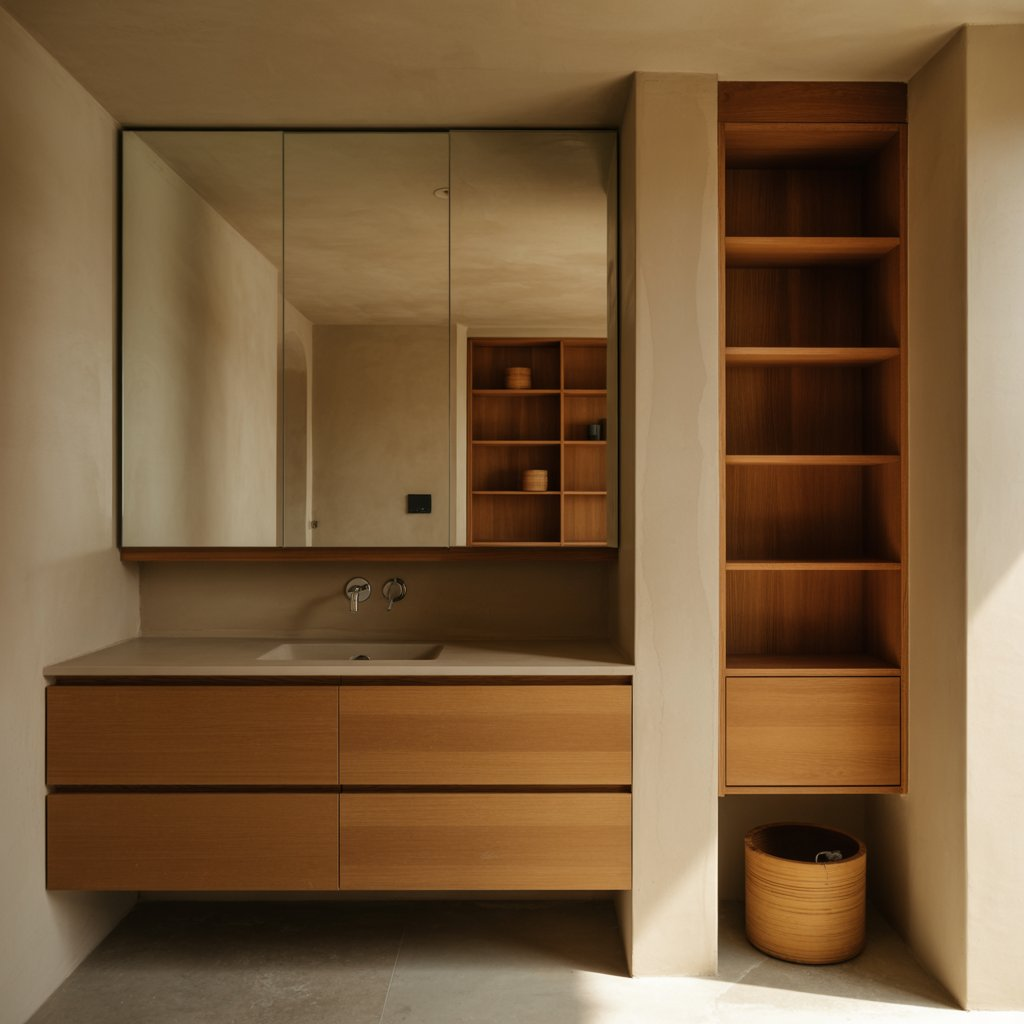
Integrated storage maintains clean lines while providing essential functionality. Built-in shelving disappears into walls, creating storage without visual clutter. These solutions require planning during construction or renovation but dramatically improve the space’s usability.
Bamboo storage containers offer sustainable alternatives to plastic organizers. Their natural variations in color and texture add visual interest while serving practical purposes. Choose containers in similar tones to maintain cohesion throughout the space.
Hidden storage behind mirrors or within vanities keeps everyday items accessible but invisible. This approach prevents countertop clutter while maintaining the serene atmosphere that defines Japandi design. Every item has its designated place.
Vertical storage maximizes space efficiency in smaller bathrooms. Wall-mounted shelving and tall storage towers draw the eye upward, creating the illusion of height. This technique works especially well in compact urban bathrooms where floor space is limited.
Essential Element 3: Lighting That Mimics Natural Rhythms
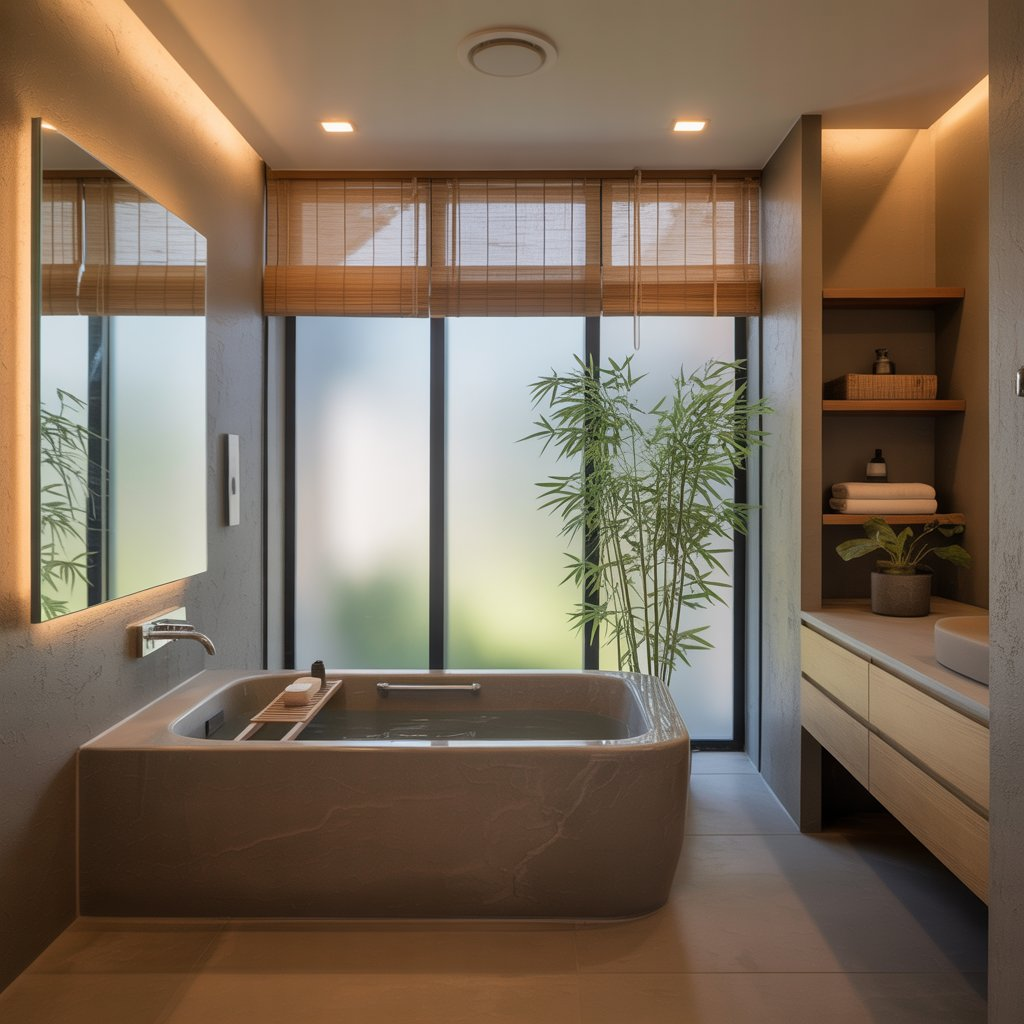
Layered lighting creates the flexibility that Japandi bathrooms require. Ambient lighting provides general illumination, while task lighting supports specific activities. Accent lighting highlights architectural features and creates mood. Each layer serves distinct purposes.
Warm light temperatures promote relaxation and complement natural materials. Cool, bright lighting has its place for tasks like shaving or applying makeup, but warm light should dominate the overall atmosphere. This warmth makes the space feel more inviting.
Natural light optimization starts with window treatments that provide privacy without blocking daylight. Frosted glass, bamboo blinds, or sheer curtains filter light while maintaining the connection to the outdoors. This balance proves essential for Japandi design success.
Dimmer switches allow lighting adjustment throughout the day. Bright light energizes morning routines, while softer evening lighting promotes relaxation. This flexibility supports the natural rhythms that Japandi design celebrates.
Essential Element 4: Color Psychology in Serene Spaces
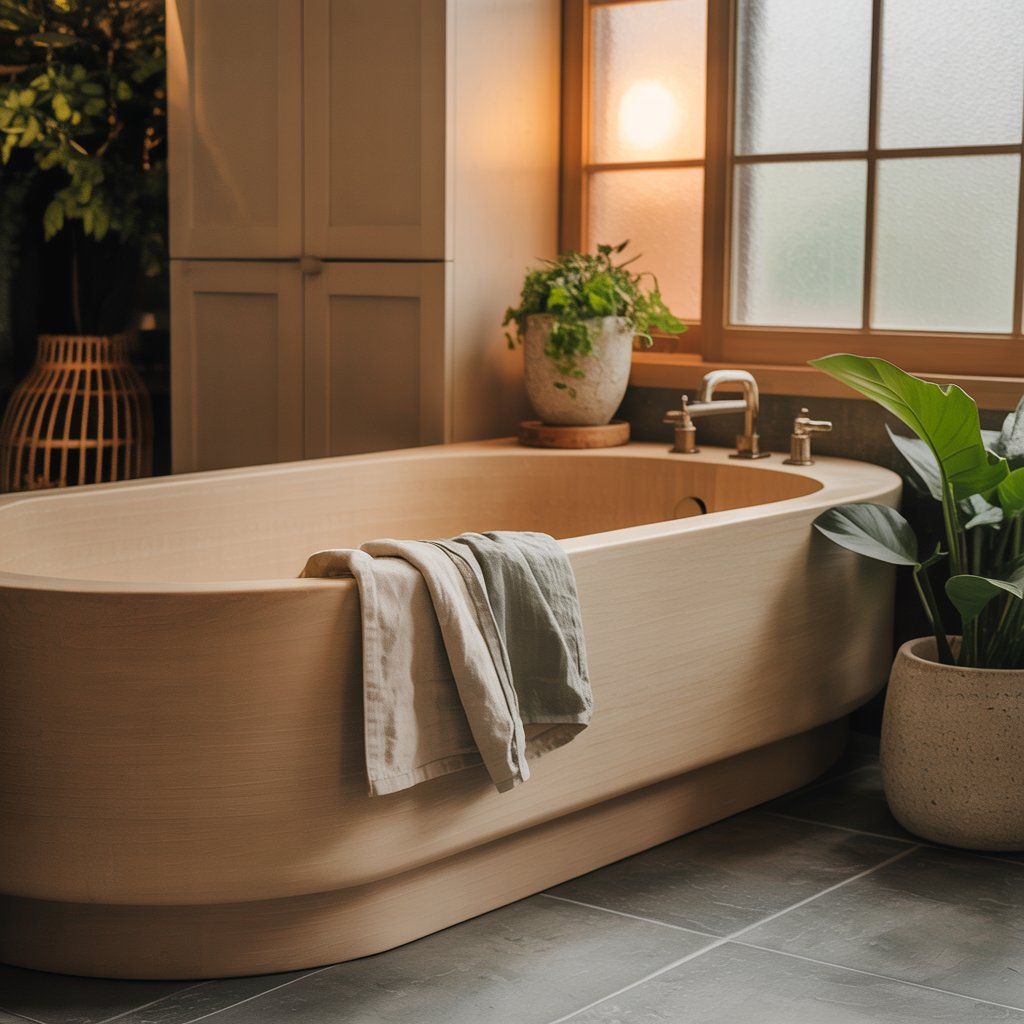
Neutral base colors create the foundation for successful Japandi bathrooms. Warm whites, soft grays, and natural beiges provide the backdrop for natural materials to shine. These colors feel calming rather than stark when combined with proper textures and lighting.
Accent colors should come from natural sources rather than paint or tiles. Green plants, brown wood grain, and stone variations provide color interest without disrupting the serene atmosphere. This approach creates spaces that feel alive rather than sterile.
Color temperature consistency throughout the space prevents visual disruption. Cool and warm tones can coexist, but they must be balanced carefully. Natural materials help bridge these temperature differences, creating harmonious color relationships.
Seasonal color adjustments keep Japandi bathrooms feeling fresh without major renovations. Swap towels, add different plants, or change storage basket colors to reflect seasonal changes. These small adjustments maintain interest while preserving the design’s essential character.
Essential Element 5: Creating Zen Through Thoughtful Layout
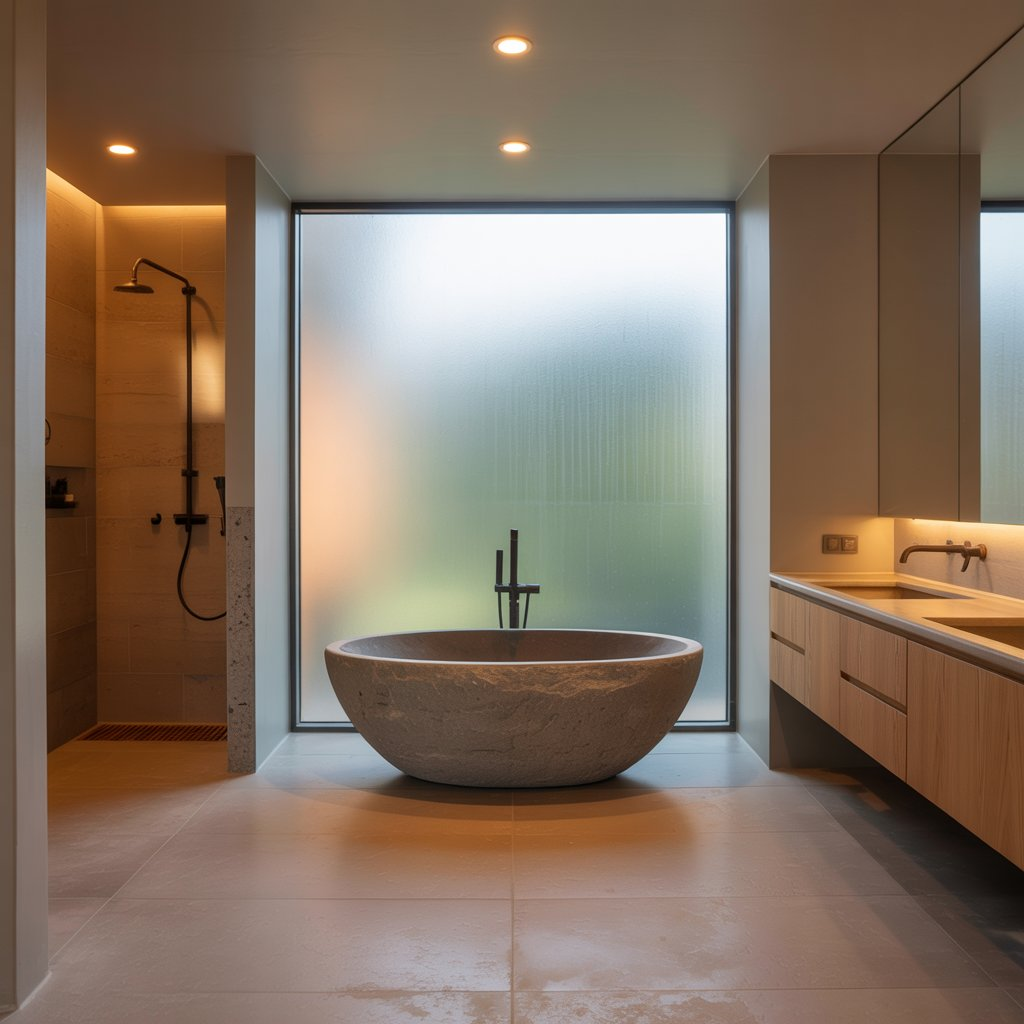
Open floor plans maximize the sense of space in Japandi bathrooms. Remove unnecessary walls and barriers to create flowing, connected areas. This openness promotes the sense of calm that defines successful Japandi design.
Purposeful placement of each element prevents the space from feeling empty despite its minimalist approach. Every item should have a reason for its location. This intentionality creates harmony between function and aesthetics.
Traffic flow considerations ensure that the bathroom functions smoothly during daily use. Consider how people move through the space and position elements accordingly. Good flow reduces stress and supports the peaceful atmosphere.
Focal points guide the eye without creating visual chaos. A beautiful bathtub, striking mirror, or textured wall panel can serve as the room’s centerpiece. Limit yourself to one primary focal point to maintain the minimalist aesthetic.
Practical Implementation for Real Homes
Budget-conscious approaches to Japandi design focus on key elements rather than complete renovations. Start with lighting improvements, add natural storage solutions, and incorporate plants. These changes create significant impact without major expense.
Small bathroom adaptations require creative solutions that maximize impact in limited space. Vertical storage, light colors, and strategic mirror placement create the illusion of spaciousness. Every element must work harder in compact spaces.
Existing bathroom integration means working with current fixtures while adding Japandi elements. Replace hardware with natural wood or matte black options. Add bamboo accessories and natural fiber rugs. These changes transform spaces without major construction.
Maintenance considerations ensure that your Japandi bathroom remains beautiful over time. Choose materials that age gracefully and develop patina. Regular cleaning routines should be simple enough to maintain consistently. The goal is effortless beauty.
Living with Your Japandi Bathroom
Daily routines become more mindful in thoughtfully designed Japandi bathrooms. The serene environment encourages slower, more intentional movements. This mindfulness extends beyond the bathroom into other areas of life.
Seasonal adjustments keep the space feeling fresh while maintaining its essential character. Change towel colors, rotate plants, or add seasonal scents through natural elements. These small changes prevent the space from feeling static.
Long-term evolution allows your Japandi bathroom to grow with your needs. The neutral foundation accommodates changing preferences without requiring major renovations. This flexibility makes Japandi design particularly sustainable.
Personal touches within the Japandi framework express individual style while maintaining design integrity. Choose accessories that reflect your personality but align with the minimalist aesthetic. This balance creates spaces that feel both serene and personal.
Your Japandi bathroom journey begins with understanding these five essential elements. Each contributes to creating a space that supports both daily functions and moments of peaceful reflection. The investment in thoughtful design pays dividends in daily comfort and long-term satisfaction.
Add a Comment