
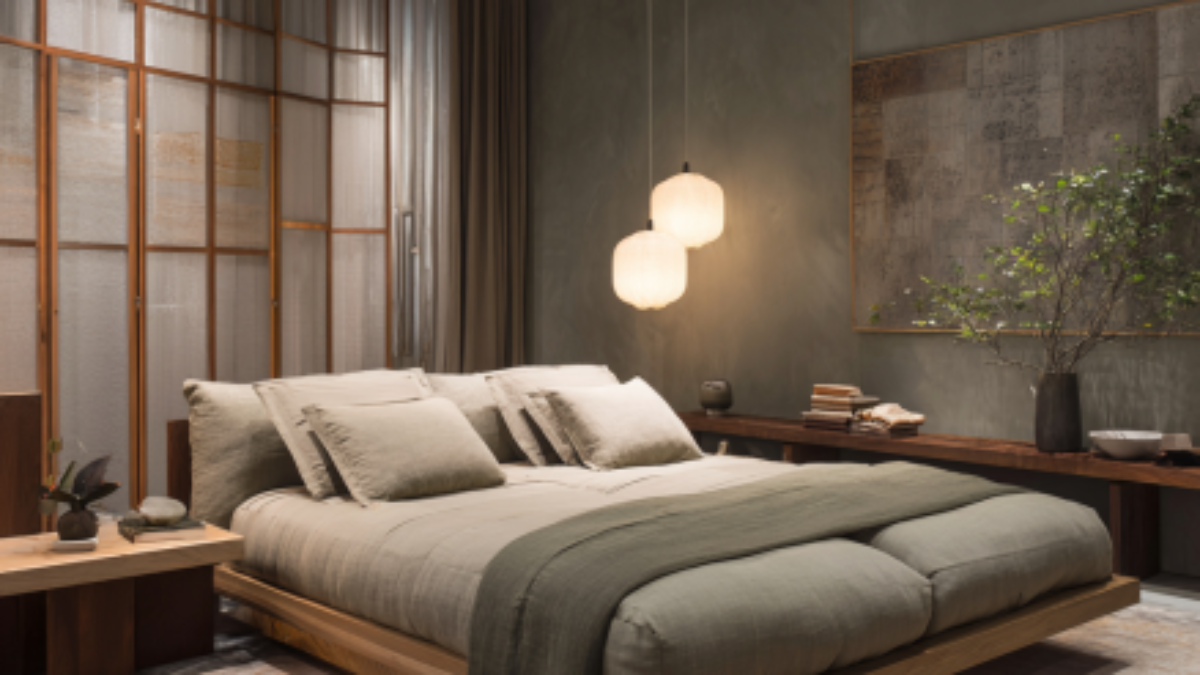
The Japandi style combines the clean lines of Scandinavian design with the tranquility of Japanese aesthetics. This blend creates serene and functional spaces, which was beautifully highlighted at Milan Design Week 2025. Here, we present 15 inspiring Japandi bedroom ideas that showcase natural materials, muted color palettes, and thoughtful design elements to help you create your own peaceful retreat at home.
Organic Materials for a Natural Touch
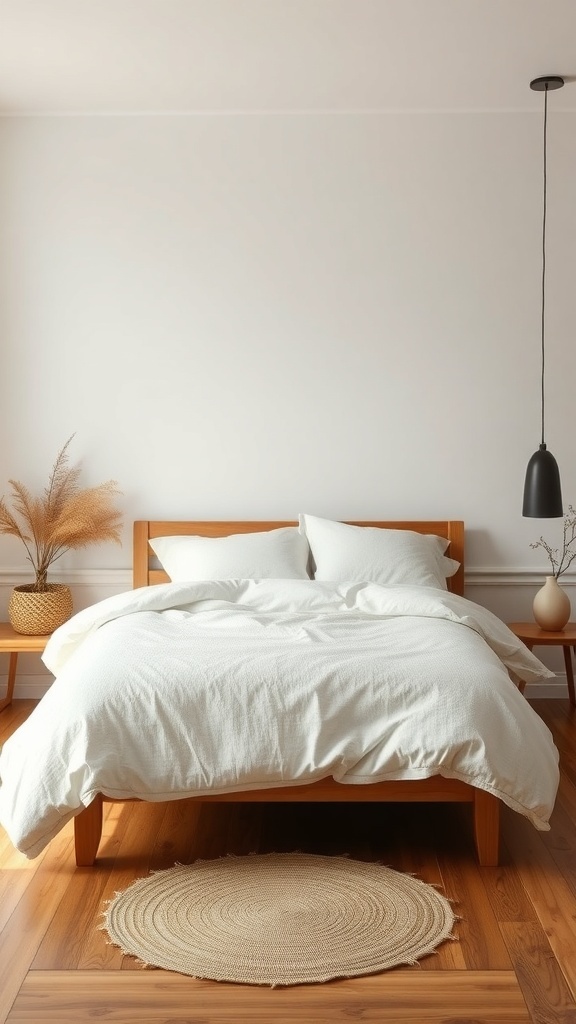
The image beautifully captures the essence of a Japandi bedroom, showcasing a low-profile wooden bed that invites relaxation. The natural wood grain of the bed frame complements the warm tones of the timber floor, creating a seamless connection with nature.
The bedding, in soft white linen, adds a layer of comfort and simplicity, embodying the minimalist approach of the Japandi style. This choice of organic material not only feels luxurious but also promotes a serene atmosphere.
On the bedside, a woven basket holds delicate dried grasses, introducing a touch of nature without overwhelming the space. This subtle decor element emphasizes the importance of organic materials in Japandi design, where every piece serves a purpose.
The round jute rug underfoot adds texture and warmth, grounding the room while maintaining a clean aesthetic. The soft, indirect lighting from the pendant lamp enhances the calming vibe, making it an ideal retreat for rest and rejuvenation.
Incorporating these organic materials into your bedroom can transform it into a peaceful haven. Think about using natural fibers, soft linens, and wooden accents to achieve that perfect balance of comfort and style.
Low-Profile Platform Beds in Natural Wood
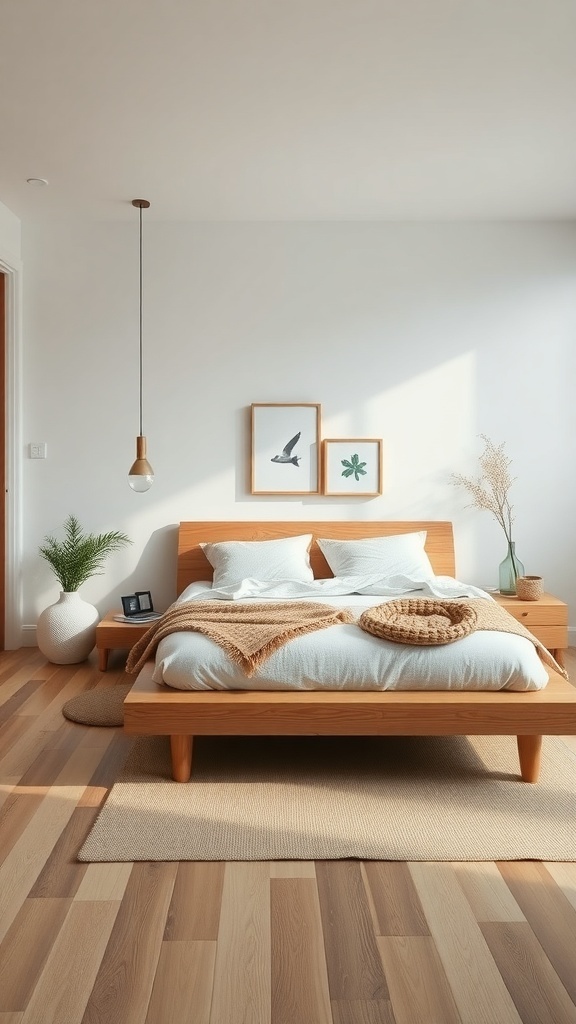
The low-profile platform bed is a hallmark of Japandi design, seamlessly blending functionality with a calming aesthetic. This particular bed, crafted from natural wood, showcases clean lines and a minimalist silhouette that invites tranquility into the bedroom.
In the image, the warm tones of the wood create a cozy atmosphere, while the low height adds to the sense of spaciousness. The bed is adorned with soft, neutral bedding that complements the overall color palette, enhancing the serene vibe of the space.
Natural wood not only brings warmth but also connects the interior to the outdoors, a key principle in Japandi style. The simplicity of the platform design allows for easy movement around the room, making it feel open and inviting.
To replicate this look, consider choosing a low-profile bed frame made from sustainable materials. Pair it with light, airy linens in muted colors to maintain that effortless, minimalist feel. This design choice not only emphasizes comfort but also aligns with the Japandi ethos of creating a peaceful retreat.
Incorporating Rattan or Cane Furniture
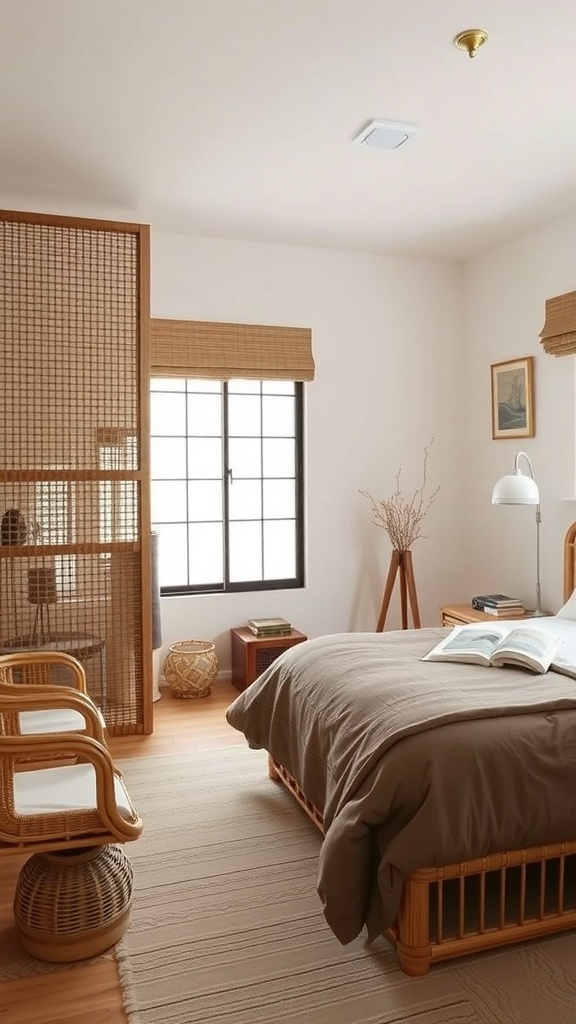
Rattan and cane furniture are essential elements in Japandi-style bedrooms, adding warmth and texture to the serene environment. The image showcases a beautifully designed space featuring a low-profile platform bed, complemented by rattan chairs and a woven side table. This combination creates a cozy yet sophisticated atmosphere.
The use of natural materials like rattan not only enhances the aesthetic but also aligns with the Japandi principle of simplicity and functionality. The light tones of the furniture harmonize with the soft color palette, creating a seamless flow throughout the room.
Incorporating rattan or cane pieces can be as simple as adding a chair or a small accent table. These items can serve as focal points without overwhelming the space. The intricate weaving of rattan adds a touch of craftsmanship, making each piece unique.
Consider using rattan for storage solutions, like baskets or shelving, to maintain a clean and organized look. This approach keeps the visual noise to a minimum while adding character to your bedroom.
When selecting rattan furniture, look for designs that feature clean lines and minimal ornamentation. This will ensure that the pieces complement the overall Japandi aesthetic, which values understated elegance.
Monochrome Neutral Palettes with Soft Accents
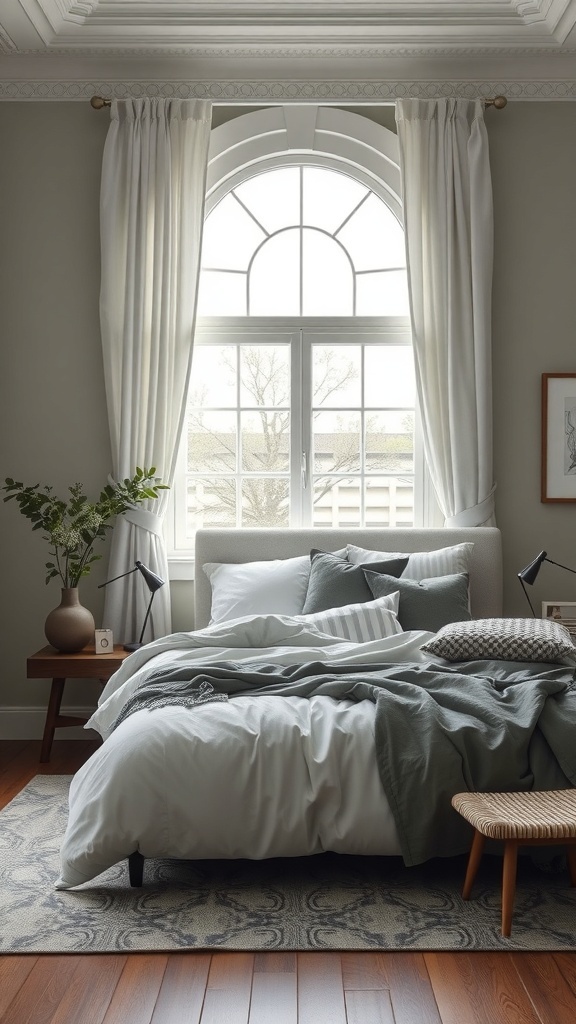
The image captures a serene bedroom that embodies the essence of Japandi style. The soft, muted tones create a calming atmosphere, perfect for relaxation. The walls are painted in a gentle grey, which serves as a neutral backdrop, allowing the room’s elements to shine without overwhelming the senses.
The bed is dressed in layers of white and soft green linens, inviting comfort and warmth. Textured pillows in varying shades add depth, while the subtle patterns on some cushions introduce a hint of visual interest without cluttering the space.
Natural light pours in through the large window, accentuated by sheer white curtains that gently frame the view. This choice not only enhances the room’s brightness but also maintains a sense of privacy. The window’s architectural design adds a touch of elegance, harmonizing with the overall aesthetic.
On the bedside table, a simple lamp and a small decorative item keep the look minimal yet functional. The wooden floor adds warmth, grounding the room in nature. A potted plant brings a touch of greenery, reinforcing the connection to the outdoors.
This bedroom exemplifies how a monochrome neutral palette can be both soothing and sophisticated. By incorporating soft accents, such as the muted green and textured layers, you can create a space that feels inviting and tranquil. This design approach encourages a peaceful retreat, making it an ideal choice for a Japandi-inspired bedroom.
Minimal Headboards and Built-in Niches
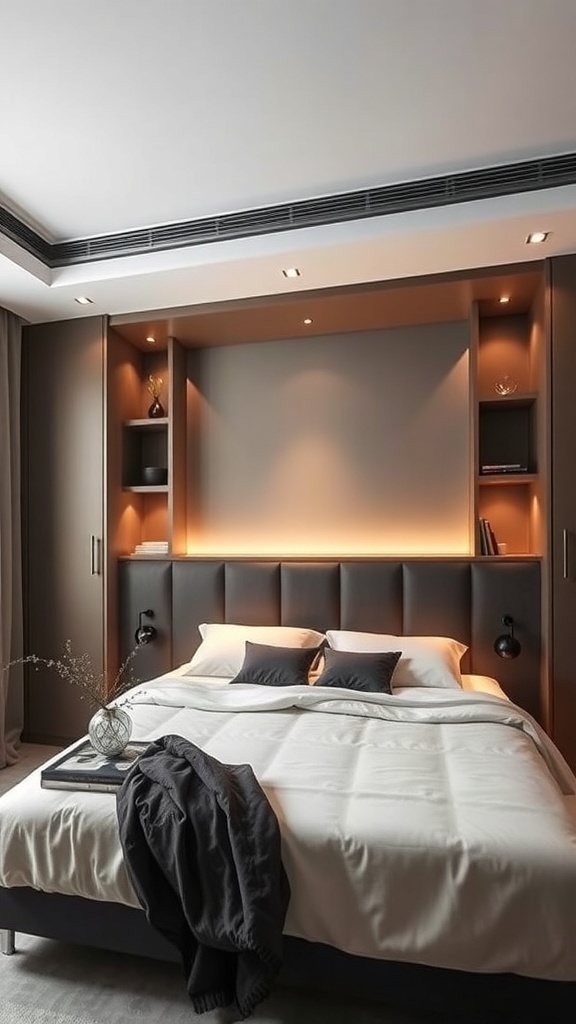
In the realm of Japandi design, simplicity reigns supreme. The image showcases a beautifully crafted bedroom featuring a minimal headboard that seamlessly integrates with built-in niches. This design choice not only enhances the aesthetic appeal but also maximizes functionality.
The headboard, upholstered in a soft fabric, offers a cozy backdrop for the bed while maintaining a low profile. This approach is perfect for creating a serene atmosphere. The built-in niches, illuminated softly, provide space for decorative items or personal touches, adding character without cluttering the space.
The warm lighting accentuates the textures of the materials used, inviting a sense of calm. This design element is a nod to the Japanese philosophy of ‘ma’, or negative space, which emphasizes the importance of what is not there as much as what is. The overall effect is a harmonious balance between form and function.
To replicate this look in your own bedroom, consider opting for a low-profile headboard that complements your bedding. Incorporating built-in shelves or niches can create a similar effect, allowing for both style and practicality. Choose soft, warm lighting to highlight these features, creating a cozy retreat that embodies the essence of Japandi style.
Soft Indirect Lighting and Paper Shades
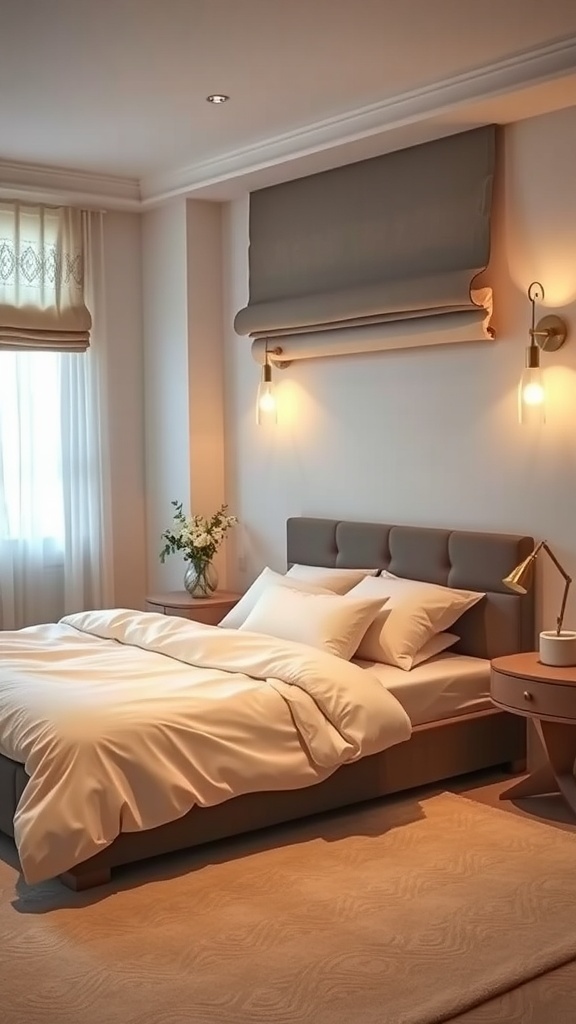
In the serene world of Japandi design, lighting plays a vital role in creating a calming atmosphere. The image showcases a beautifully designed bedroom where soft indirect lighting enhances the tranquil vibe. The warm glow from the hanging lights complements the gentle hues of the room, inviting relaxation.
Paper shades are a hallmark of this aesthetic, offering a soft diffusion of light. They filter sunlight, casting a warm, inviting glow throughout the space. This approach not only adds to the overall comfort but also aligns perfectly with the minimalist ethos of Japandi style.
The combination of these elements creates a soothing environment. The lighting and shades work together to highlight the natural textures and colors found in the room. This thoughtful design choice encourages a peaceful retreat, making it easier to unwind after a long day.
To replicate this look in your own bedroom, consider installing paper shades that match your color palette. Pair them with warm, dimmable lighting fixtures to control the mood. This simple adjustment can transform your space into a calming sanctuary.
Greenery and Simple Plants
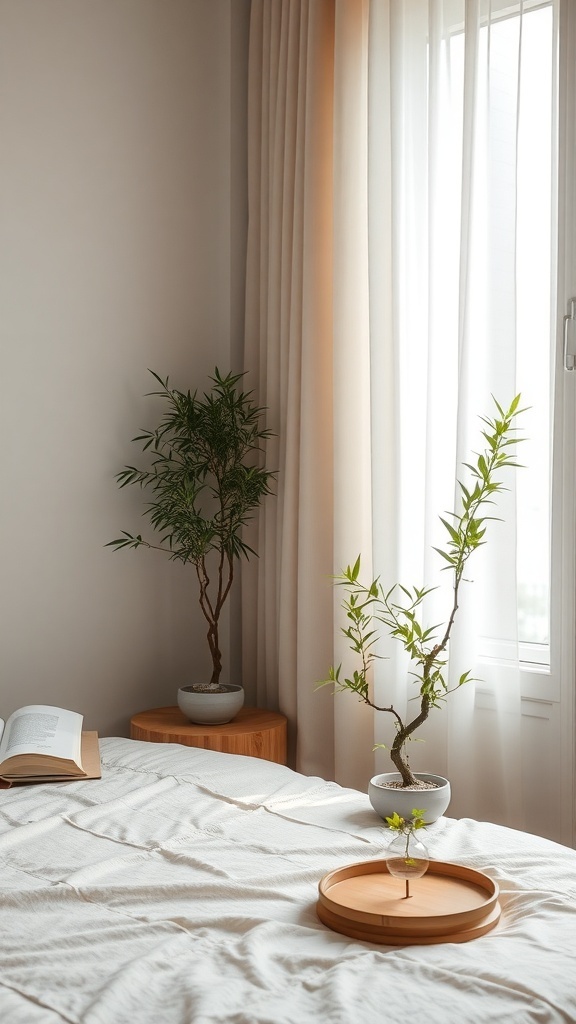
Incorporating greenery into your bedroom can create a peaceful atmosphere. The image showcases two elegant plants that enhance the serene vibe of a Japandi-style bedroom. Their simple forms and natural textures complement the minimalist design.
On the left, a slender plant adds height and a touch of life, while the bonsai on the right brings a sense of calm with its intricate branches. Both plants are housed in understated pots that blend seamlessly with the room’s aesthetic.
Using plants like these not only beautifies the space but also improves air quality. Consider placing them near windows to allow for natural light, which helps them thrive. A small tray on the bed adds a functional touch, perfect for holding a book or a delicate vase.
When selecting plants, think about low-maintenance options that suit your lifestyle. Potted bamboo or succulents can be great choices. They require minimal care and can adapt well to indoor environments.
Overall, the presence of greenery in your bedroom can transform it into a tranquil retreat. It’s a simple yet effective way to bring a piece of nature indoors, enhancing the Japandi style with a refreshing touch.
Textural Layering Without Clutter
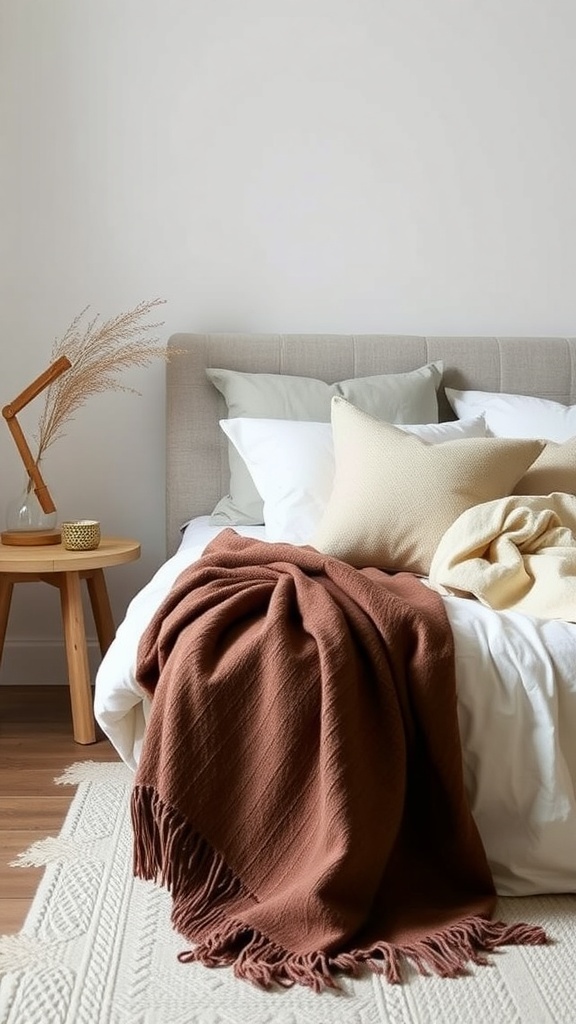
Textural layering is a hallmark of the Japandi style, and it plays a vital role in creating a serene bedroom environment. The image showcases a beautifully arranged bed that exemplifies this concept. The low-profile bed is adorned with a mix of cushions and throws, each adding depth without overwhelming the space.
The warm, earthy tones of the blanket contrast gently with the soft, muted hues of the pillows. This combination not only adds visual interest but also invites comfort. Notice how the textures—from the smooth linen to the cozy wool—work together harmoniously. This layering technique is essential for achieving that inviting, yet uncluttered look.
Incorporating different materials is key. Consider using a chunky knit throw alongside sleek cotton sheets. This juxtaposition creates a tactile experience that draws you in. When selecting your textiles, aim for a cohesive color palette that reflects nature, such as soft greens, warm browns, and creamy whites. These colors enhance the calming atmosphere typical of Japandi design.
Another element to note is the simplicity of the surrounding decor. The wooden side table and the delicate dried grass arrangement add a touch of nature without competing for attention. This balance is crucial in maintaining a peaceful vibe. Keep accessories minimal and choose pieces that resonate with the overall theme.
To replicate this look in your own space, start by selecting a few key textures and colors. Layer your bedding thoughtfully, ensuring each piece complements the others. Remember, the goal is to create a space that feels both cozy and sophisticated, embodying the essence of Japandi style.
Matte Metal Details for Contrast
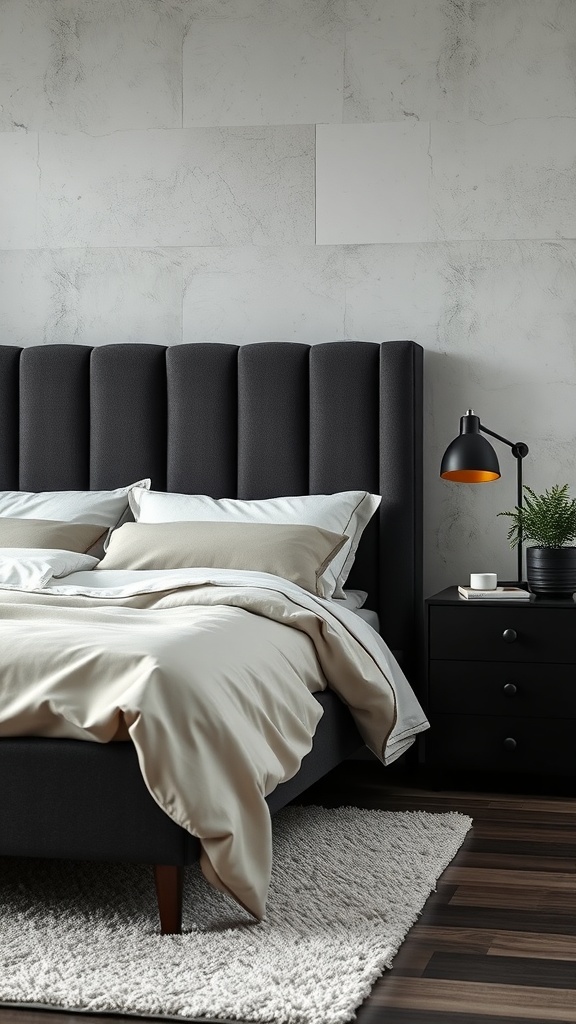
In the realm of Japandi design, matte metal details play a subtle yet impactful role. The image showcases a beautifully styled bedroom where the contrast of materials enhances the overall aesthetic. The dark, plush headboard of the bed pairs perfectly with the sleek matte black nightstand, creating a harmonious balance.
The use of matte finishes adds a layer of sophistication, allowing the eye to appreciate the textures without overwhelming the senses. Notice the warm glow from the lamp, which contrasts with the cool tones of the metal, creating a cozy atmosphere. This thoughtful combination of elements is essential in achieving the serene vibe characteristic of Japandi style.
Incorporating matte metal accents can be as simple as choosing light fixtures or hardware in a matte finish. These details can elevate the space, providing a modern touch that complements the natural materials often found in Japandi bedrooms. Think about adding a matte black lamp or drawer pulls to your furniture for a refined look.
Ultimately, these metal accents serve not just as functional pieces but also as design statements. They invite a sense of calm while enhancing the beauty of the room, making them a perfect fit for a Japandi-inspired retreat.
Nature-Inspired Surfaces
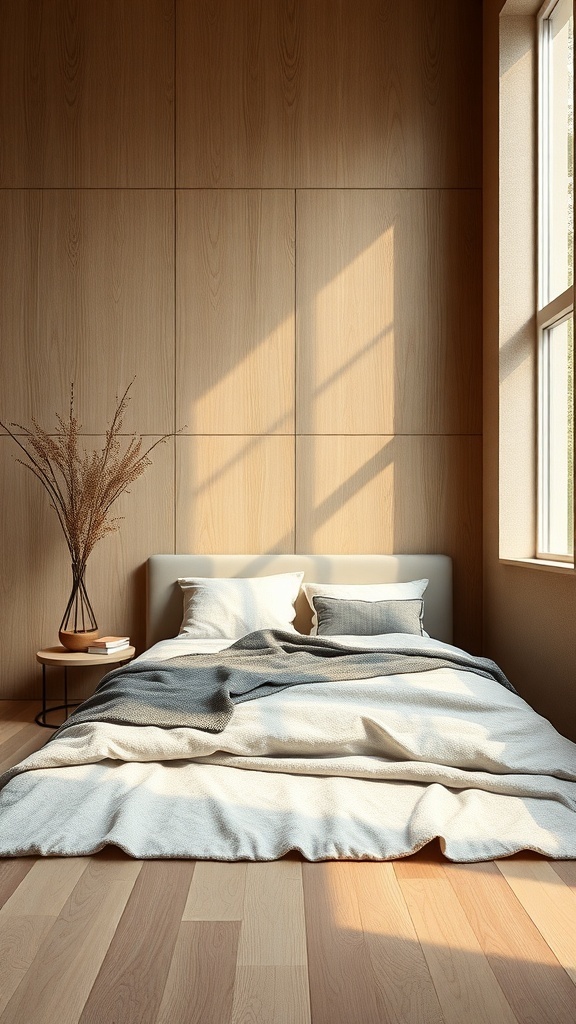
The image captures a serene Japandi bedroom, showcasing the beauty of nature-inspired surfaces. The warm wooden wall panels create a calming backdrop, emphasizing the simplicity and elegance of the design.
The low-profile platform bed, dressed in soft, neutral bedding, invites relaxation. The gentle textures of the blankets and pillows add warmth without overwhelming the space. This layering is key in achieving a minimalist yet cozy feel.
A small side table holds a few books, suggesting a space meant for quiet moments. The delicate vase with dried plants introduces an organic touch, bridging the indoor environment with nature. This element not only adds visual interest but also enhances the tranquil atmosphere.
The natural wood flooring complements the wall panels, creating a cohesive look that resonates with the Japandi philosophy of blending functionality with beauty. Sunlight streaming through the window casts gentle shadows, further enhancing the room’s peaceful vibe.
Incorporating these nature-inspired surfaces into your own bedroom can transform it into a retreat. Opt for wooden accents, soft textiles, and minimal decor to create a space that feels grounded and serene.
Sliding Doors or Panels as Room Dividers
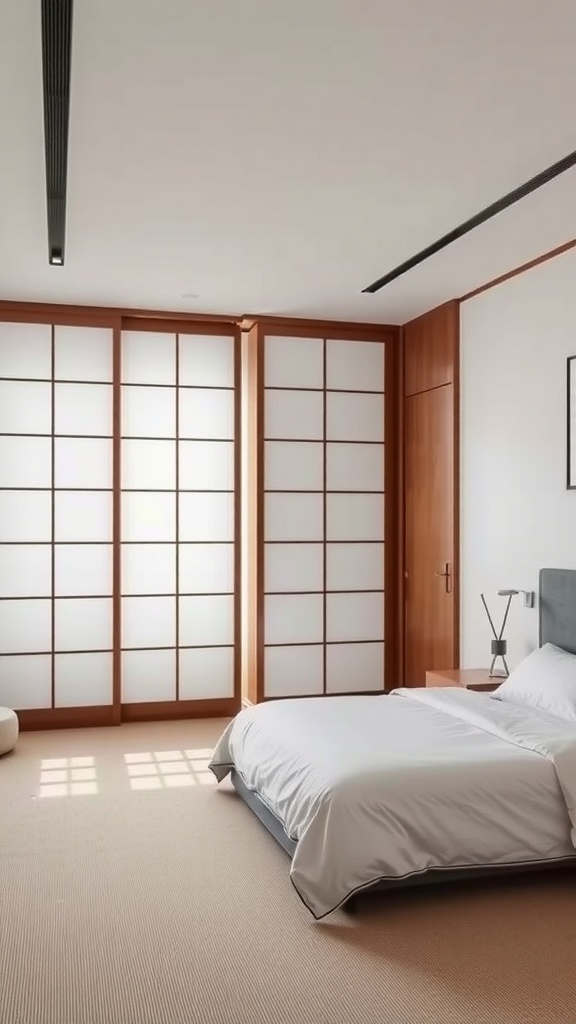
Sliding doors or panels are a hallmark of Japandi design, seamlessly blending functionality with aesthetic appeal. In the image, you can see a beautifully designed bedroom featuring these elegant dividers. The sliding panels, with their clean lines and soft frosted glass, create a sense of openness while providing privacy when needed.
This design choice not only enhances the room’s flow but also allows natural light to filter through, maintaining a bright and airy atmosphere. The warm wood frames complement the minimalist decor, emphasizing the natural materials that are central to the Japandi style.
Incorporating sliding doors can transform your space. They can serve as a stylish way to separate areas within your bedroom, like a dressing nook or a workspace, without the bulk of traditional walls. This approach keeps the room feeling spacious and uncluttered, aligning perfectly with the principles of minimalist bedroom design.
When considering sliding doors, think about materials that resonate with the Japandi aesthetic. Wood, especially in lighter tones, can add warmth, while frosted glass introduces a touch of modernity. This combination creates a serene environment, ideal for relaxation.
For those looking to replicate this look, consider how the sliding panels can be integrated into your existing layout. Whether you opt for custom-built solutions or ready-made options, the key is to maintain a cohesive design that reflects the calm and simplicity of Japandi style.
Hand-Crafted Accessories and Ceramics
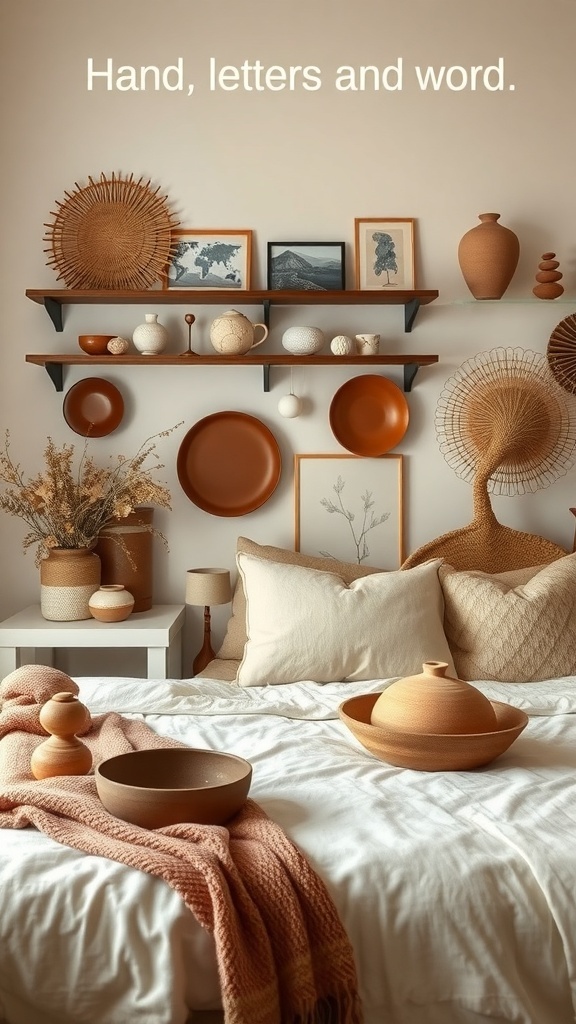
The image showcases a beautifully curated collection of hand-crafted accessories and ceramics that embody the Japandi style. The warm earthy tones create a cozy atmosphere, perfectly blending Scandinavian minimalism with Japanese craftsmanship.
On the shelves, a variety of ceramic pieces, including vases and bowls, are artfully arranged. Each item tells a story of skilled artisanship, emphasizing the beauty of imperfection. The textures of the ceramics contrast nicely with the smooth surfaces of the wooden shelves, adding depth to the display.
The wall decor features woven elements and framed art, enhancing the serene vibe of the space. The use of natural materials like rattan and clay not only aligns with the Japandi aesthetic but also brings a touch of nature indoors.
In the foreground, a soft, knitted throw drapes over the bed, inviting comfort. The layered textiles, combined with the ceramics, create a harmonious balance of function and beauty. This arrangement encourages a sense of calm, making it an ideal retreat for relaxation.
To replicate this look, consider incorporating hand-crafted pieces into your own bedroom. Seek out local artisans or unique finds at markets. Mixing different textures and colors can elevate your space while maintaining that minimalist feel.
Muted Accent Colours Inspired by Nature
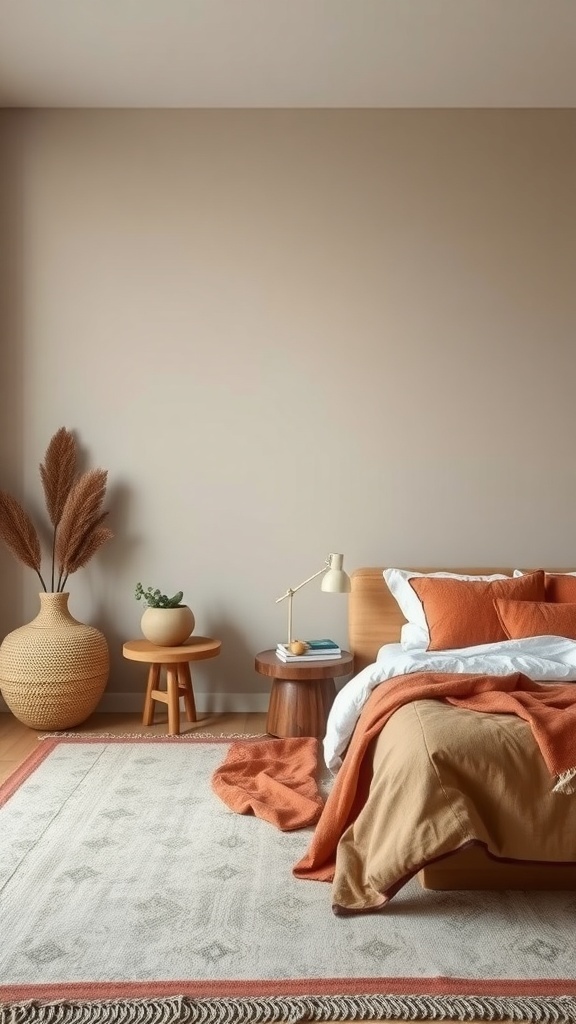
In the realm of Japandi design, muted accent colors play a vital role in creating a serene atmosphere. The image captures a bedroom that beautifully embodies this concept. Soft terracotta hues are harmoniously paired with warm neutrals, creating a calming palette that feels both inviting and grounded.
The walls, painted in a soft beige, provide a gentle backdrop that allows the accents to shine without overwhelming the senses. The terracotta throw and cushions on the bed add a touch of warmth, reminiscent of natural clay and earth tones. This subtle color scheme not only enhances the room’s tranquility but also connects it to the natural world.
Incorporating muted colors inspired by nature can be easily achieved in your own space. Consider using soft greens, warm browns, or gentle greys to create a cohesive look. These colors can be introduced through textiles, artwork, or even decorative accessories. The key is to choose shades that evoke a sense of calm and relaxation.
Notice the use of organic materials in the image, such as the woven basket and wooden furniture. These elements complement the muted palette, reinforcing the connection to nature. When selecting furniture or decor, look for pieces that feature natural finishes or textures, as they enhance the overall aesthetic.
In summary, muted accent colors inspired by nature can transform a bedroom into a peaceful retreat. By thoughtfully incorporating these shades and materials, you can create a space that feels both stylish and serene.
Balance of Function and Beauty
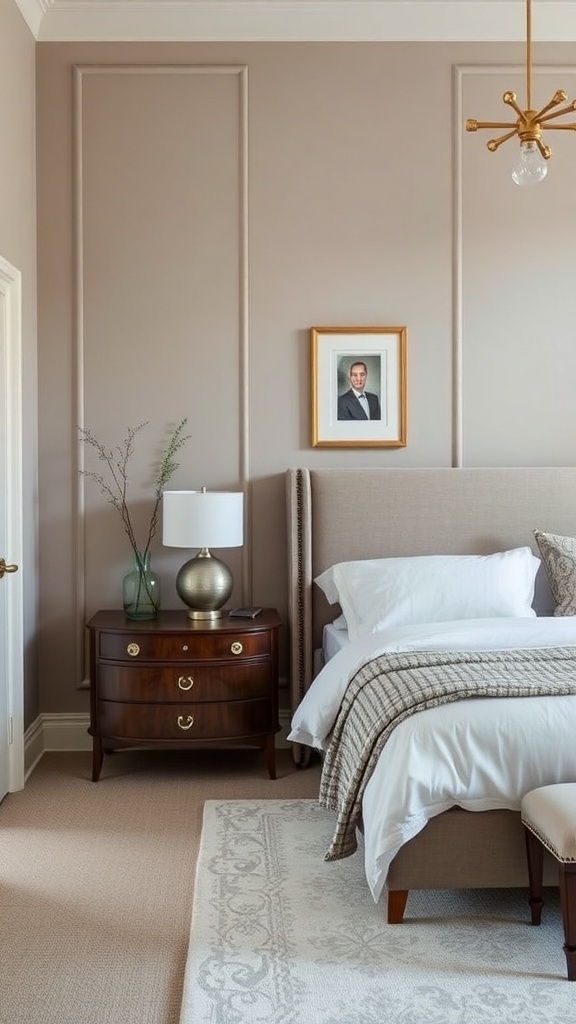
The image captures a serene bedroom that embodies the essence of Japandi style, where function meets beauty seamlessly. The low-profile bed, adorned with crisp white linens and a cozy throw, invites relaxation. The muted color palette of soft taupe walls enhances the calming atmosphere, making it a perfect retreat.
On the bedside, a classic wooden nightstand showcases a blend of practicality and elegance. The round lamp adds a touch of warmth, while the framed portrait introduces a personal element without overwhelming the space. This thoughtful arrangement highlights how each piece serves a purpose while contributing to the overall aesthetic.
Japandi design emphasizes minimalism, ensuring that every item in the room is both functional and visually pleasing. The subtle textures of the bedding and the rug create a layered look, adding depth without clutter. This balance is key in achieving a tranquil environment, where beauty does not compromise utility.
To replicate this balance in your own bedroom, consider selecting furniture that combines clean lines with natural materials. Opt for soft, neutral tones and introduce a few carefully chosen accessories that reflect your personality. This approach will help you create a space that feels both inviting and harmonious.
Built-in Storage for Clean Lines
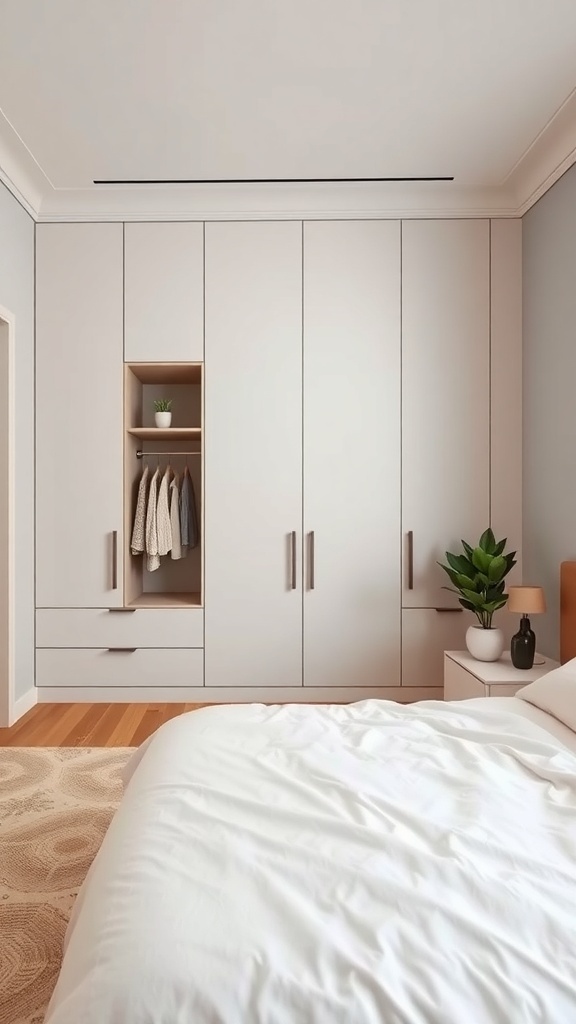
Built-in storage is a hallmark of Japandi design, offering both functionality and a sleek aesthetic. In the image, you can see a beautifully designed wardrobe that blends seamlessly with the room’s overall look. The clean lines and neutral tones create a sense of calm, making the space feel more organized and spacious.
This type of storage not only maximizes space but also minimizes visual clutter. The wardrobe features a combination of drawers and hanging space, catering to various storage needs while maintaining a minimalist approach. Notice how the natural wood accents add warmth, balancing the modern design with a touch of nature.
Incorporating built-in storage in your own bedroom can be a game-changer. It allows you to keep essentials tucked away, promoting a serene environment. Consider custom solutions that fit your specific needs, whether it’s a full wall unit or smaller built-ins that complement your existing furniture.
Another interesting aspect is the small open shelf within the wardrobe. This design choice invites a bit of greenery into the space, enhancing the natural feel. A simple plant can breathe life into the room without overwhelming it, aligning perfectly with the Japandi philosophy of simplicity and tranquility.
For those looking to replicate this look, focus on clean lines and a neutral palette. Choose materials that resonate with nature, like wood and stone, and aim for a cohesive design that feels both functional and beautiful. Built-in storage can truly transform your bedroom into a peaceful retreat.
Add a Comment