
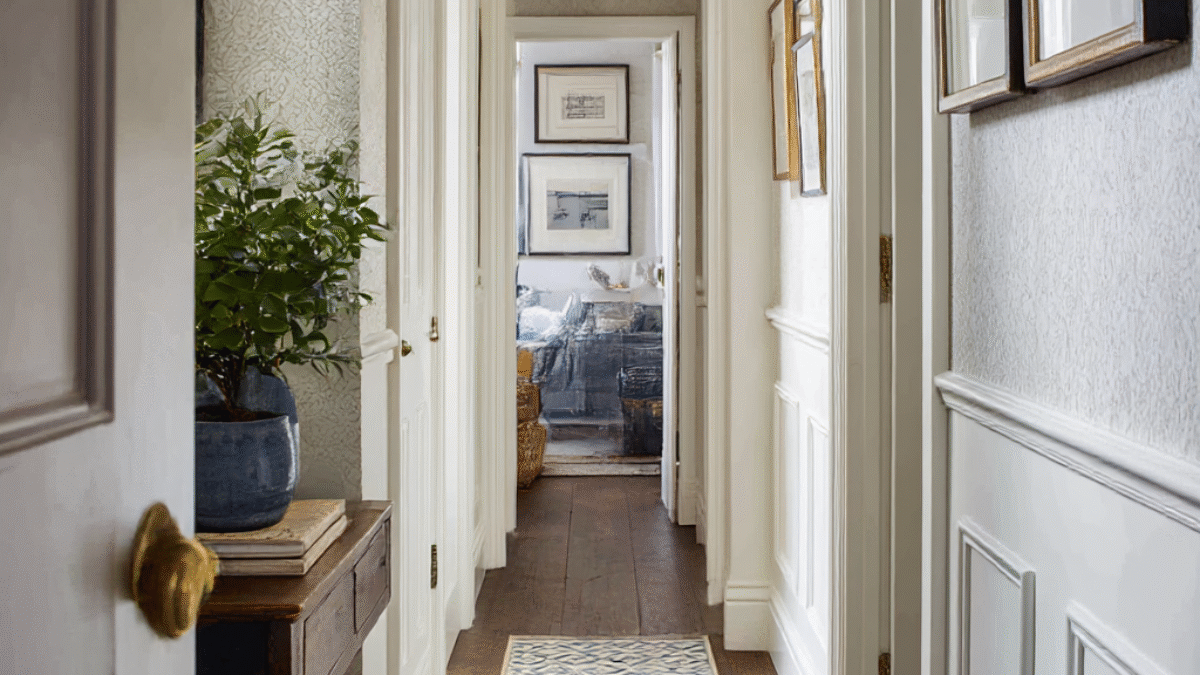
A narrow hallway can easily become an afterthought, treated as nothing more than a passage between rooms. Yet this transitional space holds enormous design potential. When approached with intention, even the slimmest corridor can feel bright, expansive, and quietly elegant. The key lies in understanding proportion, light, and restraint. With the right design decisions, a narrow hallway can feel less like a bottleneck and more like a refined architectural moment.
Embrace a Light, Cohesive Color Palette
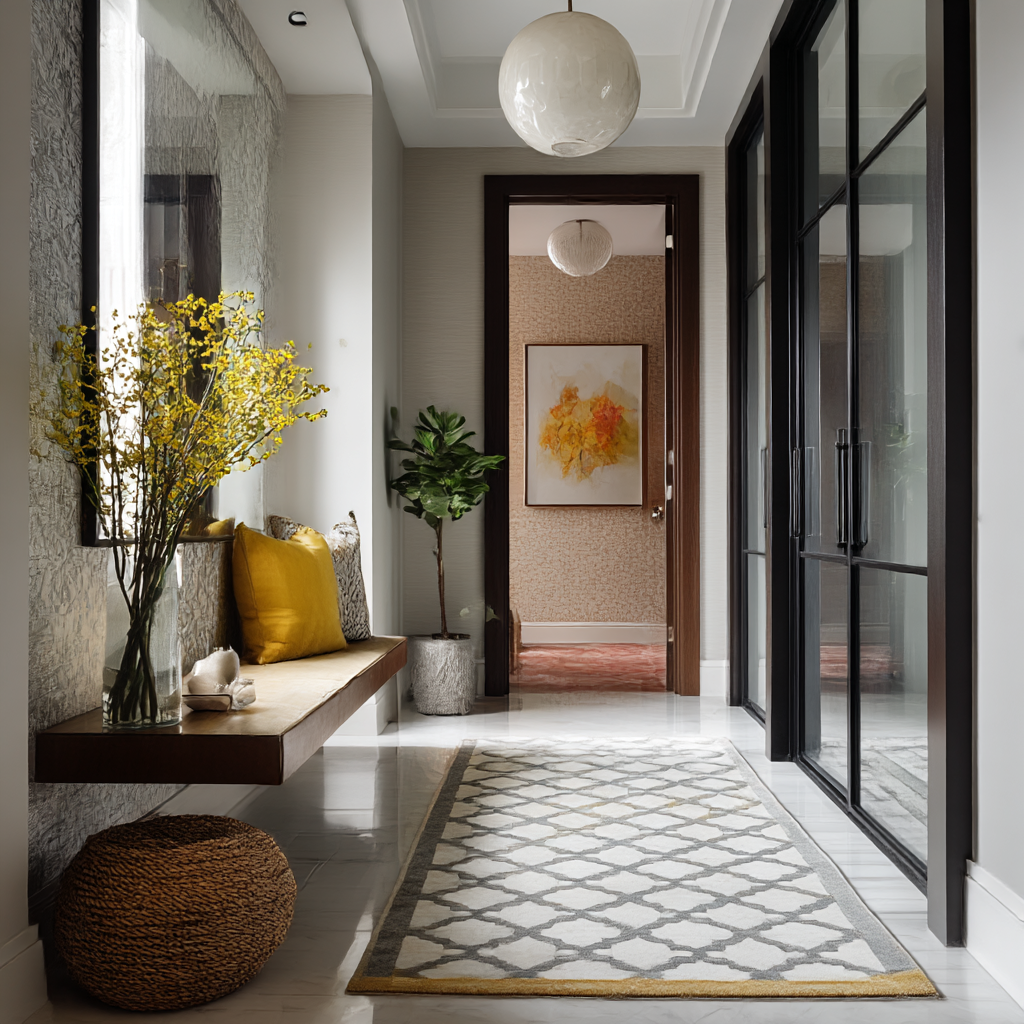
Color has the power to visually widen walls and soften tight proportions. Pale neutrals, warm whites, and soft greiges reflect light and blur boundaries, making the hallway feel more expansive. Keeping trim, doors, and walls within the same tonal family reduces visual breaks and creates a seamless flow. This continuity allows the eye to travel without interruption, which subtly enhances the sense of space.
Use Mirrors Strategically
Mirrors are one of the most effective tools for opening up a narrow hallway. Positioned to reflect natural light or a nearby window, they amplify brightness and create the illusion of depth. A large vertical mirror can elongate the corridor, while a series of slim mirrors adds rhythm without overwhelming the walls. The goal is reflection without clutter.
Choose Slimline Furniture
If your hallway allows for furniture, opt for pieces with a narrow profile. A slender console table, floating shelf, or compact bench provides function without encroaching on valuable walking space. Look for designs with open bases or raised legs to maintain visual lightness. Furniture that appears to float or hover keeps the floor visible, reinforcing an airy feel.
Elevate the Lighting Plan
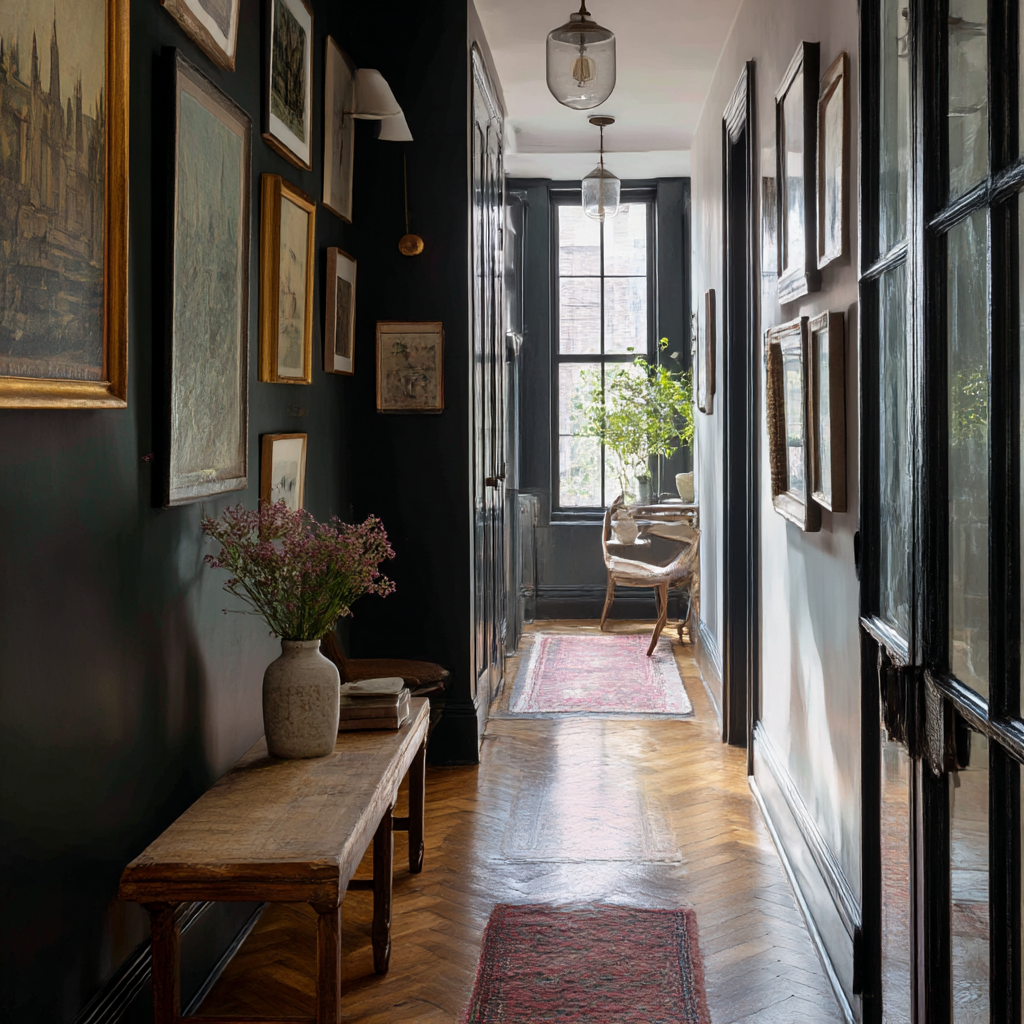
Lighting often determines whether a hallway feels cramped or welcoming. Replace harsh overhead fixtures with layered lighting that creates warmth and dimension. Wall sconces positioned at eye level draw attention outward rather than inward. Soft, warm bulbs prevent shadows from collecting in corners, which can make the space feel tighter than it is.
Keep Decor Minimal but Meaningful
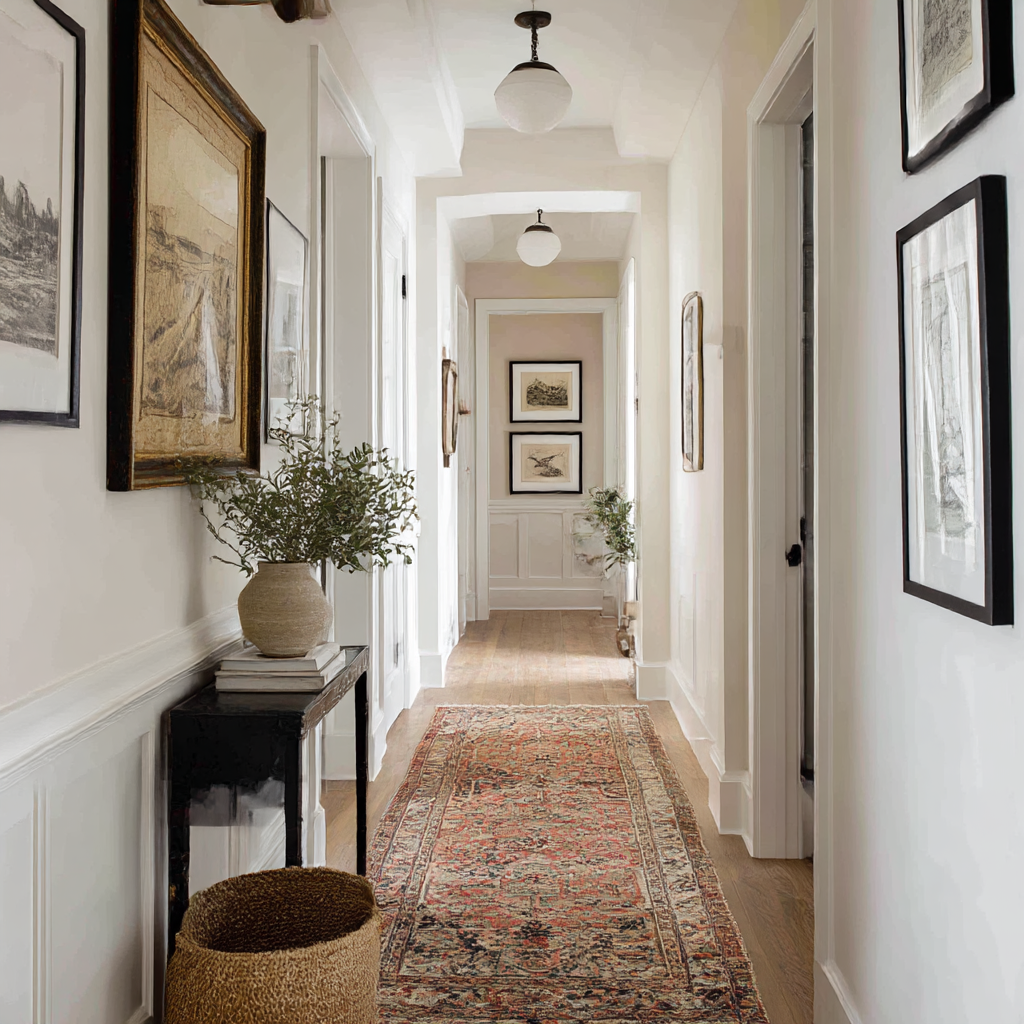
Narrow spaces benefit from restraint. Rather than covering every wall with art, select a few impactful pieces and allow them breathing room. A curated gallery wall in matching frames can work beautifully when aligned neatly and spaced evenly. Minimal decor prevents visual congestion and supports the overall sense of calm.
Incorporate Vertical Elements
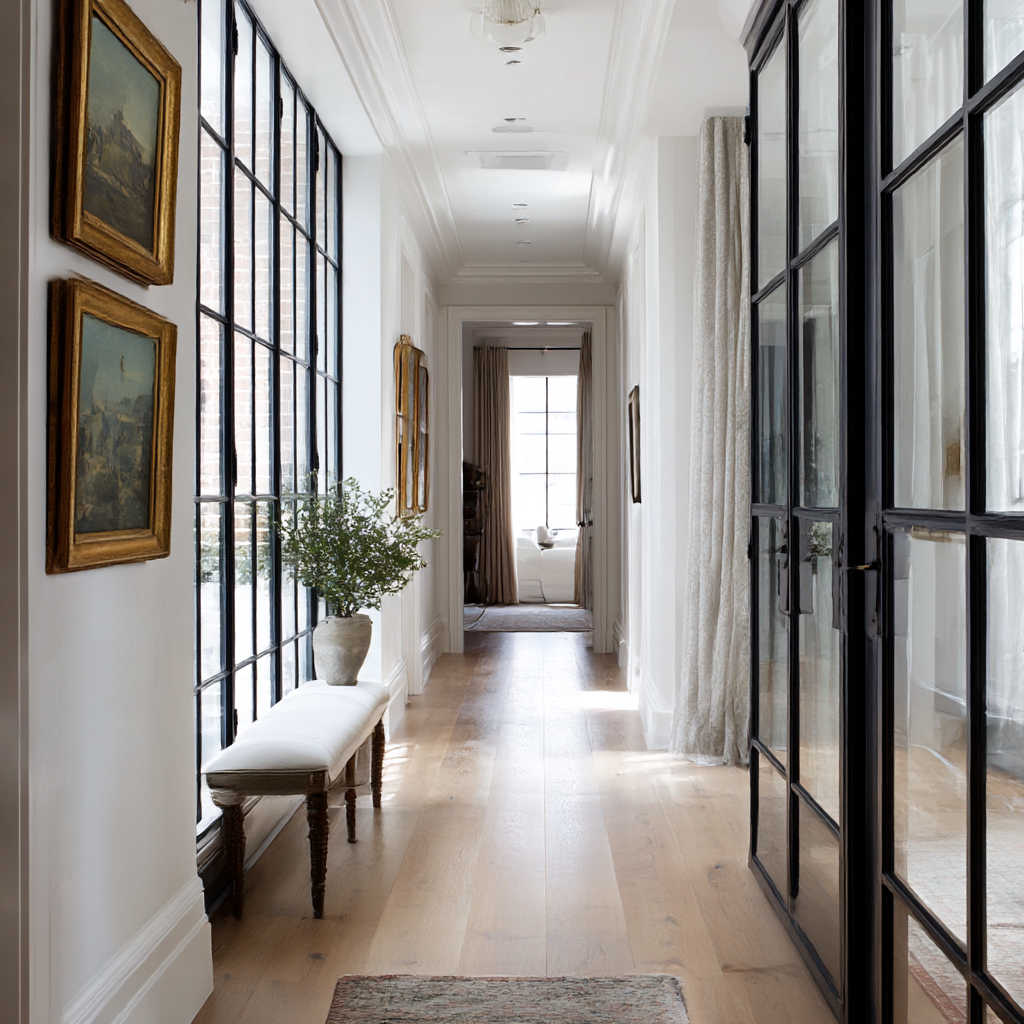
When horizontal space is limited, look upward. Vertical shiplap, panel molding, or tall artwork draws the eye higher, elongating the walls. Even floor-to-ceiling drapery at the end of a hallway can create the illusion of height. This vertical emphasis shifts focus away from width and toward proportion.
Opt for Reflective Finishes
Subtle reflective surfaces help bounce light throughout a corridor. Glossy paint finishes, lacquered consoles, metallic accents, or glass decor elements add brightness without bulk. Used sparingly, these finishes introduce dimension while maintaining a clean aesthetic.
Consider a Statement Runner
A hallway runner introduces softness and guides the eye forward. Choose a design that complements your overall color palette while remaining light enough to avoid visual heaviness. Stripes running lengthwise can subtly elongate the space, enhancing the sense of movement and openness.
Paint the Ceiling Thoughtfully
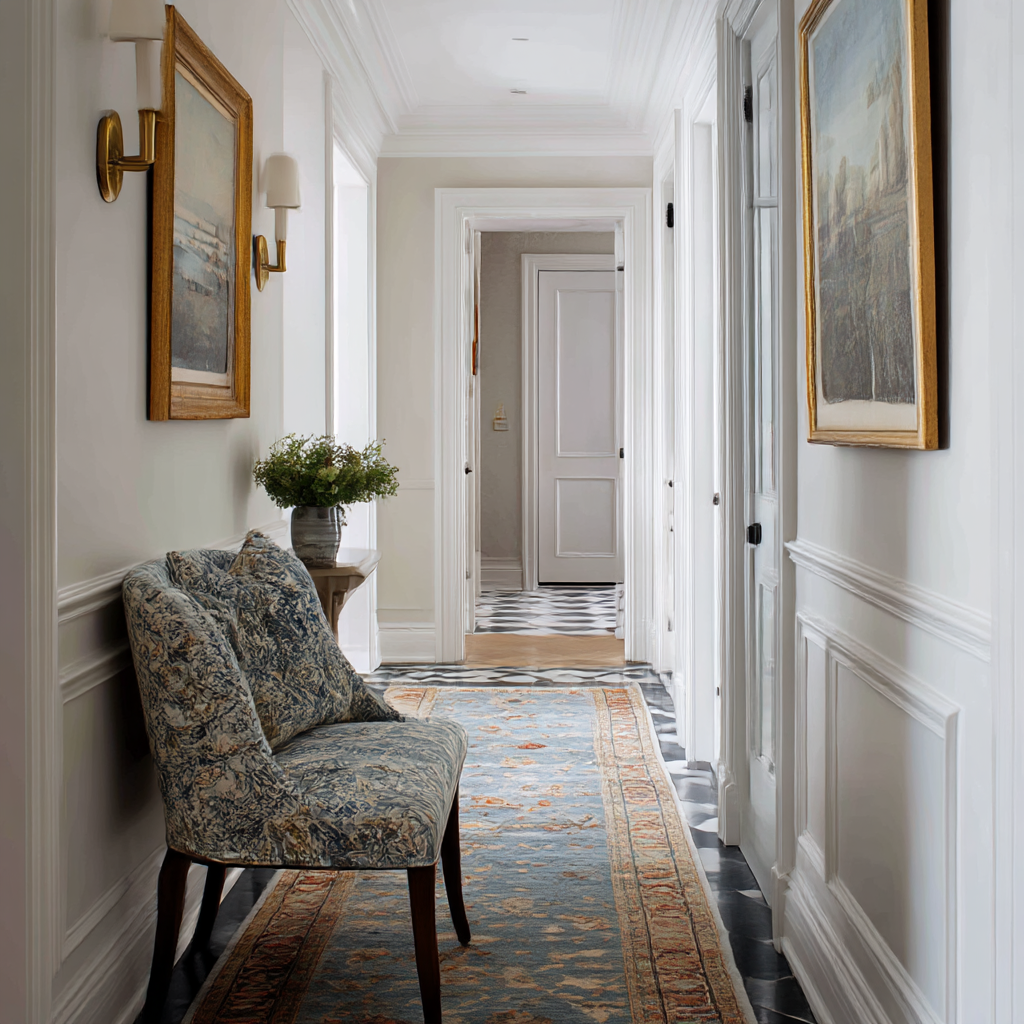
The ceiling is often overlooked in narrow corridors. Painting it the same color as the walls can blur edges and create cohesion. Alternatively, a slightly lighter tone can lift the space and reflect more light. Avoid dark ceilings unless the hallway receives abundant natural light, as darker shades can lower the perceived height.
Introduce Subtle Architectural Detail
Simple molding, wainscoting, or trim adds character without crowding the space. When kept within a restrained color palette, these details provide interest while maintaining airiness. Architectural elements give the hallway a sense of permanence and polish without relying on excess decoration.
Maintain Clear Sightlines
Clutter quickly undermines openness in a narrow hallway. Keep floors clear and storage discreet. Hooks, baskets, and shelves should be thoughtfully placed and not overloaded. When sightlines remain uninterrupted from one end of the corridor to the other, the entire space feels longer and more expansive.
Create a Focal Point at the End
Drawing attention to the far end of a hallway naturally extends its perceived length. A piece of artwork, a mirror, a small plant, or a softly lit console can anchor the space and invite movement forward. This subtle design strategy prevents the corridor from feeling abrupt or confined.
Final Thoughts
A narrow hallway does not need to feel restrictive. With thoughtful color choices, strategic lighting, minimal decor, and carefully scaled furnishings, even the tightest corridor can feel chic and airy. The secret is not in adding more, but in refining what is there. When light flows freely and visual clutter is reduced, the hallway transforms from a forgotten transition into a beautifully composed extension of your home.
Questions & Answers
What colors work best in a narrow hallway?
Light neutrals, soft whites, and warm pale tones reflect light effectively and create a sense of openness without feeling stark.
Can I use dark colors in a small hallway?
Dark shades can work if balanced with ample lighting and reflective elements, but they generally make narrow spaces feel more enclosed.
How do I decorate without making the hallway feel crowded?
Choose fewer, well-scaled pieces and leave intentional negative space. Clear sightlines and minimal layering help maintain an airy atmosphere.
Add a Comment